A 2019 Social Accounting Matrix for Burkina Faso with Agricultural Activities and Household Groups Disaggregated by Agroecological Zones
Martial A.K. Houessou, Zuhal Elnour, Harald Grethe, François Ramdé

TL;DR
This paper presents a detailed 2019 economic model for Burkina Faso, focusing on agriculture and household groups across different regions.
Contribution
The paper introduces a new, disaggregated SAM for Burkina Faso with agricultural and household details by agroecological zones.
Findings
The SAM includes 91 accounts, covering activities, commodities, and factors of production.
It differentiates labor by skill and includes land as a separate account.
The SAM is freely available for economic analyses across agroecological zones.
Abstract
A social accounting matrix (SAM) is a square matrix that captures the circular flows of all economic transactions within a country at a given time. It serves as a reference database for calibrating single-country computable general equilibrium (CGE) models to analyse the economy-wide effects of policy changes and other external shocks. We developed a SAM for Burkina Faso for 2019, adopting a top-down approach, first developing a macro-SAM and further disaggregating it to obtain a micro-SAM. The SAM depicts land as a separate account, differentiates labour by skill level, and disaggregates agriculture and households by agroecological zones. The SAM comprises 91 accounts: 47 activities, 19 commodities, margins, five factors of production, 12 household groups, three tax accounts (sales, production, and income), government, enterprises, savings-investments, and the rest of the world. The…
Click any figure to enlarge with its caption.
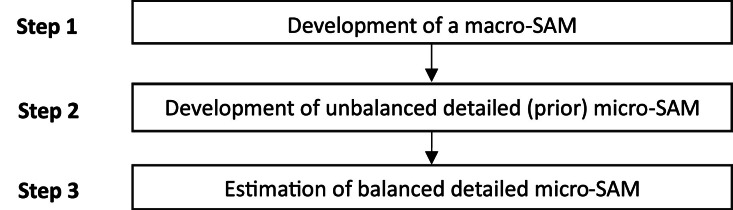 Figure 1
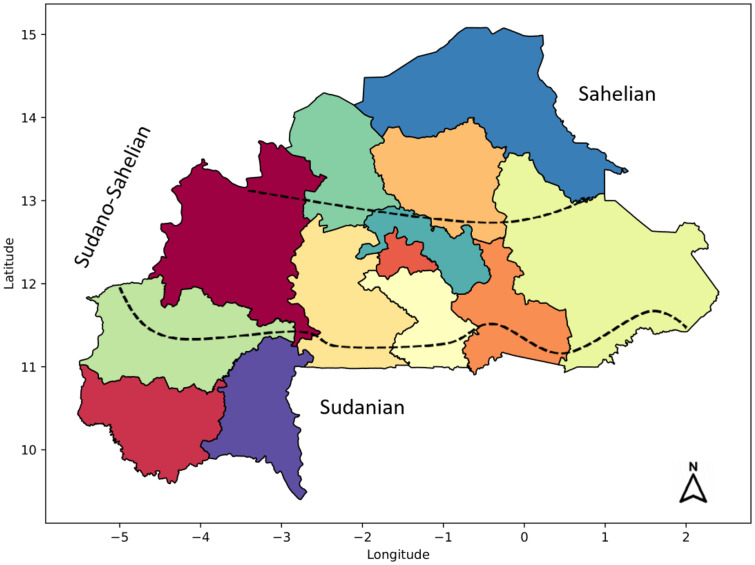 Figure 2
Peer Reviews
No public reviews on file for this paper yet. If you reviewed it on a platform where reviews are public (OpenReview, ICLR, NeurIPS, ICML), you can paste yours below so the community can read it here.
Videos
No videos yet. Explain this paper in a talk, walkthrough, or lecture? Add one.
Taxonomy
TopicsGender, Labor, and Family Dynamics · Income, Poverty, and Inequality · Taxation and Compliance Studies