Fc-Engineering Improves PET Imaging of Anti-Mesothelin VH-Fc across Multiple Tumor Mouse Models and Reveals Sex-Specific Renal Clearance
Abhinav Bhise, Xiaojie Chu, Anders Josefsson, Angel G. Cortez, George Diehl, Lora H. Rigatti, Hyun Jung Park, Jessie R. Nedrow, Wei Li

TL;DR
Scientists improved a protein used for imaging tumors by modifying its Fc region, which reduced unwanted accumulation in organs like the liver and spleen and enhanced tumor targeting.
Contribution
The novel Fc mutations (LALAPG) significantly improved tumor uptake and reduced off-target accumulation in Fc-rich organs.
Findings
Fc-engineered mutants showed high tumor uptake (13.0%ID/g) and reduced liver/spleen accumulation compared to wild-type.
Biodistribution studies confirmed high tumor specificity in multiple xenograft models with moderate to high MSLN expression.
Female mice showed higher renal retention of the engineered protein, indicating sex-specific pharmacokinetics.
Abstract
Mesothelin (MSLN) is overexpressed in various malignancies, making it a promising target for molecular imaging and therapeutic strategies. Anti-MSLN VH-Fc fusion proteins show high tumor uptake as compared with monoclonal antibodies; however, elevated accumulation in Fc-rich organs (liver, spleen) can compromise tumor-to-background ratios and limit clinical applicability. To overcome this, we developed Fc mutant anti-MSLN VH-Fc fusion proteins incorporating G236R/L328R (GRLR) and L234A/L235A/P329G (LALAPG) mutations to eliminate FcγRs interactions. Engineered mutants exhibited high purity (>95%), retained strong MSLN binding (KD 2.2–3.7 nM), and effectively silenced FcγR binding by ex vivo and in vivo analyses. Following zirconium-89 radiolabeling, PET imaging was conducted across multiple xenograft models with varying MSLN expression. In HCT116 xenografts, [89Zr]Zr-2A10-VH-FcLALAPG…
Genes, proteins, chemicals, diseases, species, mutations and cell lines named across the full text — each resolved to its canonical identifier and authoritative record.
Click any figure to enlarge with its caption.
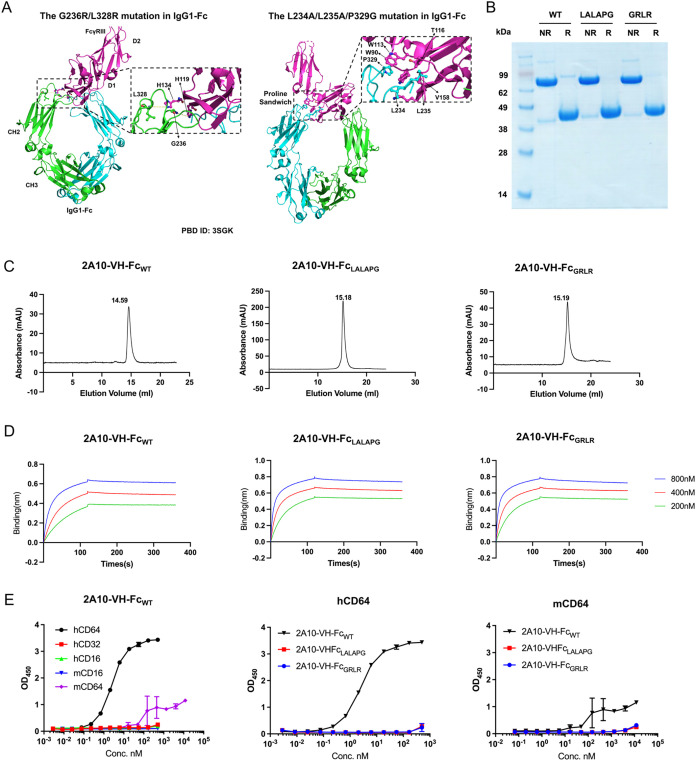 Figure 1
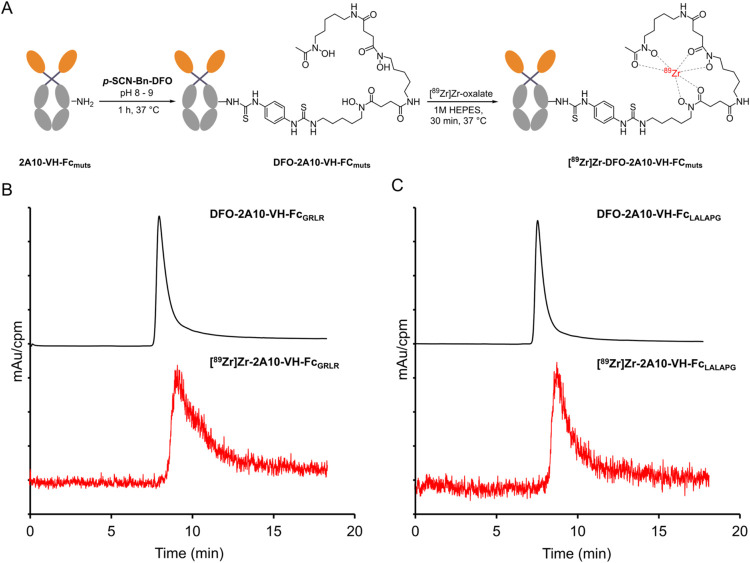 Figure 2
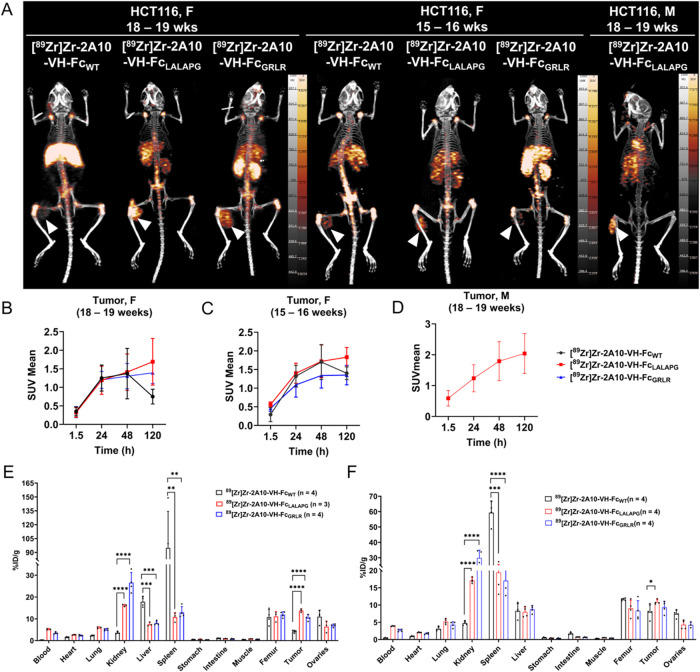 Figure 3
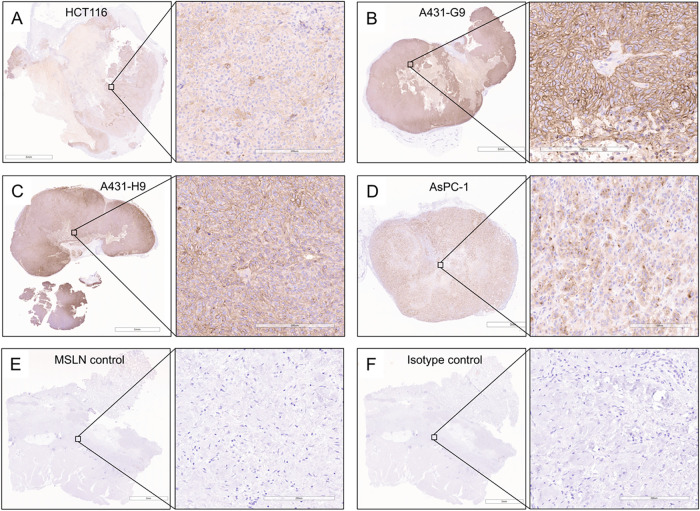 Figure 4
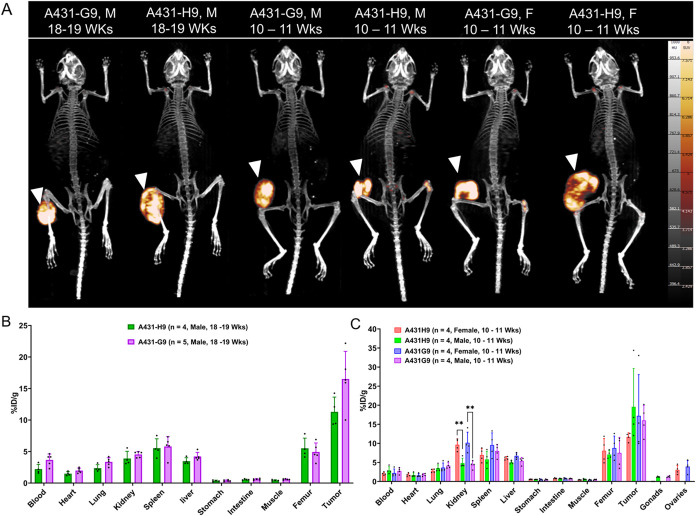 Figure 5
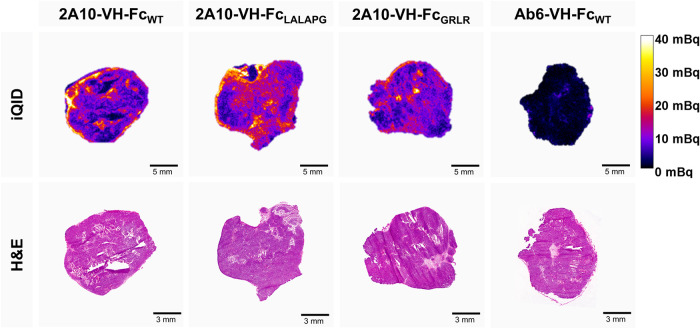 Figure 6
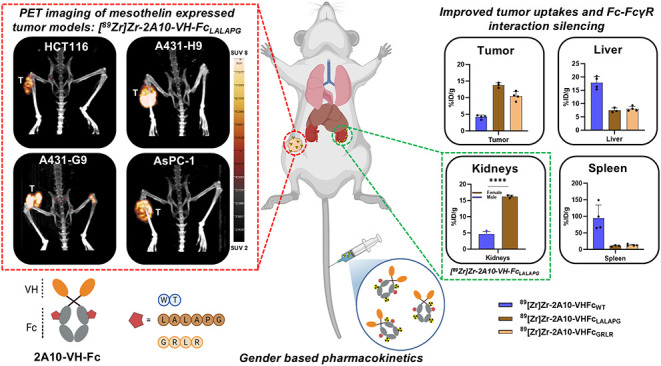 Figure 7
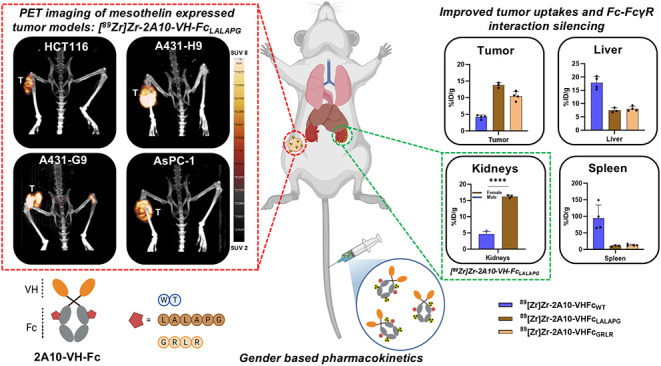 Figure 8
Peer Reviews
No public reviews on file for this paper yet. If you reviewed it on a platform where reviews are public (OpenReview, ICLR, NeurIPS, ICML), you can paste yours below so the community can read it here.
Videos
No videos yet. Explain this paper in a talk, walkthrough, or lecture? Add one.
Taxonomy
TopicsOccupational and environmental lung diseases · Monoclonal and Polyclonal Antibodies Research · Radiopharmaceutical Chemistry and Applications