Trends and patterns of inequality in modern contraceptive use in urban and rural India: are family planning programmes increasingly reaching the marginalized?
Abhishek Kumar, Subrato Kumar Mondal, Ashita Munjral, Rajib Acharya, Niranjan Saggurti

TL;DR
India's modern contraceptive use has increased over time, but wealthier and more educated women still use them more than poorer and less educated women, especially in urban and rural areas.
Contribution
The study provides new evidence on trends and patterns of inequality in modern contraceptive use in India using longitudinal data from 1992–93 to 2019–21.
Findings
Modern contraceptive prevalence rates increased across all socioeconomic groups in urban and rural India between 1992–93 and 2019–21.
Inequality in contraceptive use, measured by the concentration index, decreased over time but remained pro-rich in both urban and rural areas.
Modern reversible methods are increasingly accessible to marginalized populations, which could help achieve universal reproductive health access.
Abstract
India has made good progress in the use of modern contraceptives in recent decades, however identifying women who are left behind is important to policy makers for further improving availability, accessibility, and coverage of family planning services to the marginalized population and hence achieving the international and national development agenda. Using five rounds of the National Family Health Survey data conducted between 1992–93 to 2019–21, this study examined the trends and patterns in inequality—by household wealth quintile and women’s education—in modern contraceptive prevalence rates (mCPR) and demand for family planning satisfied with modern methods in urban and rural areas. The findings showed a secular trend of increasing rates in the use of modern contraceptives across socioeconomic sub-groups within urban (mCPR among the poorest quintile increased from 32% to 49%, and…
Genes, proteins, chemicals, diseases, species, mutations and cell lines named across the full text — each resolved to its canonical identifier and authoritative record.
Click any figure to enlarge with its caption.
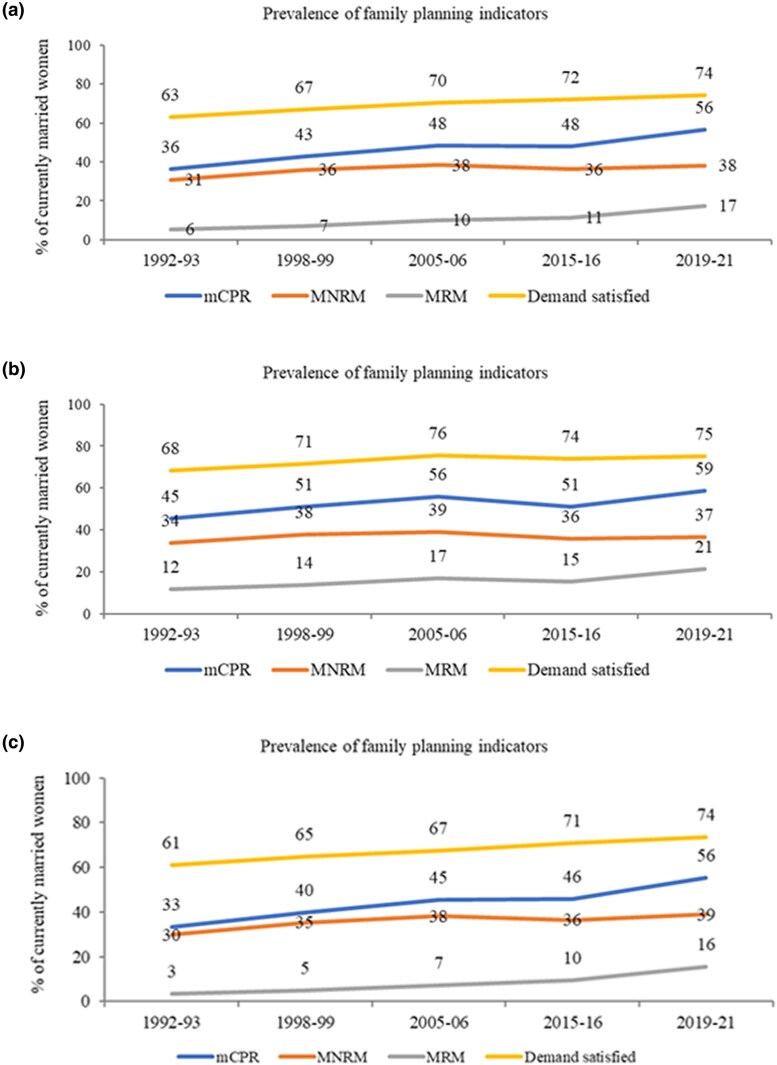 Figure 1
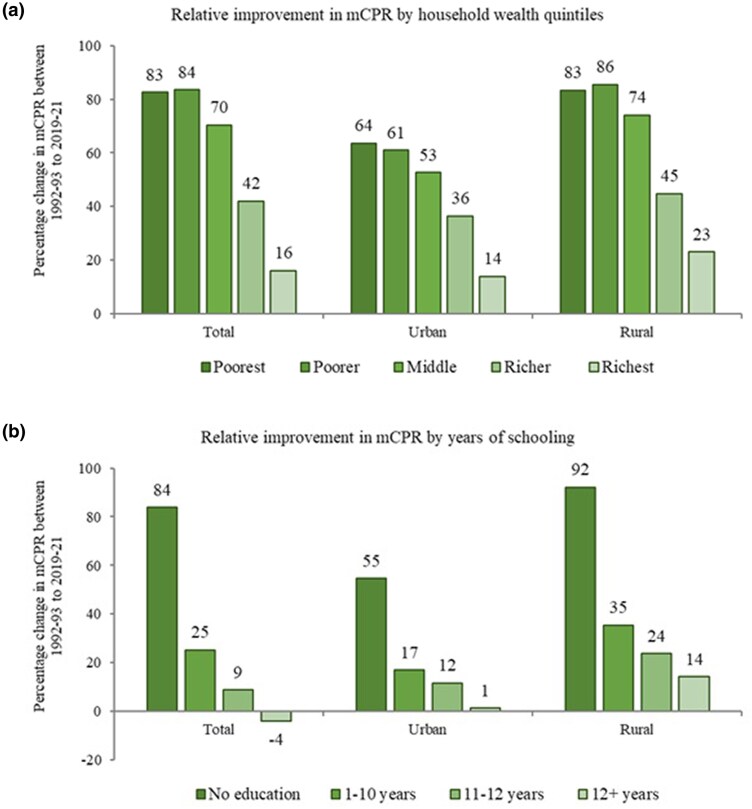 Figure 2
Peer Reviews
No public reviews on file for this paper yet. If you reviewed it on a platform where reviews are public (OpenReview, ICLR, NeurIPS, ICML), you can paste yours below so the community can read it here.
Videos
No videos yet. Explain this paper in a talk, walkthrough, or lecture? Add one.
Taxonomy
TopicsGlobal Maternal and Child Health · Reproductive Health and Contraception · Demographic Trends and Gender Preferences