Outcomes of aortic and mitral valve replacement with Dafodil™ pericardial bioprosthesis over 5-years: Dafodil™-1 trial
Channabasavaraj Shivalingaiah Hiremath, Anil Jain, Anurag Garg, Atul Maslekar, Nirmal Gupta, Binay Krishna Sarkar, Seetharama Bhat, Manish Porwal, Zile Singh Meharwal, Yugal Kishore Mishra, Prashant Vaijyanath, Vijay Grover, Shiv Kumar Chaudhary, Subash. S. Rajput

TL;DR
A 5-year study found that the Dafodil™ bioprosthesis for heart valve replacement showed good performance, safety, and quality of life improvements in patients.
Contribution
This study provides long-term clinical data on the Dafodil™ pericardial bioprosthesis in aortic and mitral valve replacement.
Findings
The Dafodil™ bioprosthesis showed improved haemodynamic performance over five years with no structural valve deterioration.
Patients experienced significant quality-of-life improvements and low rates of adverse events.
Mortality rates were 9.8% for aortic and 22.2% for mitral valve replacement groups after five years.
Abstract
The durability and performance of bioprosthetic valves are pivotal in managing valvular heart disease (VHD). This 5-year follow-up study evaluated the long-term clinical safety, haemodynamic performance, and quality-of-life (QoL) outcomes of the Dafodil™ pericardial bioprosthesis in patients undergoing aortic or mitral valve replacement (AVR/MVR). In this prospective, multicenter, first-in-human trial conducted across 19 Indian centers, 136 patients with advanced VHD (67 AVR, 69 MVR) were enrolled. Key endpoints were evaluated over 5 years. The mean age of the patients in the AVR and MVR cohorts was 60.2 ± 8.3 years and 49.7 ± 14.4 years, respectively. A total of 124 patients (61 AVR, 63 MVR) completed the 5-year follow-up. In the AVR cohort, mean pressure gradients decreased from 51.2 ± 24.1 mmHg at baseline to 11.3 ± 5.3 mmHg at five years, while effective orifice area (EOA)…
Genes, proteins, chemicals, diseases, species, mutations and cell lines named across the full text — each resolved to its canonical identifier and authoritative record.
Click any figure to enlarge with its caption.
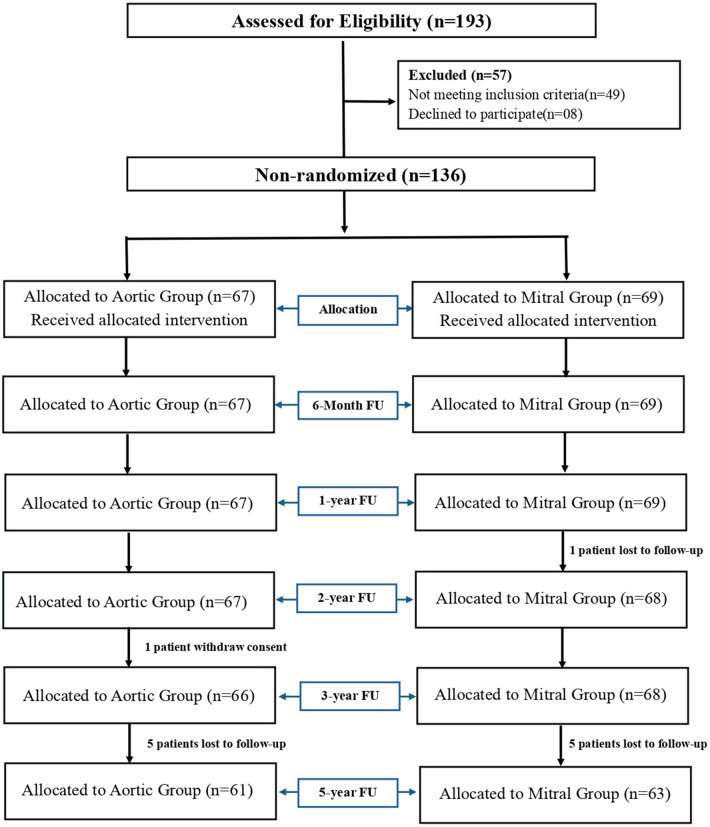 Figure 1
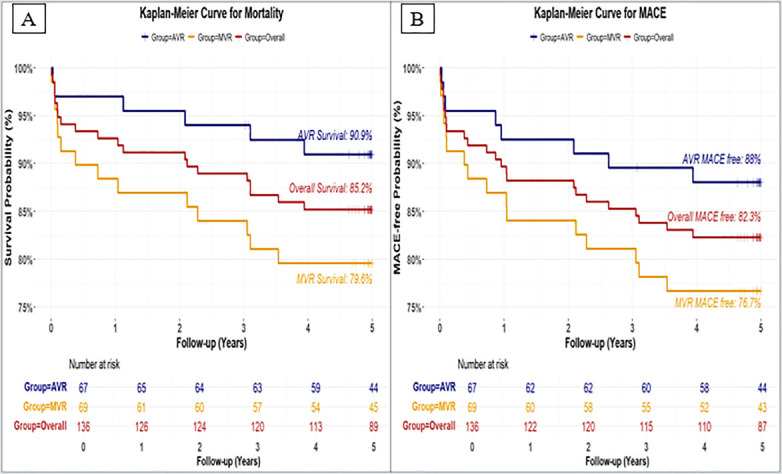 Figure 2
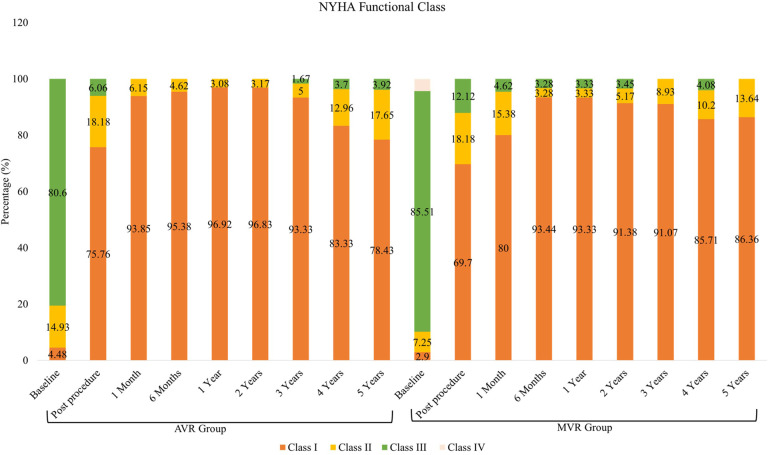 Figure 3
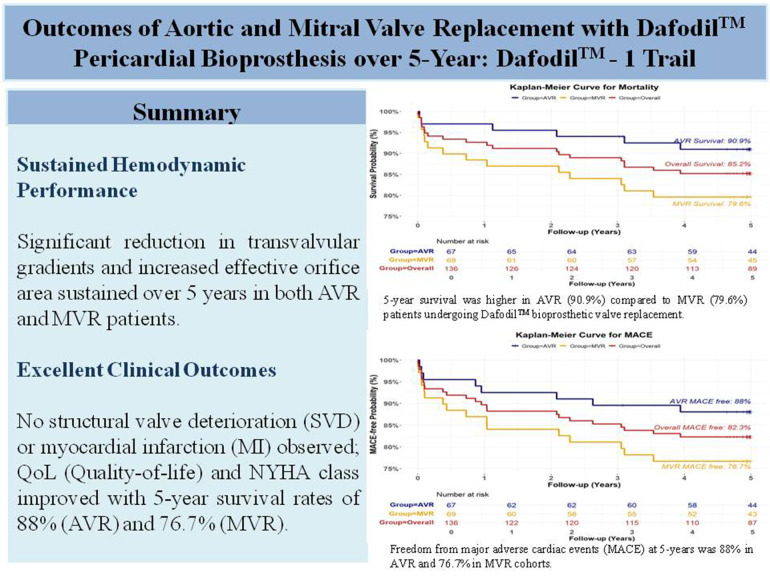 Figure 4
Peer Reviews
No public reviews on file for this paper yet. If you reviewed it on a platform where reviews are public (OpenReview, ICLR, NeurIPS, ICML), you can paste yours below so the community can read it here.
Videos
No videos yet. Explain this paper in a talk, walkthrough, or lecture? Add one.
Taxonomy
TopicsCardiac Valve Diseases and Treatments · Congenital Heart Disease Studies · Cardiac and Coronary Surgery Techniques