Racial and Ethnic Disparities in Pharmacologic and Non‐Pharmacologic Pain Management Among Older Cancer Survivors
Oindrila Bhattacharyya, Mohamed I. Elsaid, Brittany E. Punches, Andy Ni, Ashley S. Felix, Macarius M. Donneyong

TL;DR
The study finds racial and ethnic disparities in how older cancer survivors receive pain treatments, including both medications and non-drug therapies.
Contribution
The paper provides new empirical evidence on racial disparities in both pharmacologic and non-pharmacologic pain management among older cancer survivors.
Findings
Non-Hispanic Black, Asian/Pacific Islander, and Other race-ethnicity survivors used less pain treatment overall compared to non-Hispanic White survivors.
Minority survivors received lower opioid doses for longer durations but higher non-opioid doses for shorter durations.
Non-Hispanic Black and Hispanic-Latino survivors used fewer non-pharmacologic treatments compared to non-Hispanic White survivors.
Abstract
Pain is common among cancer survivors and often managed with medication; however, racial‐ethnic disparities persist in pain treatment. Given inadequate data on pharmacologic and non‐pharmacologic pain management among minoritized cancer survivors, we investigated these patterns using the SEER‐Medicare claims linked database. An incident cancer diagnosis cohort (≥ 66 years) was created from 2007 to 2016. The primary outcome was incidence of pain treatment (pharmacologic and non‐pharmacologic) within 90 days post‐diagnosis. Racial disparities were measured as adjusted incidence ratios for treatment using Poisson regression and adjusted differences in supply days and doses using linear regression, comparing non‐Hispanic Black (nHB), Hispanic‐Latino (LatinX), Asian/Pacific Islander (API), and Others to non‐Hispanic White (nHW). Models were adjusted for demographic and clinical variables.…
Genes, proteins, chemicals, diseases, species, mutations and cell lines named across the full text — each resolved to its canonical identifier and authoritative record.
Click any figure to enlarge with its caption.
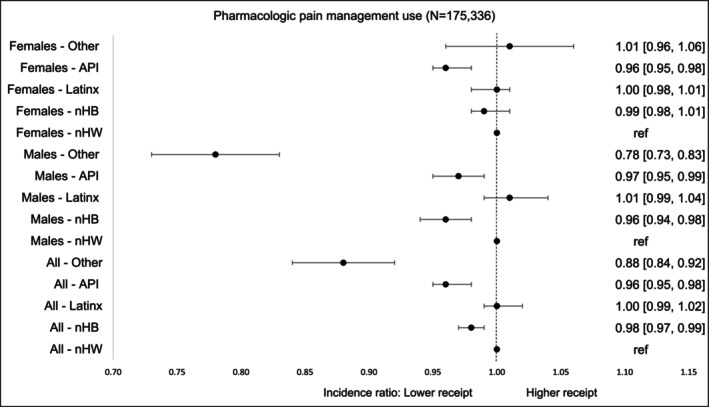 Figure 1
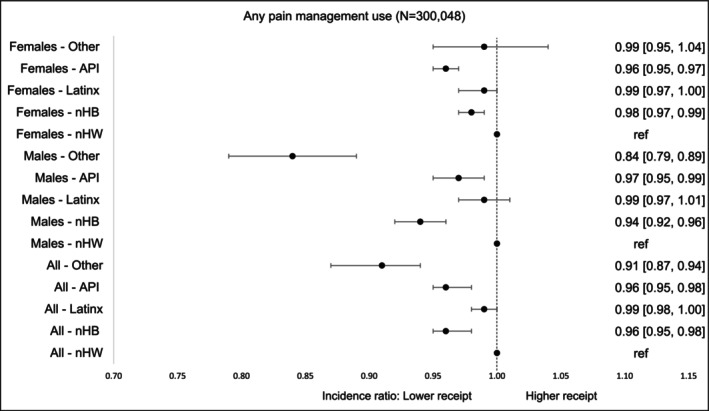 Figure 2
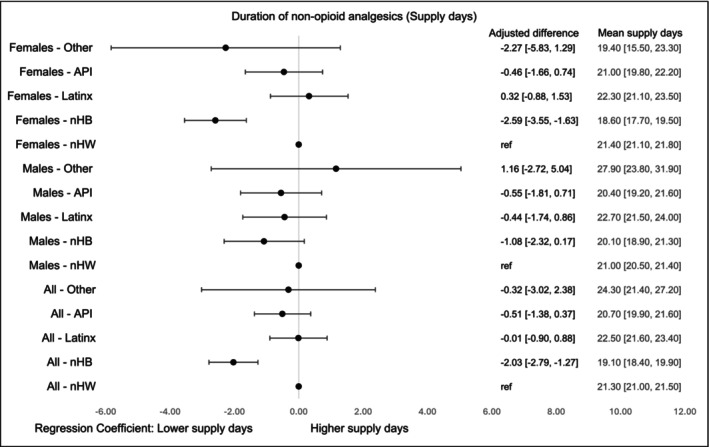 Figure 3
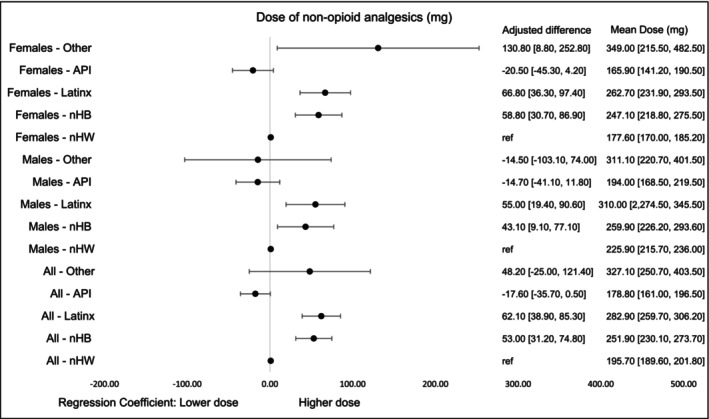 Figure 4
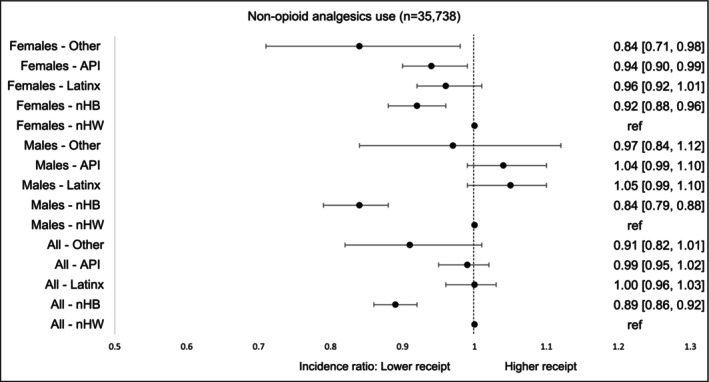 Figure 5
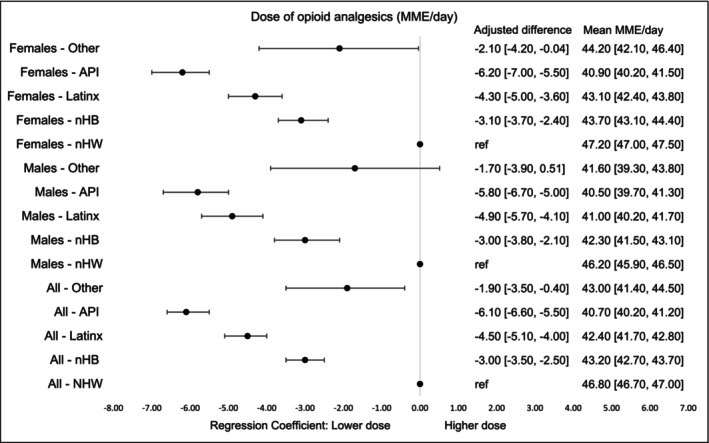 Figure 6
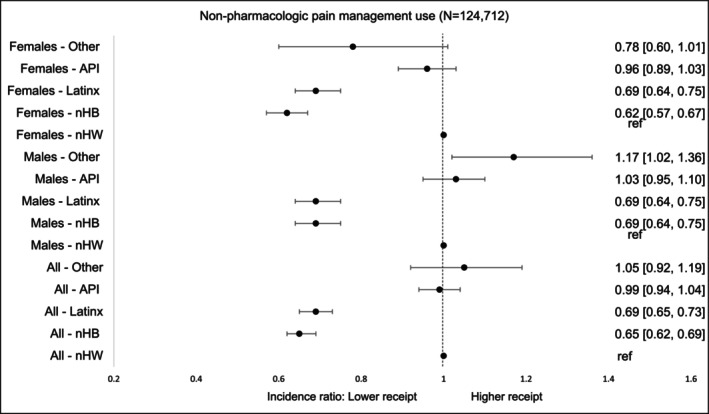 Figure 7
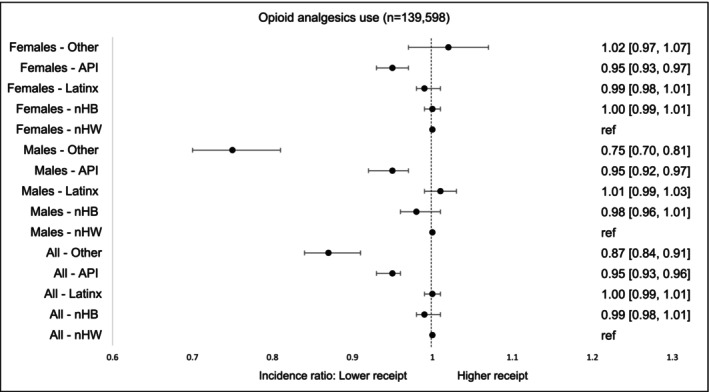 Figure 8
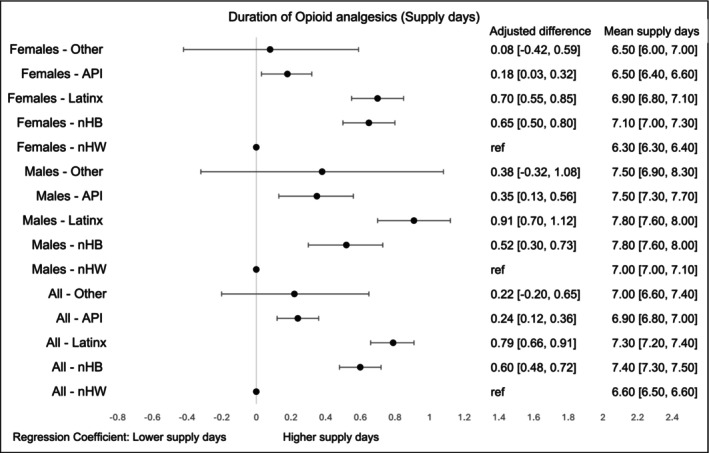 Figure 9
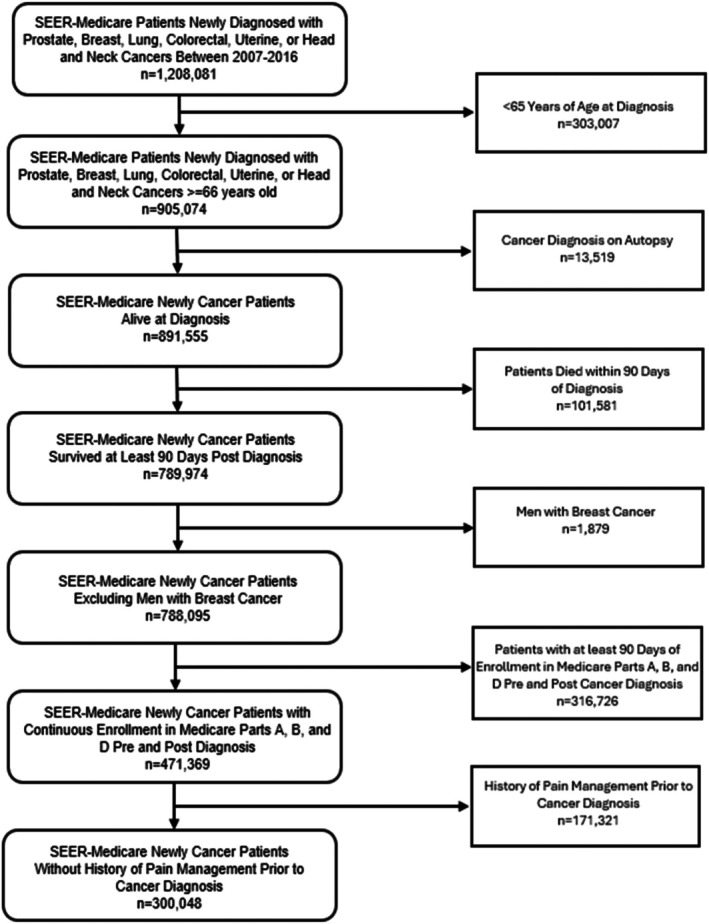 Figure 10
Peer Reviews
No public reviews on file for this paper yet. If you reviewed it on a platform where reviews are public (OpenReview, ICLR, NeurIPS, ICML), you can paste yours below so the community can read it here.
Videos
No videos yet. Explain this paper in a talk, walkthrough, or lecture? Add one.
Taxonomy
TopicsPain Management and Opioid Use · Opioid Use Disorder Treatment · Palliative Care and End-of-Life Issues