Oxygen Isotopic Fractionation of O2 Consumption by Methane and Ammonia Monooxygenases
Carolina F. M. de Carvalho, Maartje A.H.J. van Kessel, Arjan Pol, Jakob Zopfi, Moritz F. Lehmann, Sarah G. Pati

TL;DR
This study examines how oxygen isotopes change during methane and ammonia oxidation by microbes, to better understand oxygen consumption in aquatic ecosystems.
Contribution
The study experimentally determines oxygen isotopic fractionation values for specific microbial enzymes and evaluates their role in observed discrepancies in oxygen isotope measurements.
Findings
Oxygen isotopic fractionation values for pMMO and AMO were similar to those of heterotrophic respiration.
The sMMO enzyme showed a more negative isotopic fractionation value compared to prior reports.
The observed discrepancy in oxygen isotope measurements may be due to substrate diffusion limitations rather than enzyme activity.
Abstract
Understanding stable isotopic fractionation of dissolved O2 in aquatic environments is crucial to constrain and accurately model the processes responsible for biological O2 consumption, which are closely linked to the overall health of an ecosystem. This study aimed to investigate whether O2 consumption by microbial methane and ammonia oxidation may contribute to the observed discrepancy in O2 isotopic fractionation (18ϵ) between heterotrophic O2 respiration in laboratory incubations (−18 to −24 ‰) and in situ measurements of O2 consumption in lakes and oceans (−10 to −18 ‰). To estimate the in vivo 18ϵ values of soluble methane monooxygenase (sMMO), particulate methane monooxygenase (pMMO), and ammonia monooxygenase (AMO), which are the first enzymes required for the oxidation of methane and ammonia, experiments were performed with three methanotrophic bacteria and one comammox…
Genes, proteins, chemicals, diseases, species, mutations and cell lines named across the full text — each resolved to its canonical identifier and authoritative record.
Click any figure to enlarge with its caption.
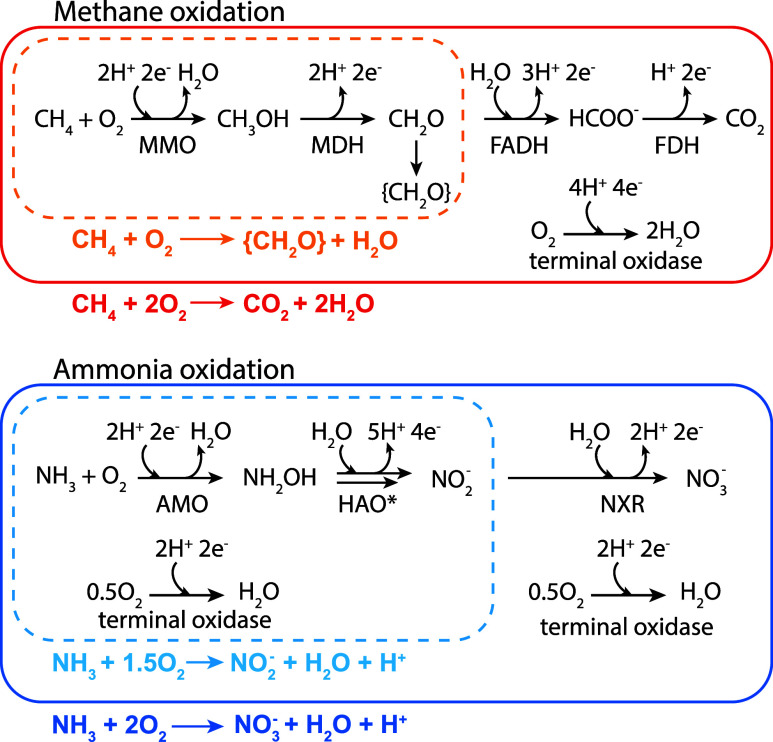 Figure 1
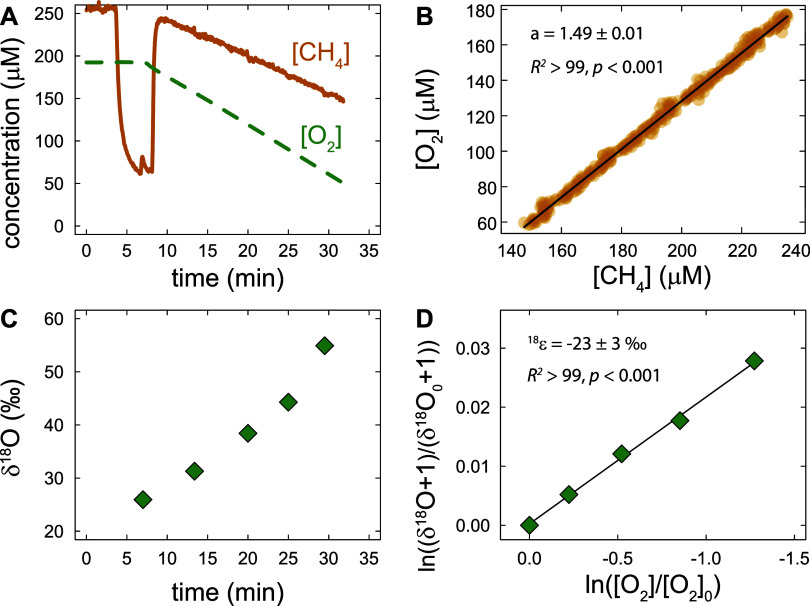 Figure 2
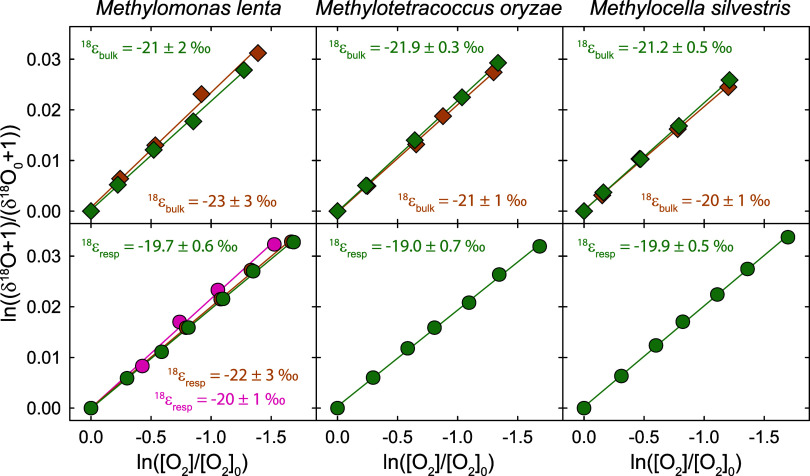 Figure 3
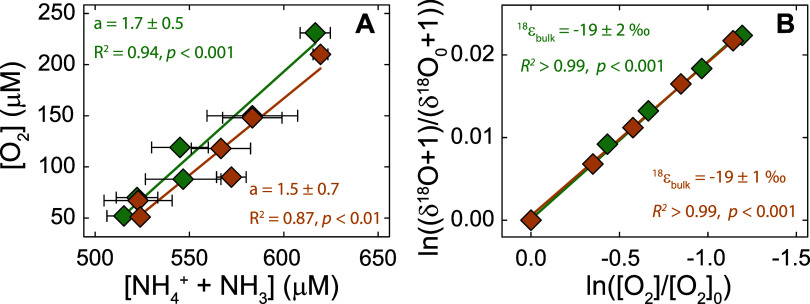 Figure 4
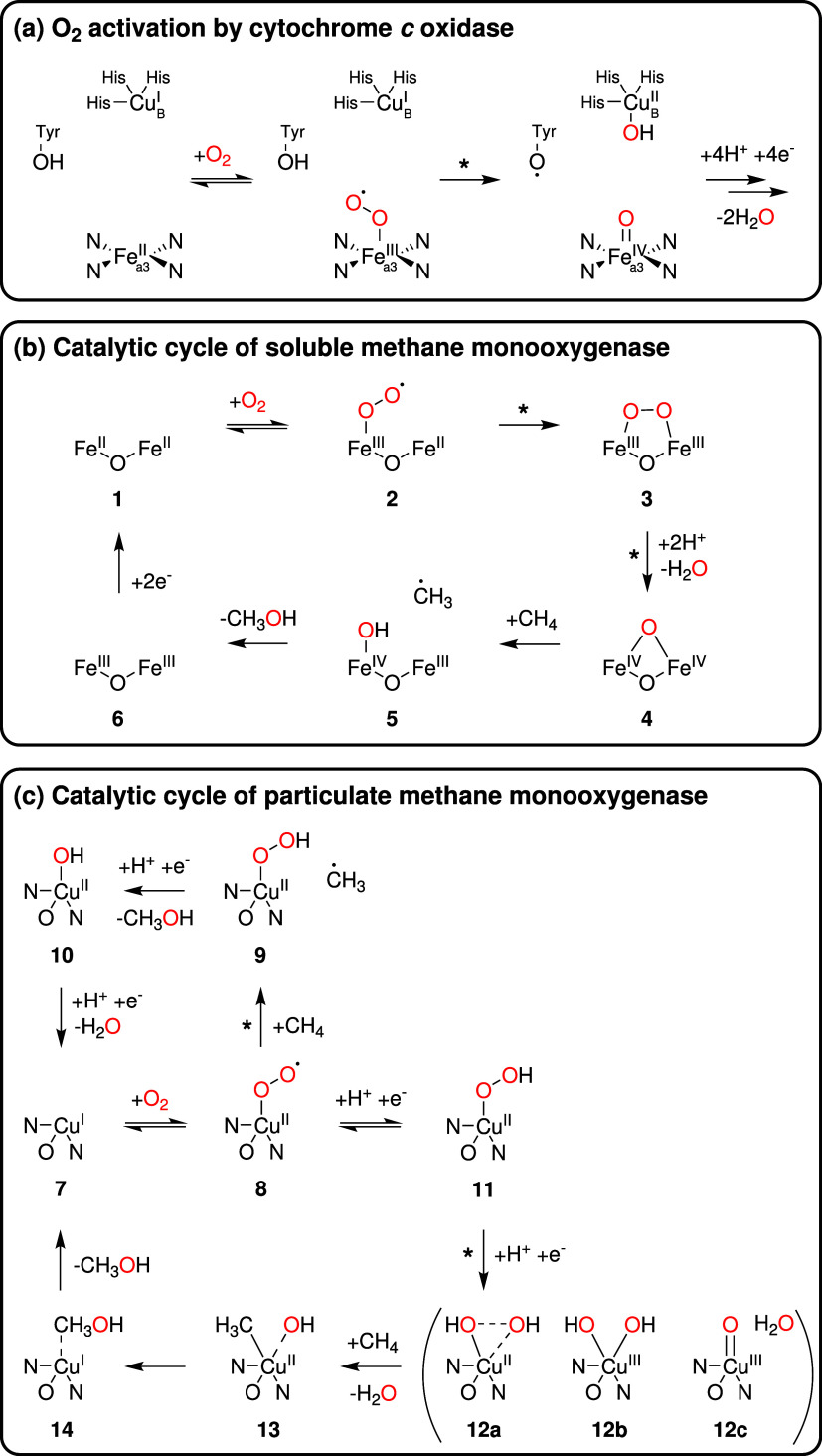 Figure 5
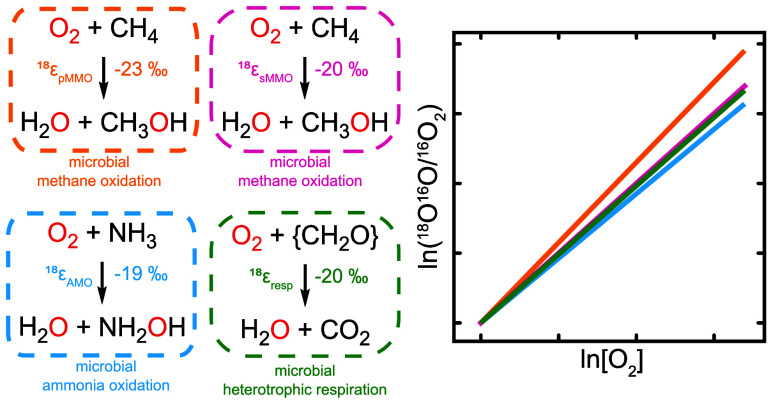 Figure 6
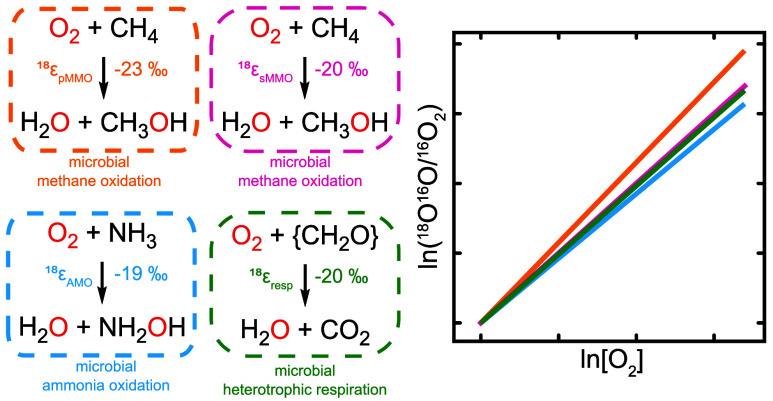 Figure 7
 Figure 8
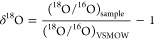 Figure 9
 Figure 10
 Figure 11
 Figure 12
Peer Reviews
No public reviews on file for this paper yet. If you reviewed it on a platform where reviews are public (OpenReview, ICLR, NeurIPS, ICML), you can paste yours below so the community can read it here.
Videos
No videos yet. Explain this paper in a talk, walkthrough, or lecture? Add one.
Taxonomy
TopicsMarine and coastal ecosystems · Microbial Community Ecology and Physiology · Ocean Acidification Effects and Responses