Fission yeast Whi5 represses MBF-dependent transcription in quiescent cells
Celia Gálvez-Merchán, Rafael López-San Segundo, M. Belén Suárez, Daniel González-Álvarez, José Ayté, Livia Pérez-Hidalgo, Sergio Moreno

TL;DR
The study shows that in fission yeast, the Whi5 protein represses MBF-dependent genes during quiescence by recruiting a histone deacetylase complex.
Contribution
The paper demonstrates that Whi5 physically interacts with MBF and Clr6-I to repress transcription in quiescent fission yeast cells.
Findings
Whi5 accumulates in the nucleus under nitrogen starvation and represses MBF-dependent genes.
Whi5 interacts with MBF and the Clr6-I histone deacetylase complex.
Whi5 is required for the interaction between MBF and Clr6-I to repress gene expression.
Abstract
When cells arrest in G1 to enter quiescence, the transcriptional machinery that drives the G1/S transition must be inactivated. In budding yeast and mammals, this repression is mediated by the Whi5 and Retinoblastoma (Rb) proteins, which inhibit the SBF and E2F transcription factors, respectively. In fission yeast, the MBF complex is functionally analogous to SBF and E2F, and Whi5/Mug54 has been predicted to act as a G1/S transcriptional repressor. Here, we show that upon nitrogen starvation, Whi5 accumulates in the nucleus and is required to repress MBF-dependent genes during quiescence. Mass spectrometry and bimolecular fluorescence complementation (BiFC) demonstrate that Whi5 physically associates with components of both the MBF complex and the histone deacetylase Clr6-I complex. Moreover, Whi5 is required for the interaction between MBF and Clr6-I, supporting a model in which Whi5…
Genes, proteins, chemicals, diseases, species, mutations and cell lines named across the full text — each resolved to its canonical identifier and authoritative record.
Click any figure to enlarge with its caption.
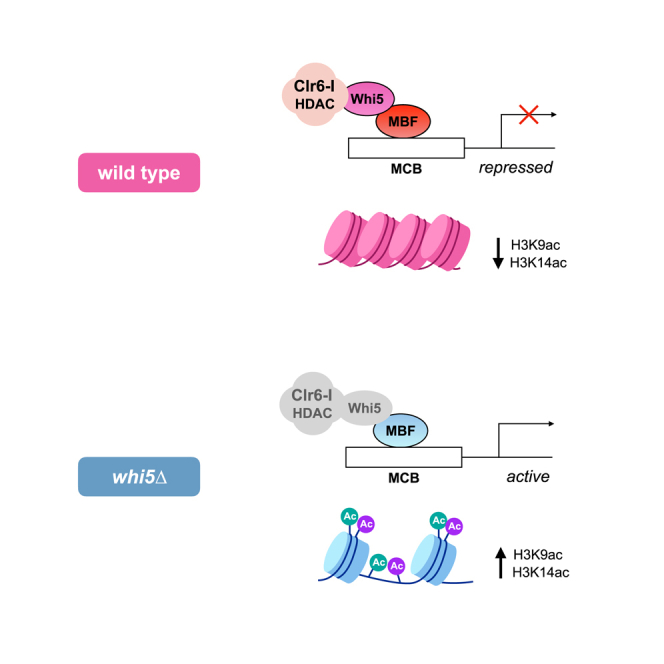 Figure 1
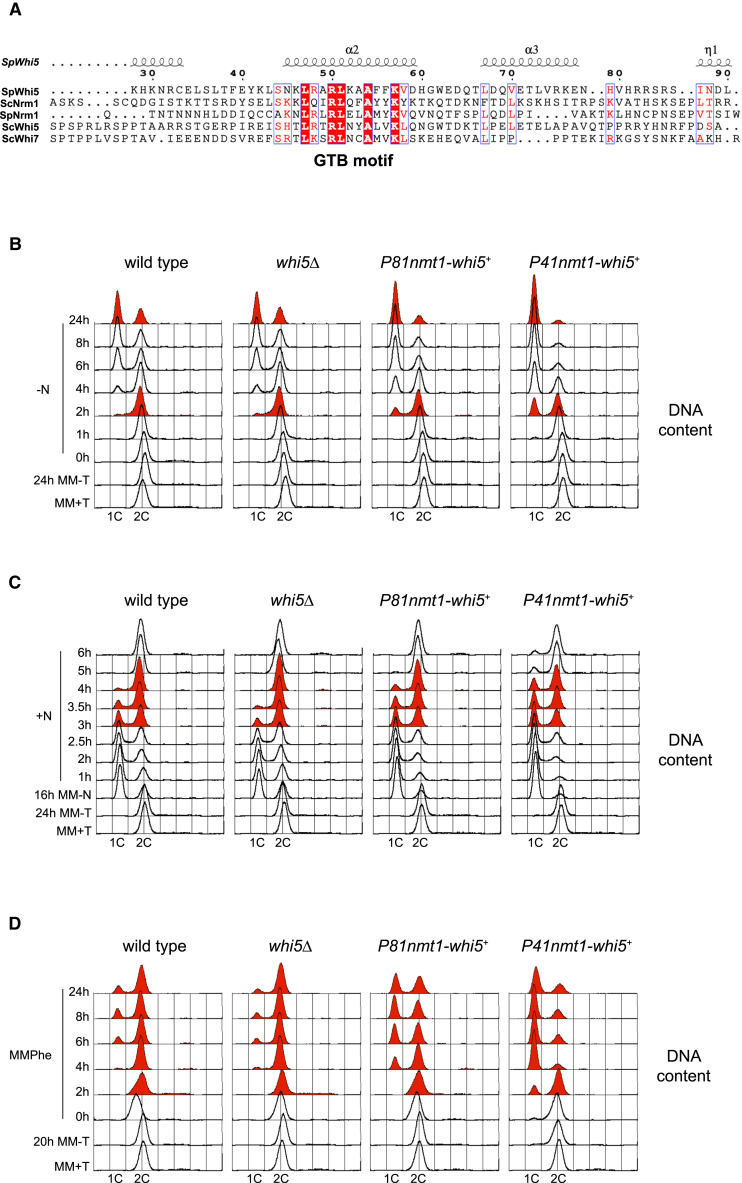 Figure 2
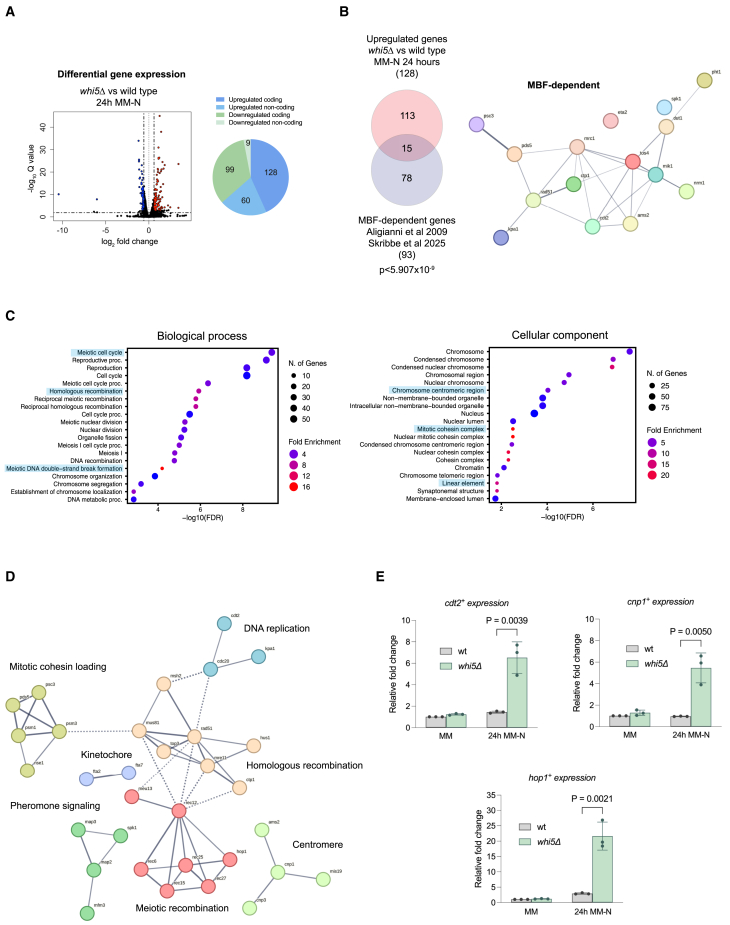 Figure 3
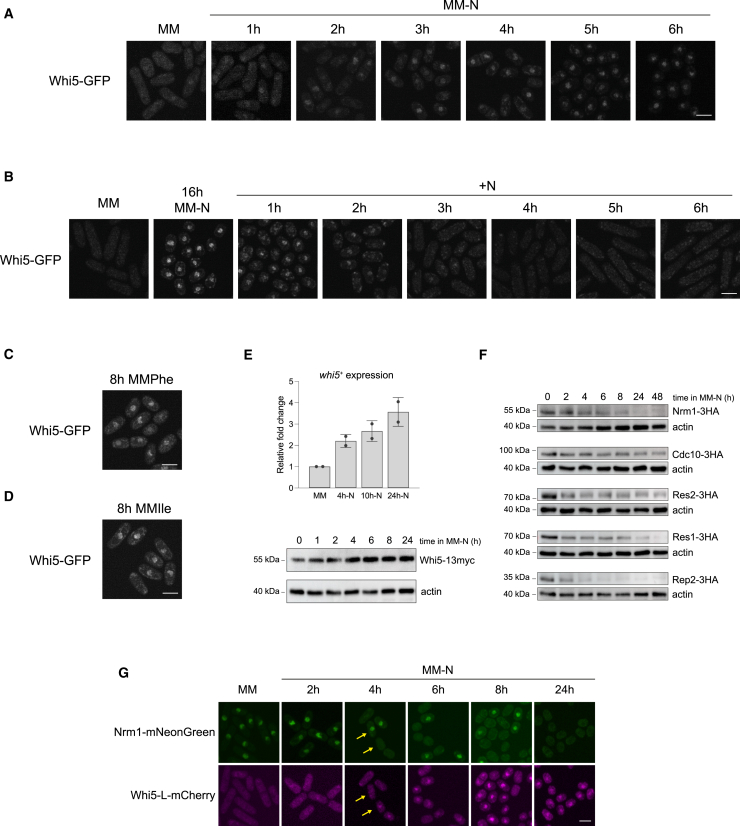 Figure 4
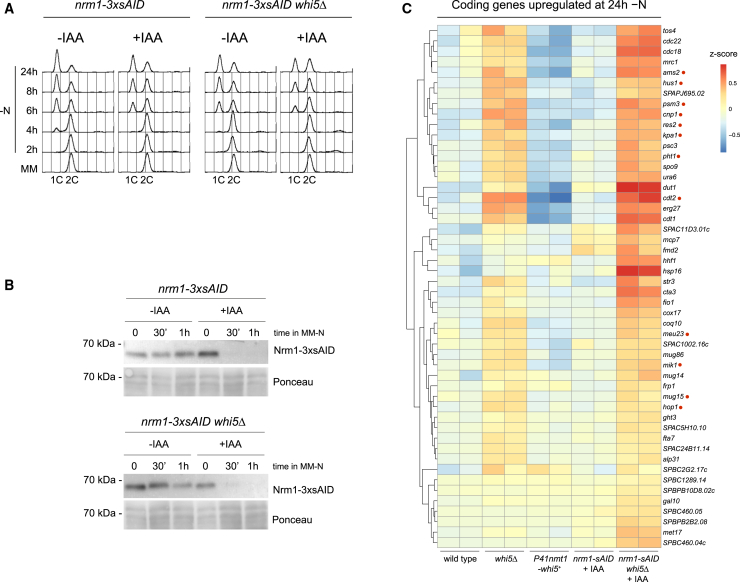 Figure 5
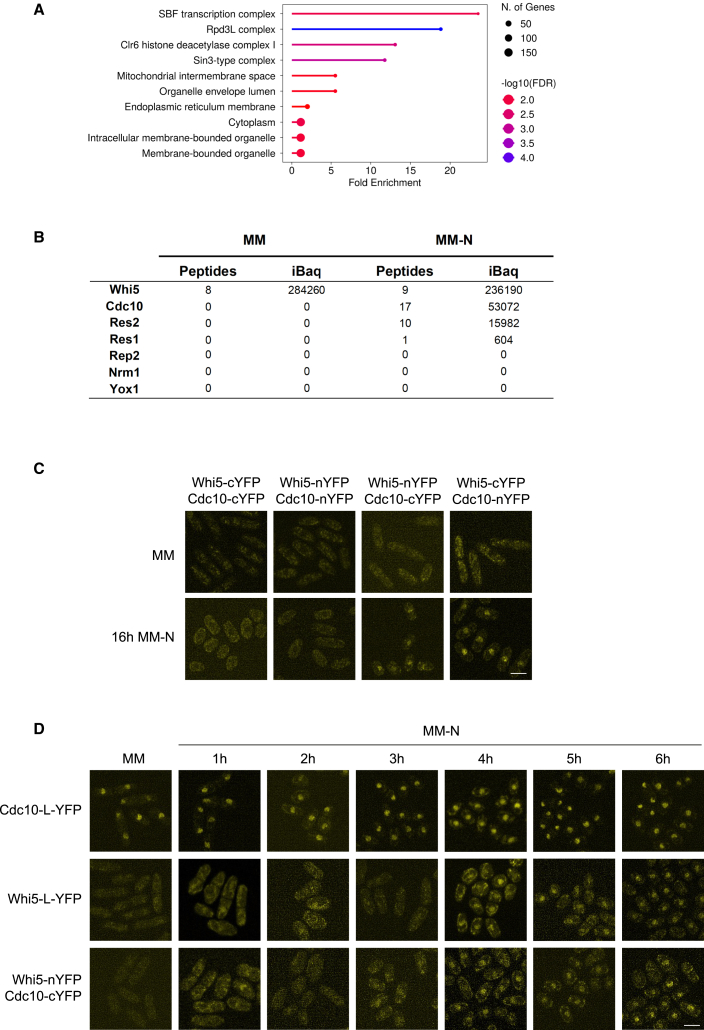 Figure 6
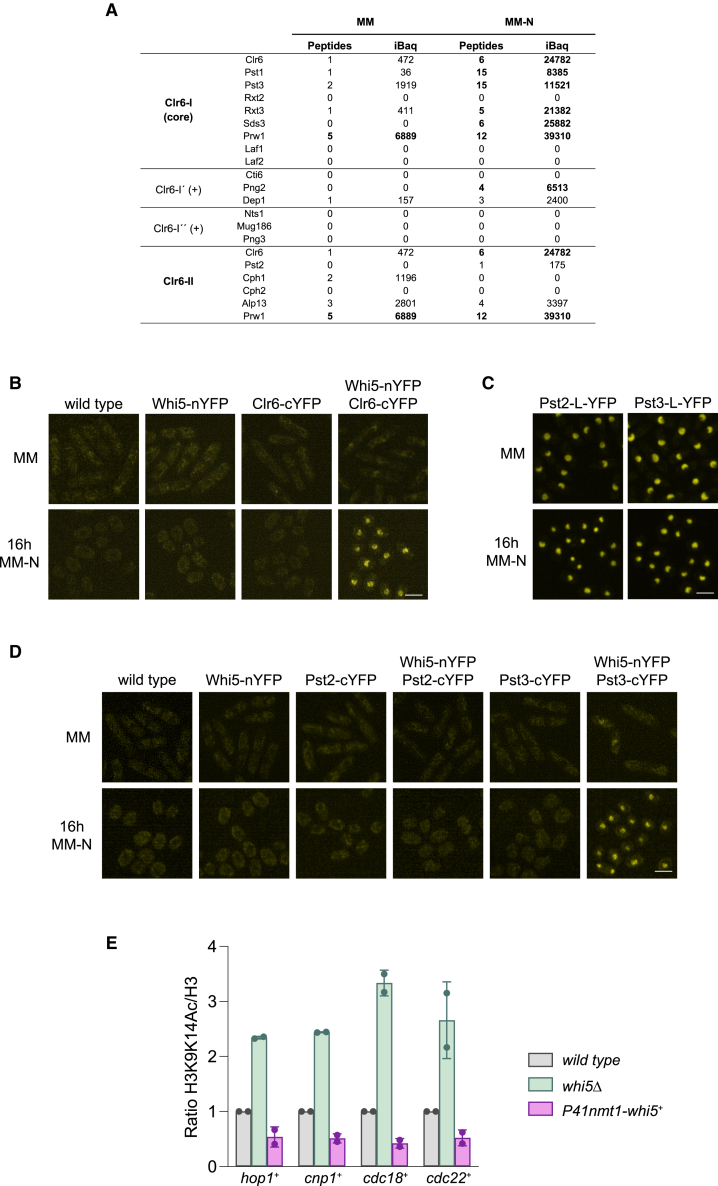 Figure 7
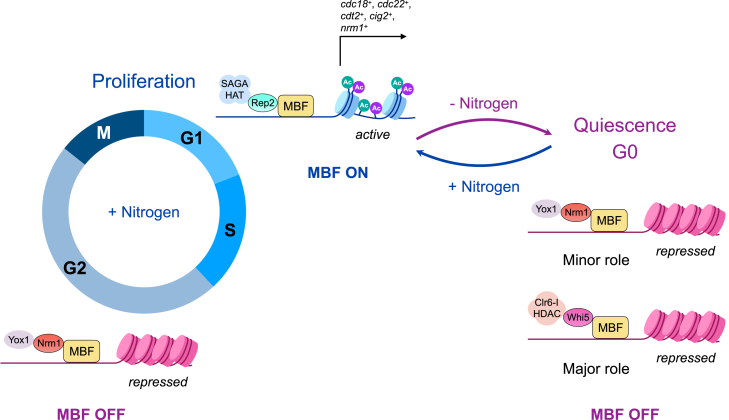 Figure 8
Peer Reviews
No public reviews on file for this paper yet. If you reviewed it on a platform where reviews are public (OpenReview, ICLR, NeurIPS, ICML), you can paste yours below so the community can read it here.
Videos
No videos yet. Explain this paper in a talk, walkthrough, or lecture? Add one.
Taxonomy
TopicsGenomics and Chromatin Dynamics · Developmental Biology and Gene Regulation · Cancer-related Molecular Pathways