Preclinical drug screen identifies WEE1 inhibitor and vinca alkaloid as a combination treatment concept for Li-Fraumeni syndrome medulloblastoma
Anna S. Kolodziejczak, Florian Selt, Heike Peterziel, Nora Jamaladdin, Norman Mack, Kendra Maaß, Chris Meulenbroeks, Romain Sigaud, Christel Herold-Mende, Ahmed El Damaty, Jürgen Burhenne, Shunya Ohmura, Tim Holland-Letz, Lena M. Kutscher, Aurélie Ernst, Pei-Chi Wei

TL;DR
A drug screen found that combining a WEE1 inhibitor with vincristine could be a safe and effective treatment for medulloblastoma in Li-Fraumeni syndrome patients.
Contribution
Identified a novel combination therapy using a WEE1 inhibitor and vincristine for TP53-mutant medulloblastoma in Li-Fraumeni syndrome.
Findings
The combination of adavosertib and vincristine showed high activity against TP53-mutant medulloblastoma cells.
WEE1 inhibition reduced tumor growth in both in vitro and in vivo models of TP53-mutant medulloblastoma.
The drug combination exhibited low genotoxicity in LFS fibroblasts and mouse models.
Abstract
Li-Fraumeni syndrome (LFS) is characterized by constitutional pathogenic TP53 mutation and increased risk of cancer development, including Sonic Hedgehog-activated medulloblastoma (SHH-MB). In LFS patients, radiation and DNA-damaging agents can exhibit lower efficiency and cause secondary malignancies. To identify efficacious, safe chemotherapeutic approaches for LFS-associated SHH-MB, 333 compounds were screened in in vitro TP53mut brain tumor cell lines. The combination of WEE1 inhibitor adavosertib and vinca alkaloid vincristine demonstrated the highest activity, which was validated in TP53mut SHH-MB patient-derived organoids. Low genotoxicity of these compounds was determined in vitro in LFS fibroblasts, and in vivo in the LFS mouse model. Despite the drugs’ limited efficacy in the in vivo PDX model, WEE1 knockdown led to significant growth reduction in in vitro and in vivo TP53mut…
Genes, proteins, chemicals, diseases, species, mutations and cell lines named across the full text — each resolved to its canonical identifier and authoritative record.
Click any figure to enlarge with its caption.
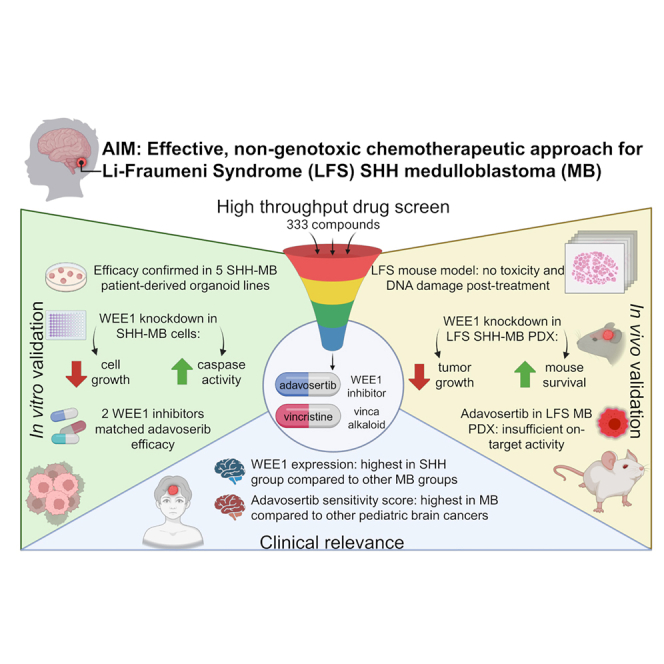 Figure 1
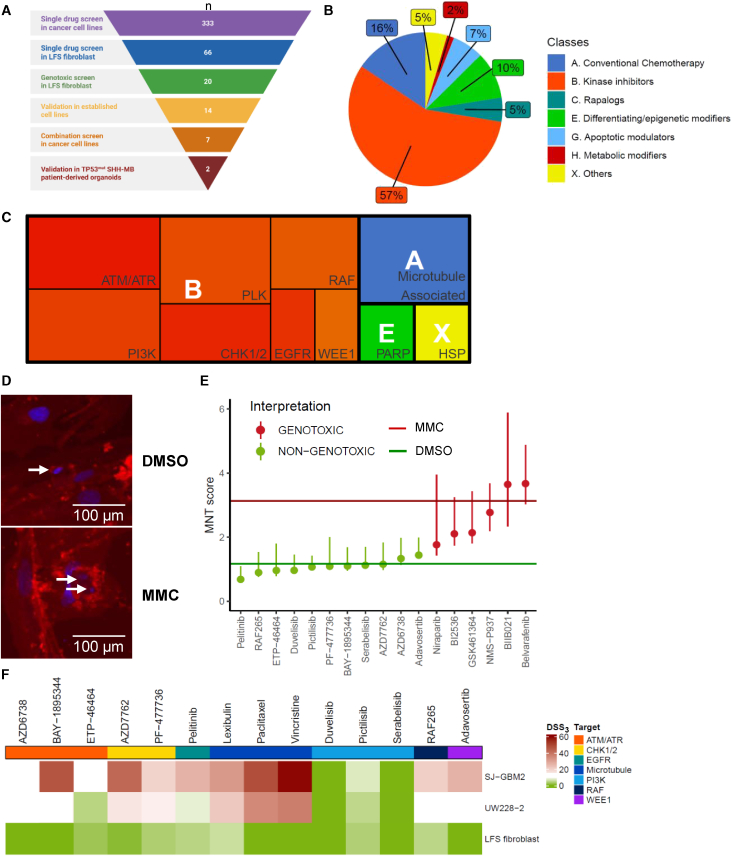 Figure 2
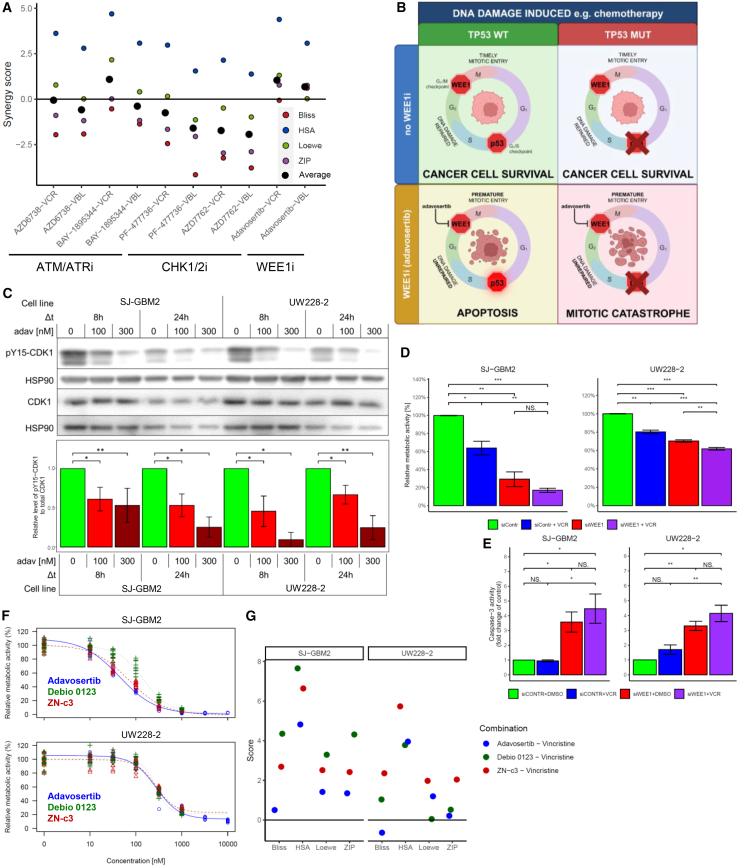 Figure 3
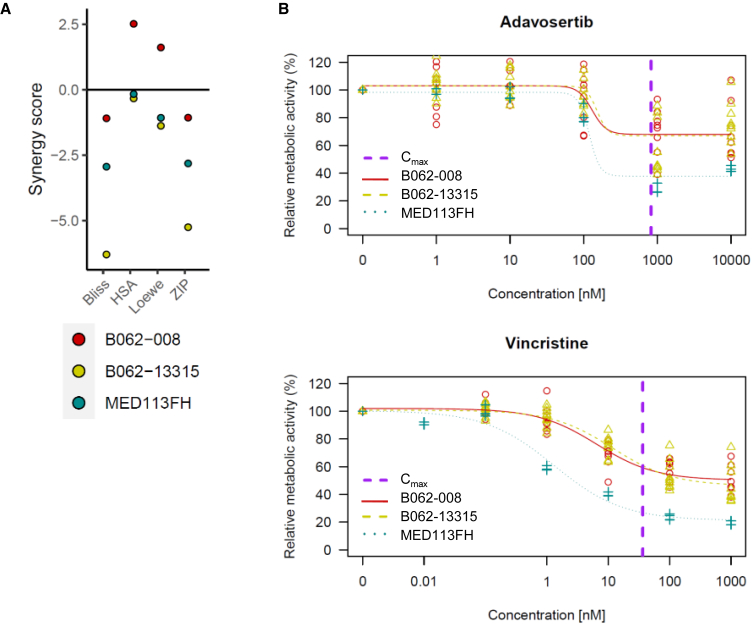 Figure 4
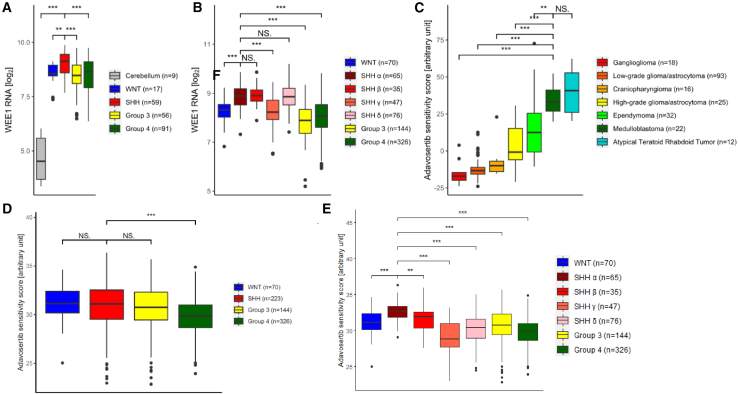 Figure 5
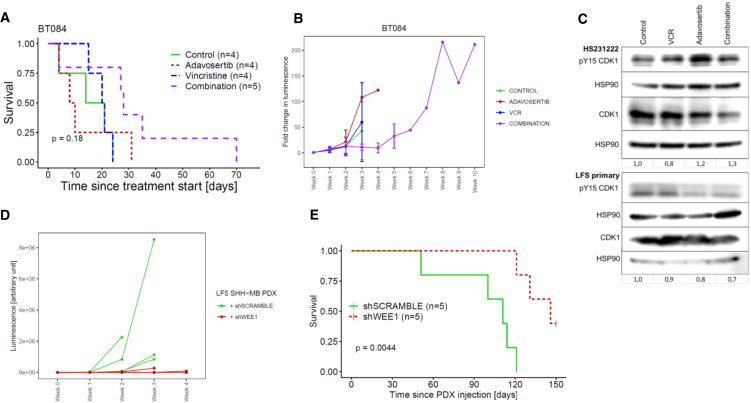 Figure 6
Peer Reviews
No public reviews on file for this paper yet. If you reviewed it on a platform where reviews are public (OpenReview, ICLR, NeurIPS, ICML), you can paste yours below so the community can read it here.
Videos
No videos yet. Explain this paper in a talk, walkthrough, or lecture? Add one.
Taxonomy
TopicsHedgehog Signaling Pathway Studies · Cancer-related Molecular Pathways · Telomeres, Telomerase, and Senescence