FGFR signaling and neddylation facilitate SARS-CoV-2 infection by modulating interferon induction and viral entry, respectively
Alberto Felix-Lopez, Joaquin Lopez-Orozco, Mohamed Elaish, Nawell Fayad, Zaikun Xu, Tekeleselassie Woldemariam, Bardes B. Hassan, Rashmi Panigrahi, Juveriya Qamar Khan, Megha Rohamare, Irv Mayers, J.N. Mark Glover, Joyce A. Wilson, Darryl Falzarano, Anil Kumar, Tom C. Hobman

TL;DR
This study identifies host factors NAE1 and FGFR1 that help SARS-CoV-2 infect cells and suggests targeting them as a potential treatment for COVID-19.
Contribution
The study discovers NAE1 and FGFR1 as host dependency factors for SARS-CoV-2 and shows that their inhibition reduces viral replication and lung damage.
Findings
Inhibitors of NAE1 and FGFR1 reduce replication of SARS-CoV-2 variants in human cells.
NAE1 supports early stages of infection, likely viral entry, while FGFR1 suppresses interferon induction.
Inhibiting NAE1 and FGFR1 decreases viral load and lung pathology in a murine model of severe COVID-19.
Abstract
SARS-CoV-2 is the causative agent of COVID-19, and although vaccines have reduced disease severity, emerging variants remain a significant public health issue. Broadly effective therapeutics, particularly those targeting host pathways essential for coronavirus infection, are still needed. Here, we used a CRISPR knockout screen to identify druggable host factors required for SARS-CoV-2 infection. The screen revealed NAE1 and FGFR1 as key contributors to infection. Inhibitors, either FDA-approved or those in clinical trials, of these pathways reduced replication of both ancestral and contemporary viral variants. Mechanistic studies showed that FGFR1 promotes viral replication through downstream MEK/ERK signaling, while neddylation appears to support viral entry or infectivity rather than replication itself. In a murine model of severe COVID-19, inhibitors of NAE1 and FGFR1 significantly…
Genes, proteins, chemicals, diseases, species, mutations and cell lines named across the full text — each resolved to its canonical identifier and authoritative record.
Click any figure to enlarge with its caption.
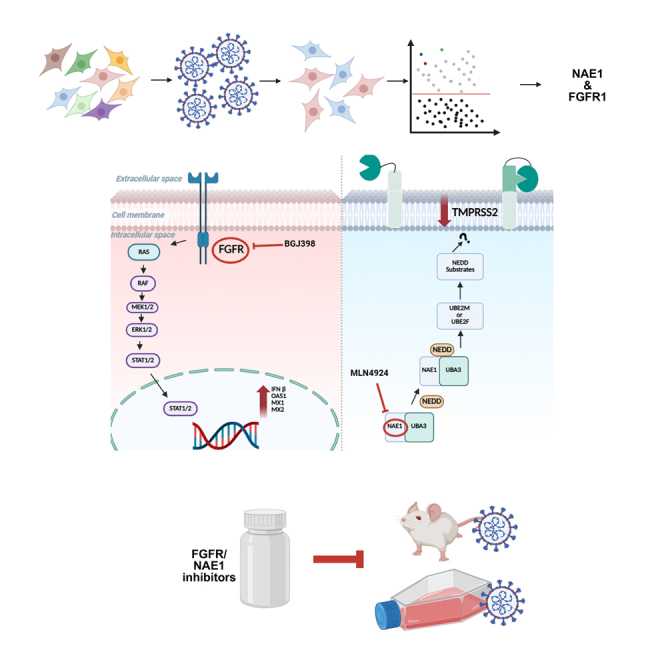 Figure 1
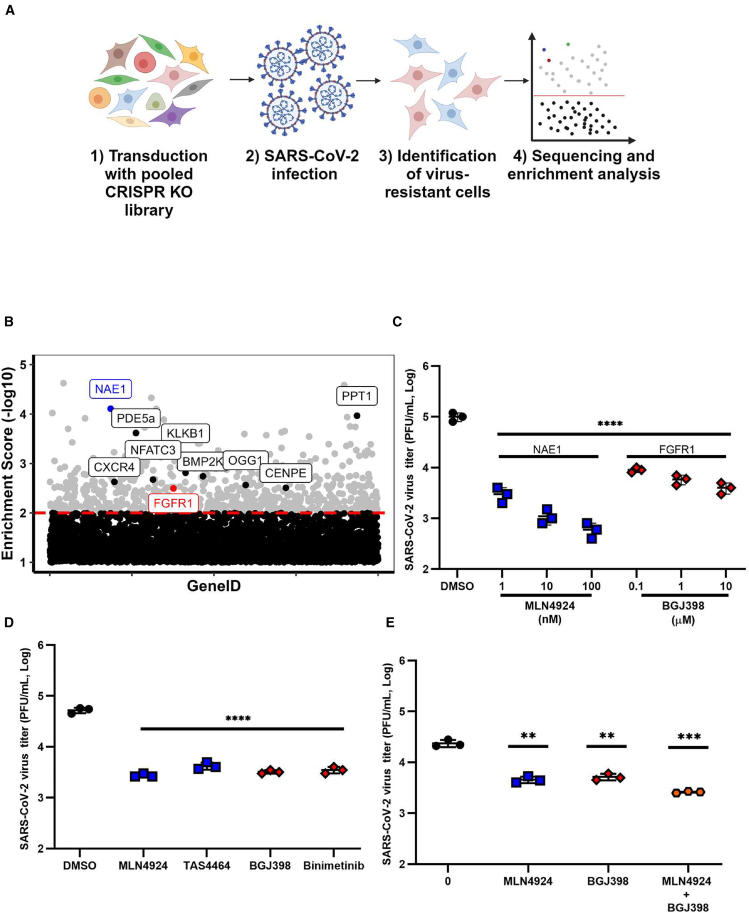 Figure 2
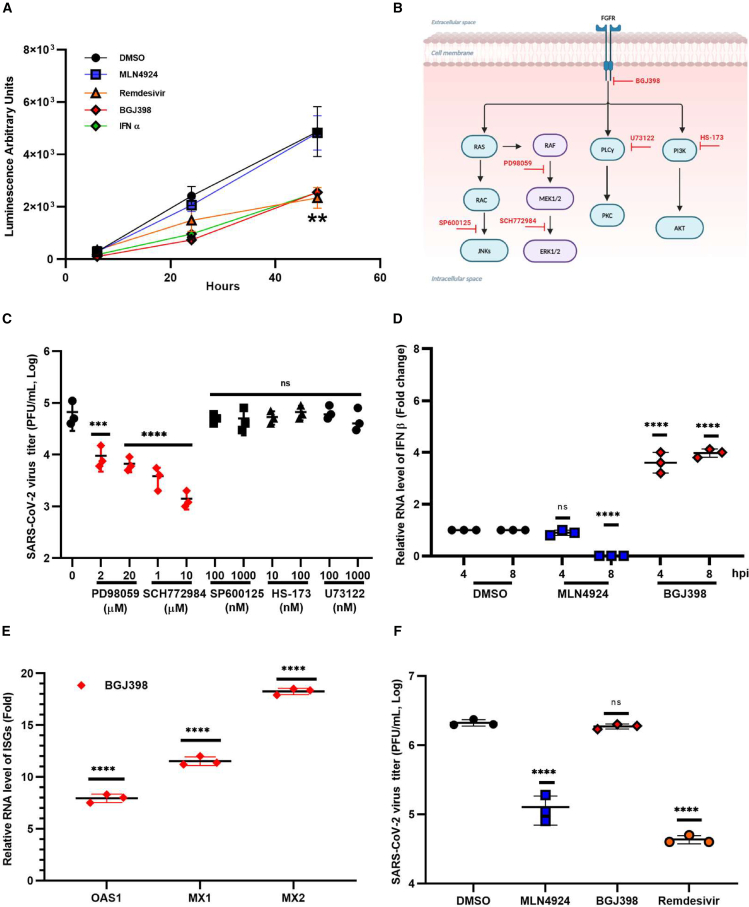 Figure 3
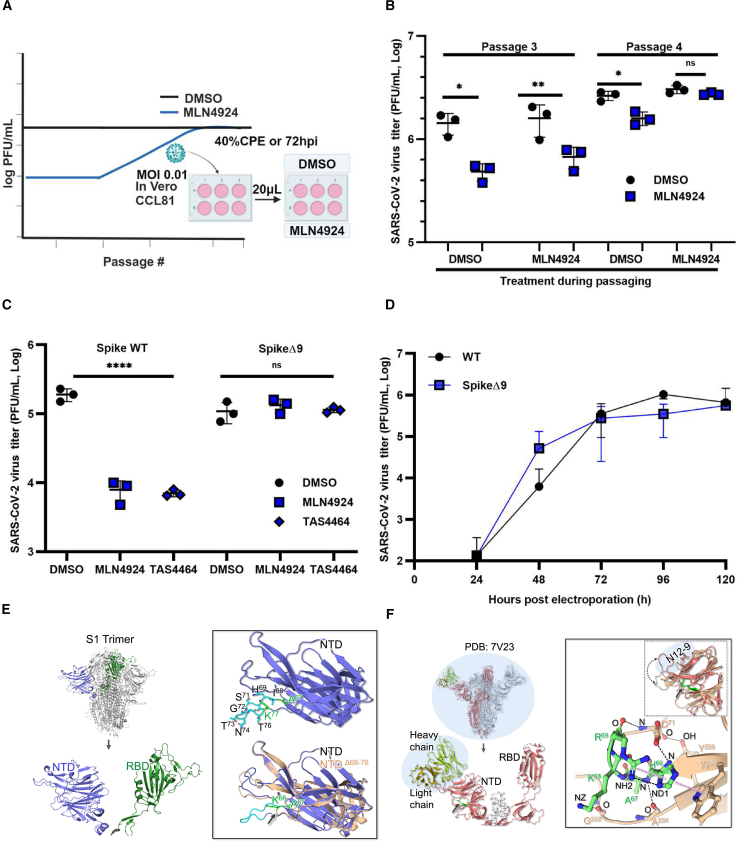 Figure 4
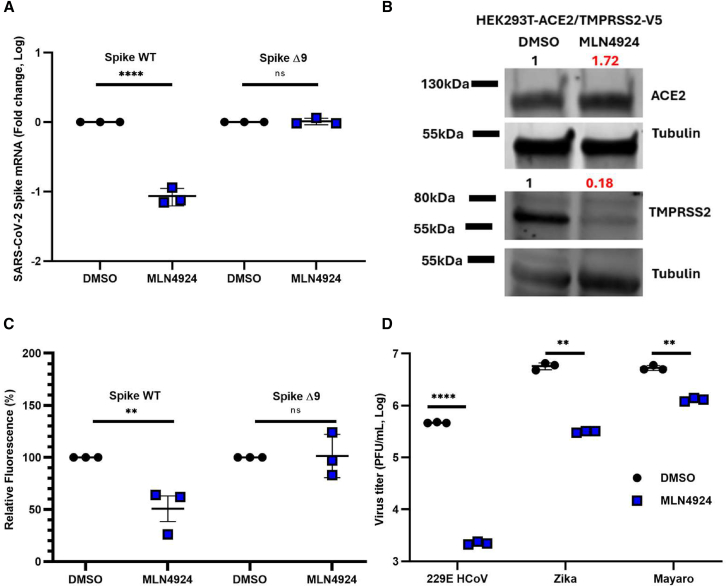 Figure 5
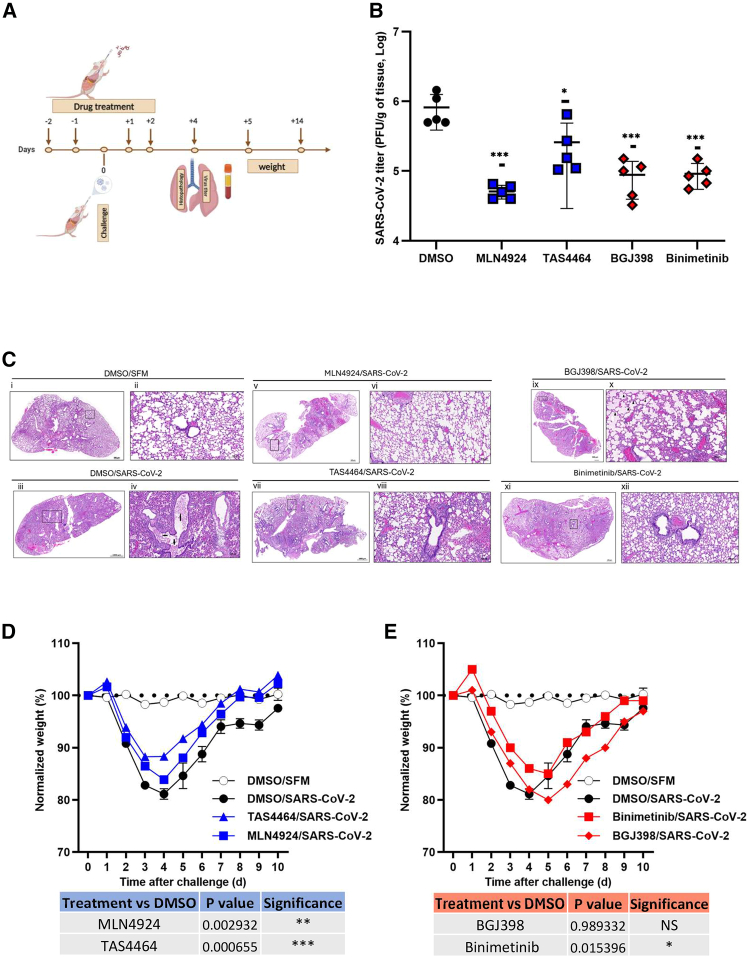 Figure 6
Peer Reviews
No public reviews on file for this paper yet. If you reviewed it on a platform where reviews are public (OpenReview, ICLR, NeurIPS, ICML), you can paste yours below so the community can read it here.
Videos
No videos yet. Explain this paper in a talk, walkthrough, or lecture? Add one.
Taxonomy
TopicsCOVID-19 Clinical Research Studies · SARS-CoV-2 and COVID-19 Research · interferon and immune responses