A machine learning model of lamina propria fibrosis in eosinophilic esophagitis for prediction of fibrostenotic disease
Priyadharshini Sivasubramaniam, Abdelrahman Shabaan, Rofyda Elhalaby, Bashar Hasan, Ameya A. Patil, Saadiya Nazli, Adilson DaCosta, Byoung Uk Park, Lindsey Smith, Taofic Mounajjed, Stephen M. Lagana, Chamil Codipilly, Puanani Hopson, Imad Absah, Christopher P. Hartley

TL;DR
A machine learning model was developed to predict fibrostenotic disease in eosinophilic esophagitis by analyzing lamina propria fibrosis in biopsy samples.
Contribution
The novel contribution is an AI model that objectively quantifies lamina propria fibrosis and predicts fibrostenosis better than traditional pathology methods.
Findings
AI fibrosis scores correlated strongly with pathologist assessments (Spearman's Rs = 0.64–0.69).
AI scores predicted fibrostenotic outcomes better than pathologists, even in limited biopsy samples.
Higher AI scores were linked to rings, strictures, and need for dilatation (p < 0.01).
Abstract
Eosinophilic esophagitis (EoE) is a chronic immune-mediated disease that can progress to fibrostenotic complications. Lamina propria fibrosis (LPF) plays a critical role in this progression but is difficult to assess reliably in routine biopsies. We aimed to develop and validate an artificial intelligence (AI) model to quantify LPF on hematoxylin and eosin (H&E)-stained slides and to evaluate its ability to predict fibrostenotic disease. We used a cloud-based platform (Aiforia Inc., Cambridge, MA, USA) to train a supervised AI model to recognize several histological features of EoE, including LPF. Our validation cohort consisted of 213 esophageal biopsy whole-slide images, including 100 adult and 113 pediatric samples with mucosal eosinophilia, which were prospectively evaluated in our anatomic pathology service between 2020 and 2021 using a standardized histological scoring system.…
Genes, proteins, chemicals, diseases, species, mutations and cell lines named across the full text — each resolved to its canonical identifier and authoritative record.
Click any figure to enlarge with its caption.
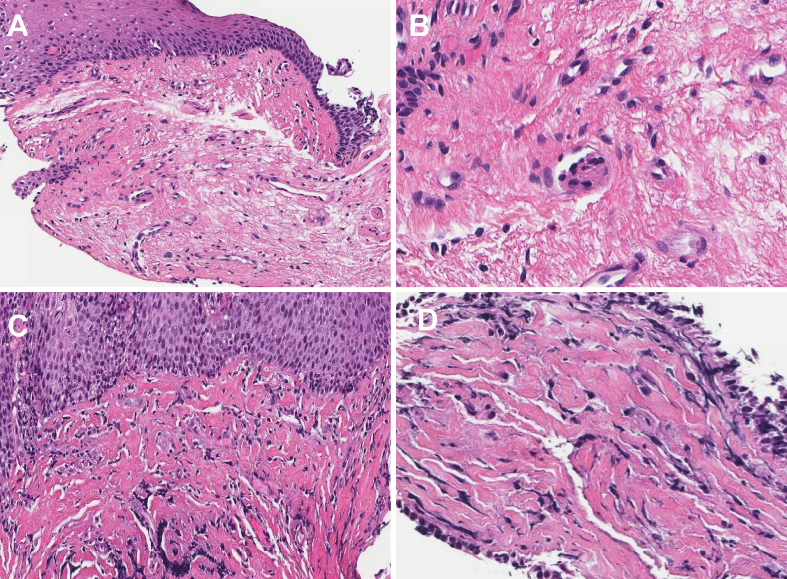 Figure 1
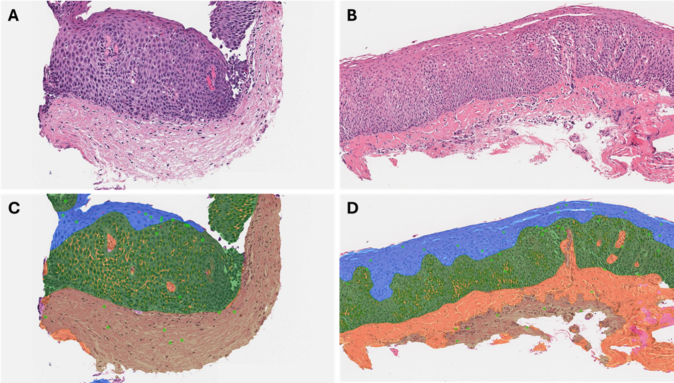 Figure 2
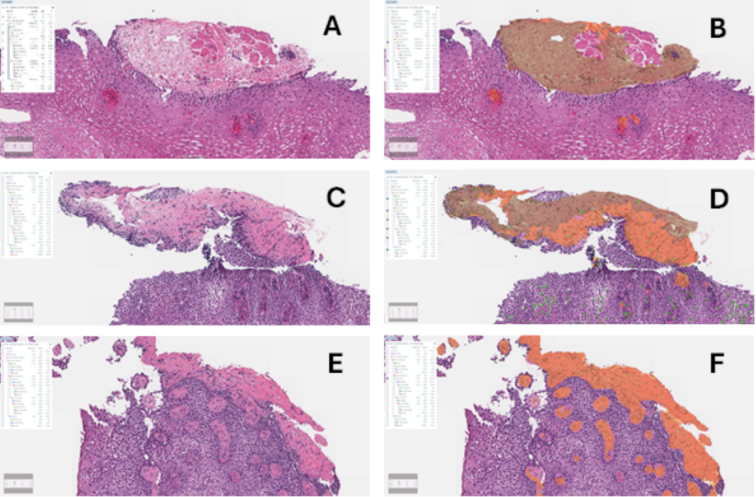 Figure 3
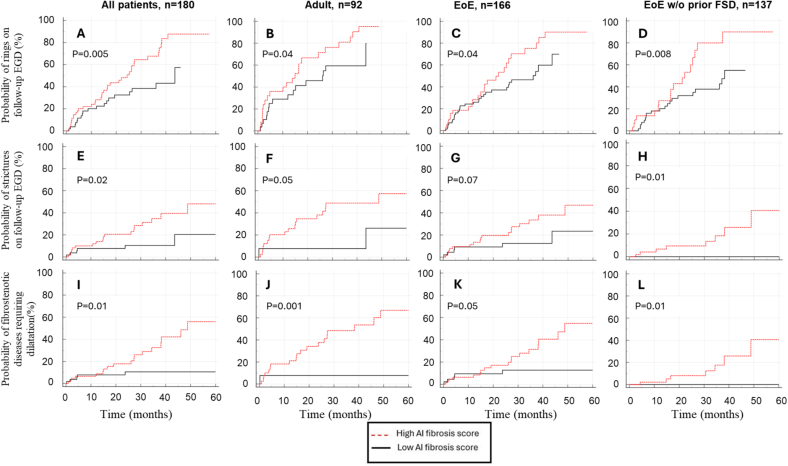 Figure 4
Peer Reviews
No public reviews on file for this paper yet. If you reviewed it on a platform where reviews are public (OpenReview, ICLR, NeurIPS, ICML), you can paste yours below so the community can read it here.
Videos
No videos yet. Explain this paper in a talk, walkthrough, or lecture? Add one.
Taxonomy
TopicsEosinophilic Esophagitis · Esophageal Cancer Research and Treatment · Eosinophilic Disorders and Syndromes