Improving Lifelong Comprehensive Care Coordination in Nephropathic Cystinosis: Multidisciplinary Perspectives
Ladan Golestaneh, Elizabeth G. Ames, Maya H. Doyle, Cybele Ghossein, Paul C. Grimm, Jennifer L. Hewlett, Alaena Lim, Lauren S. Marzinelli, Kimberly J. Schmidt, Bonnie Smeryage, Joshua J. Zaritsky, Frederick J. Kaskel

TL;DR
This paper discusses improving long-term care coordination for patients with nephropathic cystinosis, a rare disease, by exploring multidisciplinary approaches to manage its chronic and multiorgan nature.
Contribution
The paper introduces a review of strategies to optimize care delivery and reduce fragmentation in managing cystinosis across patients' lifespans.
Findings
Cystinosis has transitioned from a fatal pediatric disease to a chronic condition requiring lifelong multidisciplinary care.
Nephrologists are increasingly responsible for coordinating care across multiple specialties beyond kidney health.
Current literature lacks guidance on reducing care fragmentation and improving patient and clinician experiences.
Abstract
Nephropathic cystinosis is a rare lysosomal storage disorder characterized by cellular cystine accumulation and progressive multiorgan damage. Before advances in diagnostics, transplantation, and disease-modifying therapy, cystinosis was considered a fatal pediatric disease, with most patients reaching kidney failure by approximately 10 years of age. Life expectancy has now expanded into the 50s and beyond, and the disease has been transformed into a chronic condition with a predominantly extrarenal phenotype in adulthood. Traditionally, nephrologists have played a central role as cystinosis “care quarterbacks” in pediatric settings, and patients often expect this to continue after transitioning to adult care. As such, nephrologists are increasingly tasked with monitoring for and addressing complications in organs other than the kidneys, in addition to coordinating referrals to…
Genes, proteins, chemicals, diseases, species, mutations and cell lines named across the full text — each resolved to its canonical identifier and authoritative record.
Click any figure to enlarge with its caption.
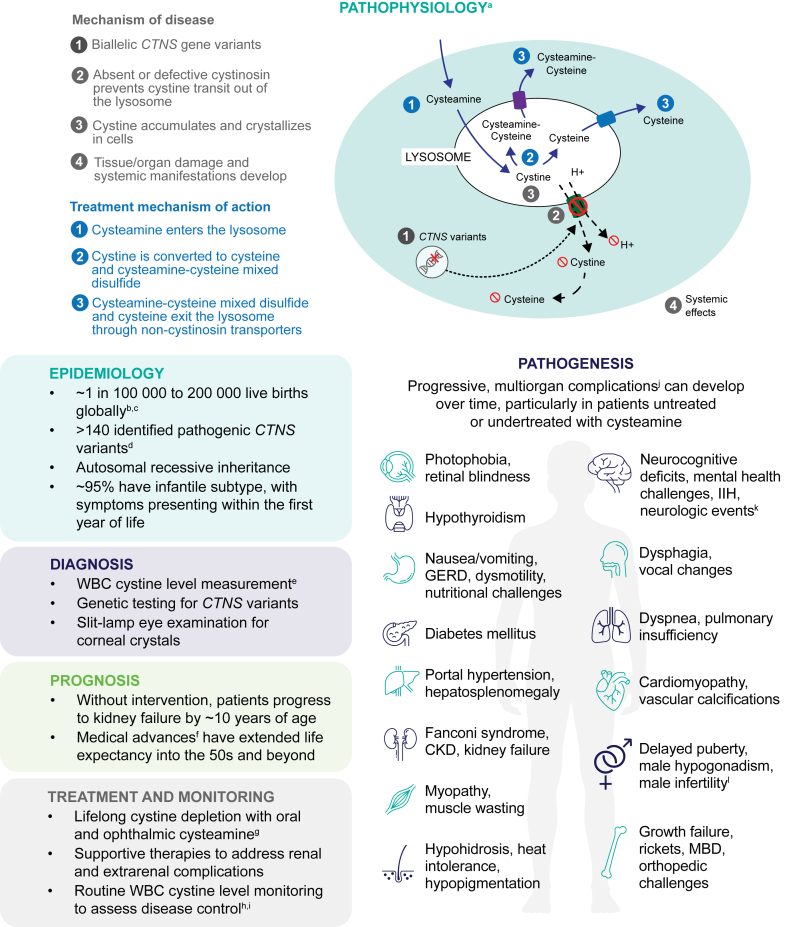 Figure 1
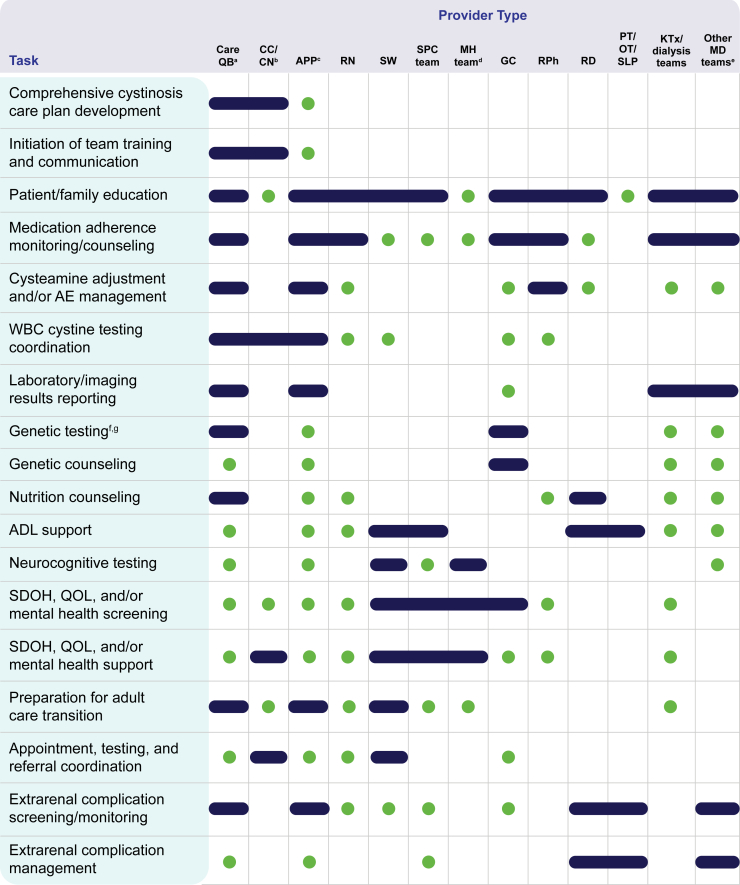 Figure 2
 Figure 3
 Figure 4
Peer Reviews
No public reviews on file for this paper yet. If you reviewed it on a platform where reviews are public (OpenReview, ICLR, NeurIPS, ICML), you can paste yours below so the community can read it here.
Videos
No videos yet. Explain this paper in a talk, walkthrough, or lecture? Add one.
Taxonomy
TopicsBiomedical Research and Pathophysiology · Genetic and rare skin diseases. · Melamine detection and toxicity