Dual‐Criterion Approach Incorporating Historical Information to Seek Accelerated Approval With Application in Time‐to‐Event Group Sequential Trials
Marco Ratta, Gaëlle Saint‐Hilary, Valentine Barboux, Mauro Gasparini, Donia Skanji, Pavel Mozgunov

TL;DR
This paper introduces a new method for drug approval that uses two criteria and historical data to speed up approvals while reducing risks.
Contribution
A novel adaptive group sequential design with dual-criteria and historical information borrowing for accelerated approvals in clinical trials.
Findings
The proposed design includes an early interim analysis using both a surrogate endpoint and a predictive metric.
Historical data can strengthen the predictive criterion for approval decisions.
Simulations show the design controls risks like family-wise error rate effectively.
Abstract
The urgency of delivering novel, effective treatments against life‐threatening diseases has brought various health authorities to allow for Accelerated Approvals (AAs). AA is the “fast track” program where promising treatments are evaluated based on surrogate (short term) endpoints likely to predict clinical benefit. This allows treatments to get an early approval, subject to providing further evidence of efficacy, for example, on the primary (long term) endpoint. Despite this procedure being quite consolidated, a number of conditionally approved treatments do not obtain full approval (FA), mainly due to lack of correlation between surrogate and primary endpoint. This implies a need to improve the criteria for controlling the risk of AAs for noneffective treatments, while maximizing the chance of AAs for effective ones. We first propose a novel adaptive group sequential design that…
Genes, proteins, chemicals, diseases, species, mutations and cell lines named across the full text — each resolved to its canonical identifier and authoritative record.
Click any figure to enlarge with its caption.
 Figure 1
 Figure 2
 Figure 3
 Figure 4
 Figure 5
 Figure 6
 Figure 7
 Figure 8
 Figure 9
 Figure 10
 Figure 11
 Figure 12
 Figure 13
 Figure 14
 Figure 15
 Figure 16
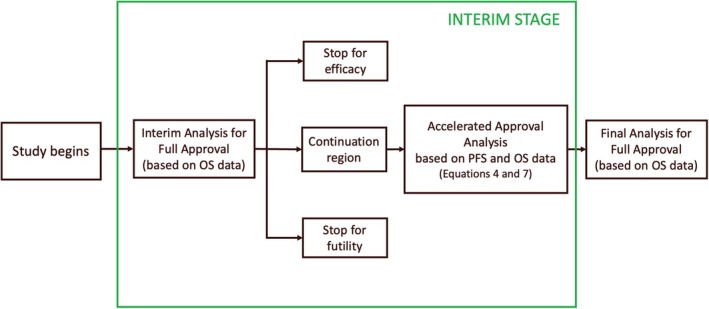 Figure 17
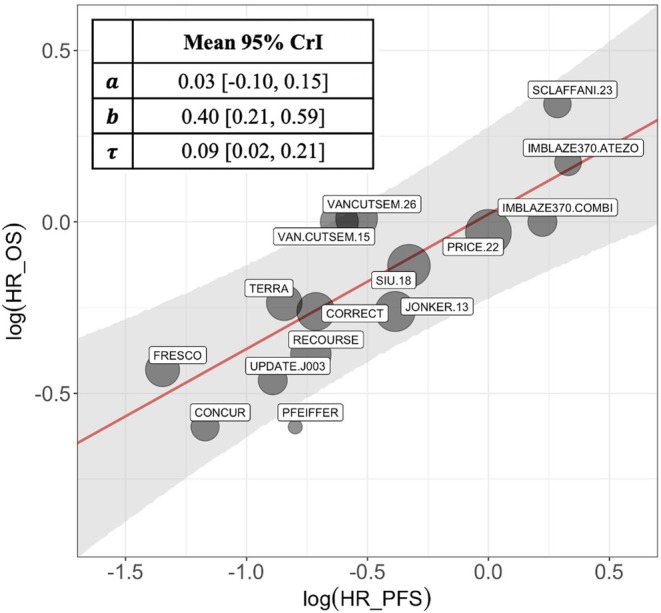 Figure 18
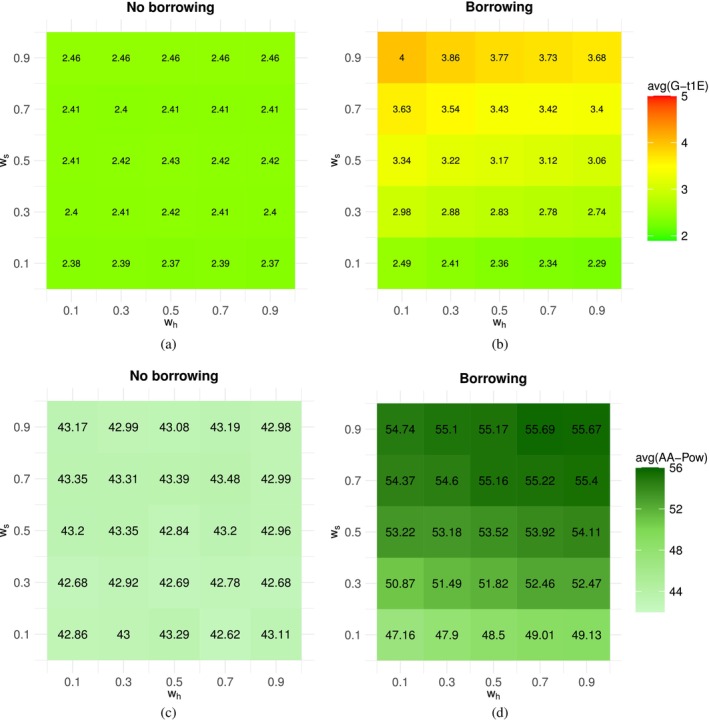 Figure 19
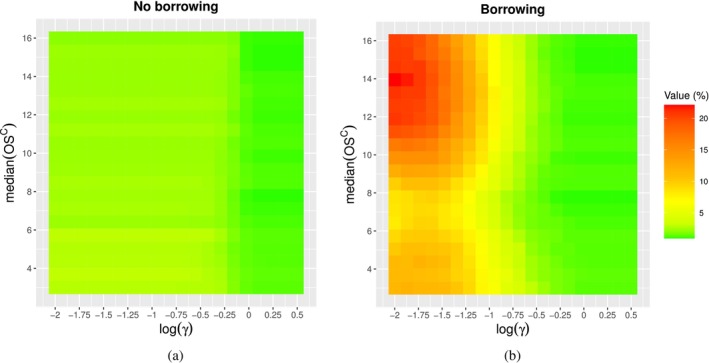 Figure 20
Peer Reviews
No public reviews on file for this paper yet. If you reviewed it on a platform where reviews are public (OpenReview, ICLR, NeurIPS, ICML), you can paste yours below so the community can read it here.
Videos
No videos yet. Explain this paper in a talk, walkthrough, or lecture? Add one.
Taxonomy
TopicsAdvanced Causal Inference Techniques · Statistical Methods in Clinical Trials · Health Systems, Economic Evaluations, Quality of Life