Boosting Reversible Photocontrol of a Photoxenase by an Engineered Conformational Shift
Sabrina Mandl, Janet Sánchez, Miquel Estévez, Astrid Bruckmann, Caroline Hiefinger, Sílvia Osuna, Andrea Hupfeld

TL;DR
Researchers improved the light-controlled activity of an enzyme using engineered amino acids and conformational shifts, achieving a 100-fold regulation factor.
Contribution
A semi-rational enzyme design approach significantly boosted light-regulation efficiency in a heterodimeric photoxenase.
Findings
Mutations at the enzyme's interface increased the light-regulation factor (LRF) for k_cat up to ~100.
Conformational shifts and population productivity changes were linked to improved photocontrol.
Allosteric signal transmission rewiring reduced k_cat but enhanced LRF(k_cat).
Abstract
Our study successfully explores strategies to effectively improve the photocontrol efficiency of light‐sensitive enzymes, dubbed photoxenases, with photoswitchable unnatural amino acids (UAAs). The engineering of photoxenases is a versatile method for the reversible photocontrol in various applications. To boost the photocontrol of an established allosteric and heterodimeric photoxenase based on imidazole glycerol phosphate synthase, we turned from an ineffective tuning of the UAA photochemistry to a semi‐rational enzyme design. Remarkably, mutations at the catalytically important heterodimer interface increased the light‐regulation factor (LRF) for the k cat up to ∼100 with near‐quantitative reversibility. Steady‐state kinetic investigations combined with computationally determined correlation‐based Shortest‐Path‐Map (SPM) analysis and conformational landscapes revealed how…
Genes, proteins, chemicals, diseases, species, mutations and cell lines named across the full text — each resolved to its canonical identifier and authoritative record.
Click any figure to enlarge with its caption.
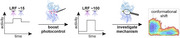 Figure 1
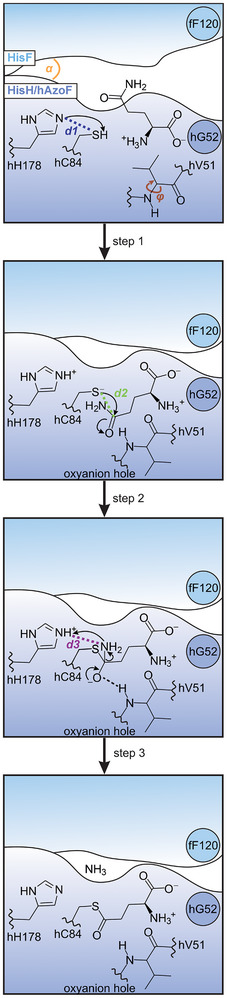 Figure 2
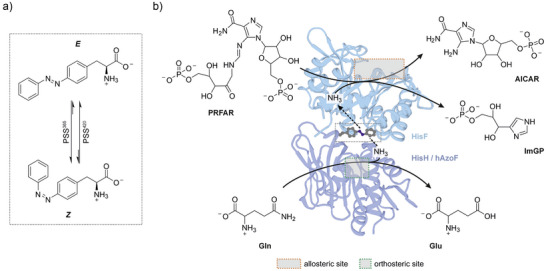 Figure 3
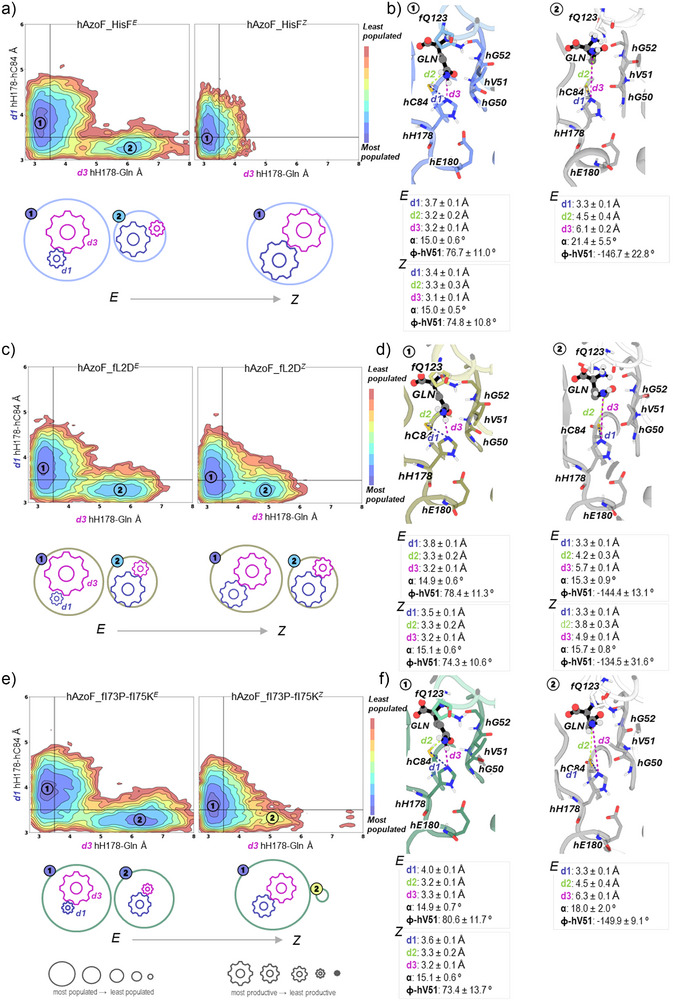 Figure 4
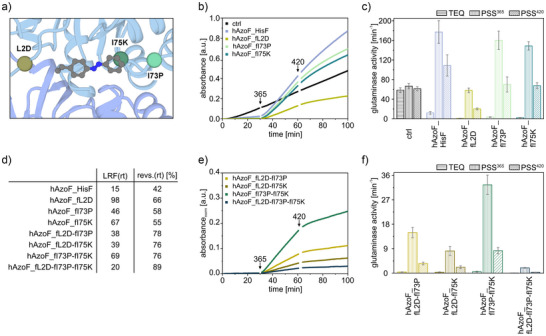 Figure 5
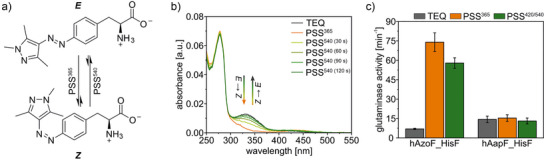 Figure 6
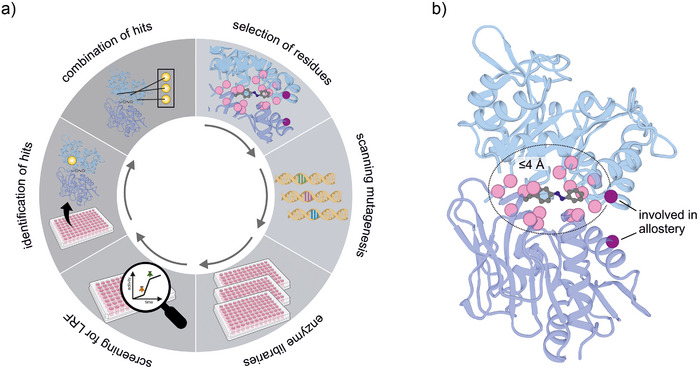 Figure 7
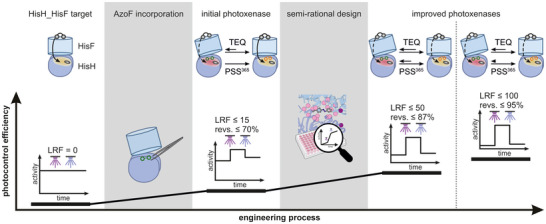 Figure 8
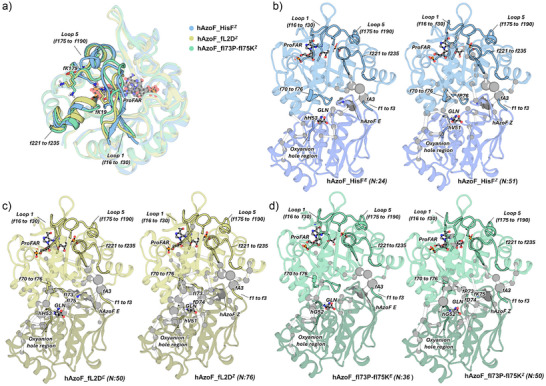 Figure 9
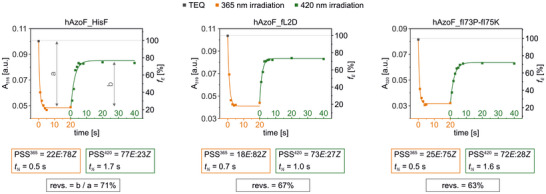 Figure 10
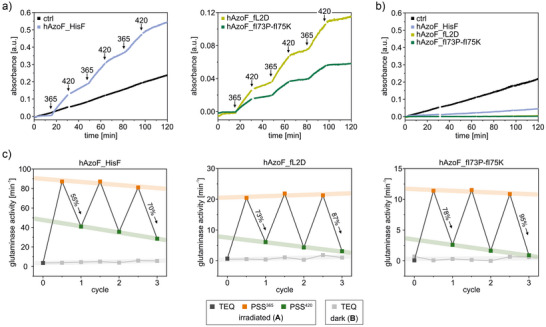 Figure 11
Peer Reviews
No public reviews on file for this paper yet. If you reviewed it on a platform where reviews are public (OpenReview, ICLR, NeurIPS, ICML), you can paste yours below so the community can read it here.
Videos
No videos yet. Explain this paper in a talk, walkthrough, or lecture? Add one.
Taxonomy
TopicsLight effects on plants · Photochromic and Fluorescence Chemistry · bioluminescence and chemiluminescence research