Light‐Induced Orthogonal Reactivity of Photoinitiators from One‐Electron Reduction to Nanocomposites
Max Schmallegger, Mathias Wiech, Georg Gescheidt

TL;DR
This paper explores new uses for photoinitiators beyond polymerization, showing how they can create metal/polymer nanocomposites through light-induced reactions.
Contribution
The paper introduces a novel method using photoinitiators to generate metal/polymer nanocomposites via one-electron reduction.
Findings
Photoinitiators can act as reducing agents for metal salts under specific conditions.
Light-induced reactions produce plasmonic polymer-metal nanocomposites in alcoholic or aqueous solutions.
Abstract
Photoinitiators for radical polymerization have been well established. This minireview indicates a palette of applications beyond their original scope. Depending on the experimental conditions, the primary radicals generated upon photolysis act as reducing agents for metal salts. This opens new possibilities for using photoinitiators as versatile and convenient tools for the preparation of metal/polymer nanocomposites. Irradiating a mixture of a photoinitiator, a metal salt, and a monomer in an alcoholic solvent or aqueous solution provides a plasmonic polymer‐metal nanocomposite in a highly convenient way.
Genes, proteins, chemicals, diseases, species, mutations and cell lines named across the full text — each resolved to its canonical identifier and authoritative record.
Click any figure to enlarge with its caption.
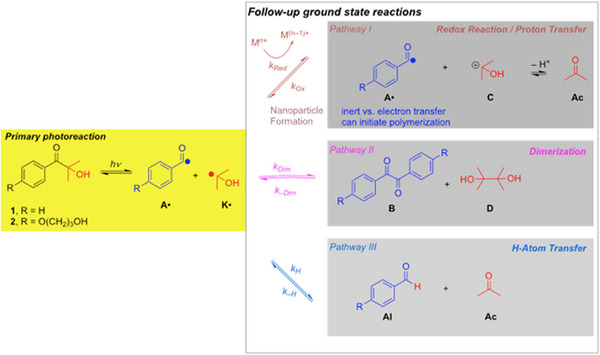 Figure 1
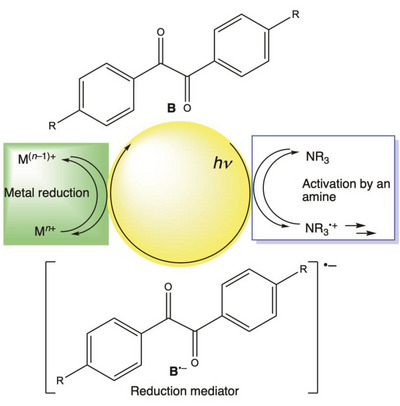 Figure 2
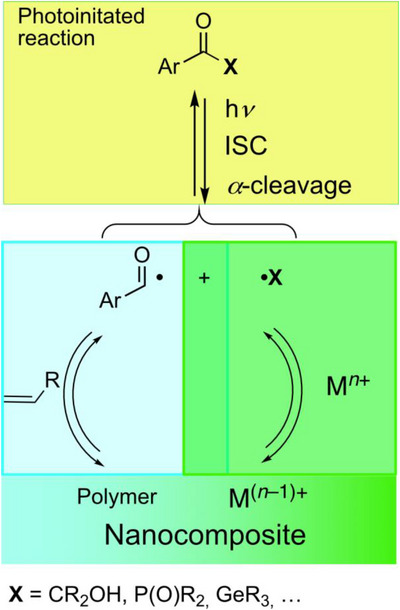 Figure 3
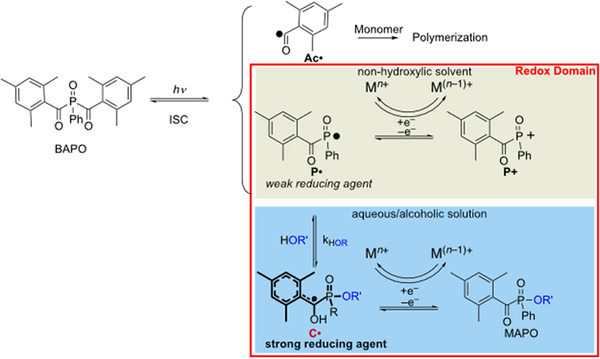 Figure 4
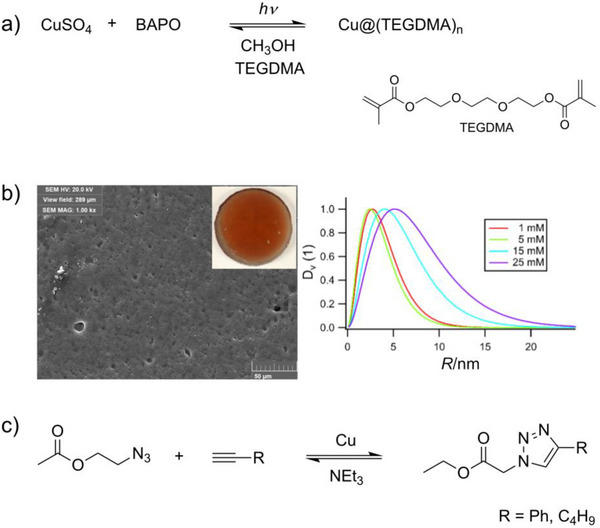 Figure 5
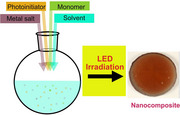 Figure 6
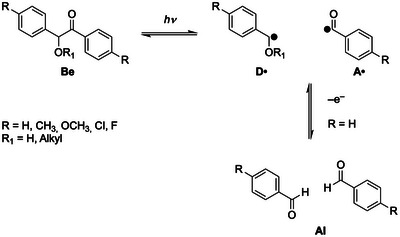 Figure 7
Peer Reviews
No public reviews on file for this paper yet. If you reviewed it on a platform where reviews are public (OpenReview, ICLR, NeurIPS, ICML), you can paste yours below so the community can read it here.
Videos
No videos yet. Explain this paper in a talk, walkthrough, or lecture? Add one.
Taxonomy
TopicsPhotopolymerization techniques and applications · Advanced Polymer Synthesis and Characterization · Polymer Science and PVC