Applicability of anthropometric indicators to assess physical fitness: proposal of percentiles for schoolchildren living at high altitude in Peru
Jose Fuentes-Lopez, Ruben Vidal-Espinoza, Danilo Rodrigues Pereira da Silva, Dony Mamani-Velásquez, Eliseny Vargas-Ramos, Estanislao Pacompia-Cari, Wilbert Cossio-Bolaños, Marco Cossio-Bolaños, Rossana Gomez-Campos

TL;DR
This study evaluates how well body measurements predict physical fitness in Peruvian children living at high altitudes and proposes new reference values for assessing their fitness.
Contribution
The study introduces BSA as a better predictor of physical fitness than BMI and TPI for high-altitude Peruvian schoolchildren.
Findings
BSA showed stronger correlations with physical tests than BMI and TPI.
Percentiles for physical fitness tests were proposed by age and sex.
HGS had the strongest relationship with physical performance in both males and females.
Abstract
a) To verify the applicability of anthropometric indicators to evaluate physical fitness in school children and b) Propose physical fitness reference values for Peruvian children living at high altitudes in Peru. A cross-sectional study was carried out in children aged 6 to 12 years living at high altitude in Peru. A total of 1372 primary school children (785 males and 587 females) were evaluated. Weight, height and four physical tests [Hand grip strength (right and left HGS)], Horizontal jump (HJ), Round trip (5 × 10 repetitions), and the 6-minute walk test (6MWT)] were evaluated. Body Surface Area (BSA), Body Mass Index (BMI), and Triponderal Index (TPI) were calculated. The BSA presented a better comparative structure in relation to BMI and TPI with all physical tests. In males, HGS was related between r = 0.64 and 0.66; HJ (r = 0.26), agility (r = -0.31) and 6MWT (r = 0.30). In…
Genes, proteins, chemicals, diseases, species, mutations and cell lines named across the full text — each resolved to its canonical identifier and authoritative record.
Click any figure to enlarge with its caption.
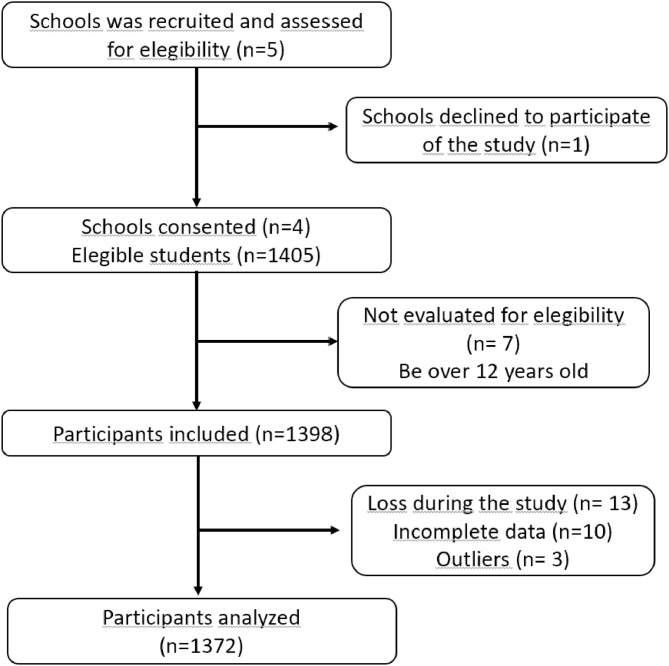 Figure 1
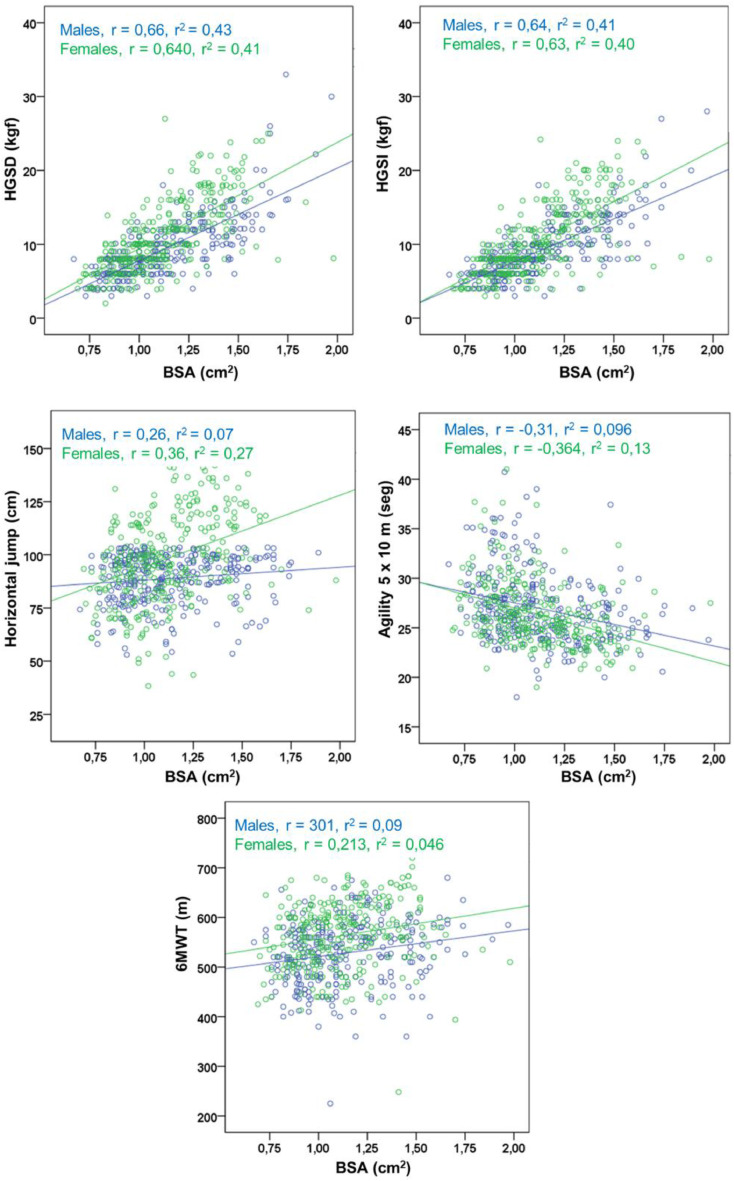 Figure 2
Peer Reviews
No public reviews on file for this paper yet. If you reviewed it on a platform where reviews are public (OpenReview, ICLR, NeurIPS, ICML), you can paste yours below so the community can read it here.
Videos
No videos yet. Explain this paper in a talk, walkthrough, or lecture? Add one.
Taxonomy
TopicsBody Composition Measurement Techniques · Health and Lifestyle Studies · Cardiovascular and exercise physiology