Exploration of ‘generational’ peer-led CPR training in the Australian community using blended learning approaches: a pilot randomised controlled trial
Jeremy Pallas, Mark Miller, Shaun Hicks, Phillip Newton, Ginger Chu, John Paul Smiles, Michael Zhang

TL;DR
This study tested a new CPR training method using peer-led teaching with a blended learning approach, finding it more effective than traditional face-to-face training.
Contribution
The study introduces a blended learning CPR training model with a multimodal aid that improves peer-led training effectiveness across generations.
Findings
Blended learning CPR training had a 96.5% pass rate compared to 75.9% for traditional training.
Peer-led training was feasible across multiple generations with a combined pass rate of 86%.
The CPR lesson card with visual prompts and a QR code improved performance beyond the first generation.
Abstract
A pilot randomised controlled trial to assess the feasibility and relative effectiveness of a community CPR train-the-trainer model using either a traditional face-to-face or blended learning approach (video supported face-to-face training with the provision of a multimodal ‘CPR lesson card’ containing visual prompts and a QR linked training video). A ‘generational’ recruitment strategy was used to evaluate knowledge degradation across a series of peer-led training episodes. Participants (n = 155) were community volunteers aged 18–85 years with no recent CPR training. Groups were randomised to either face-to-face (control) or blended training (intervention) groups. The first participant in each stream (Generation one) received professional training and subsequently taught the next generation, continuing up to four generations. Progression required passing a simulated cardiac arrest…
Genes, proteins, chemicals, diseases, species, mutations and cell lines named across the full text — each resolved to its canonical identifier and authoritative record.
Click any figure to enlarge with its caption.
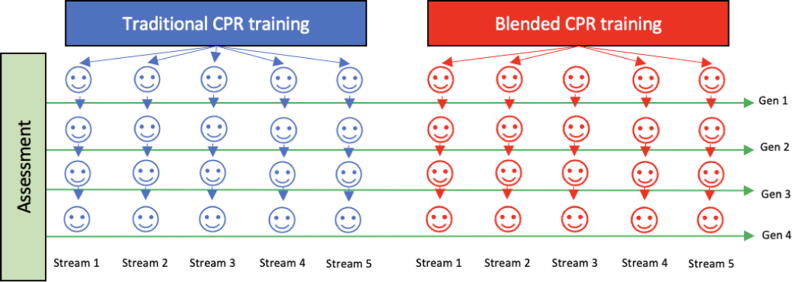 Figure 1
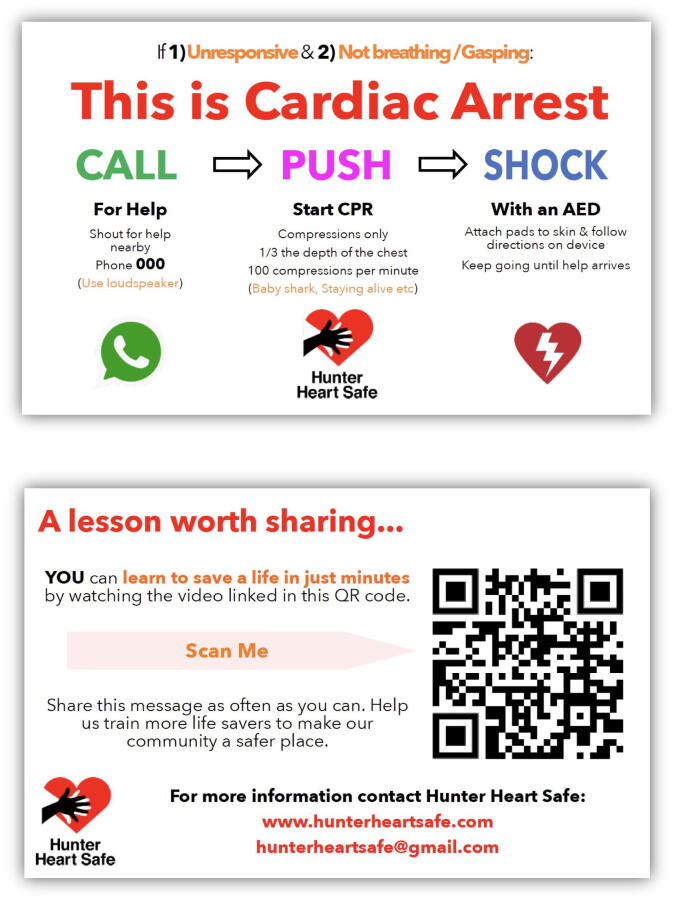 Figure 2
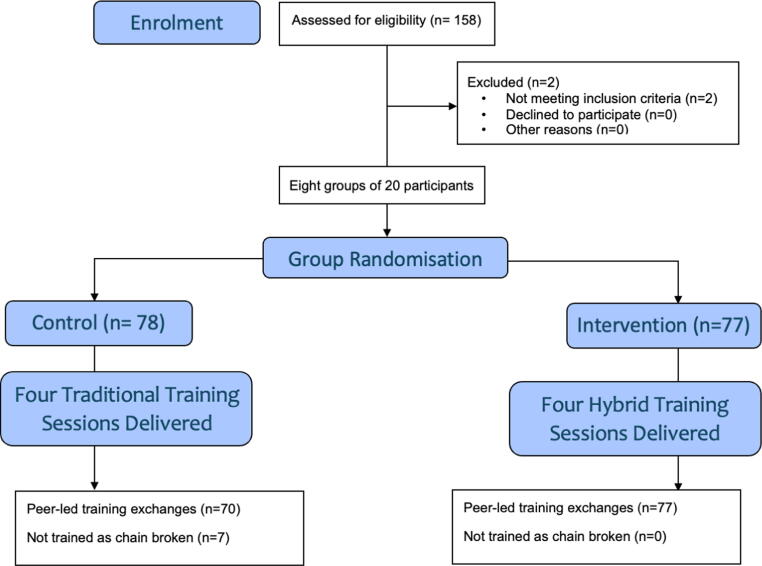 Figure 3
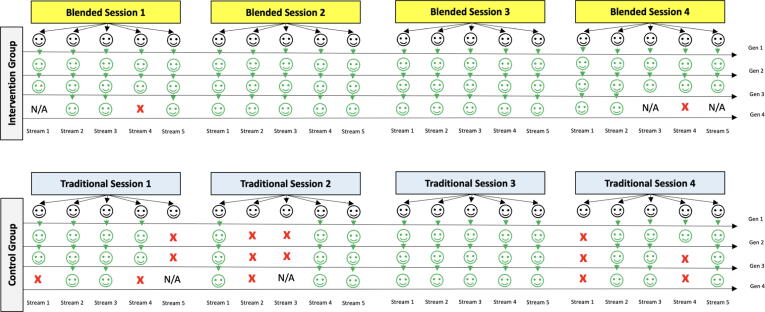 Figure 4
 Figure 5
Peer Reviews
No public reviews on file for this paper yet. If you reviewed it on a platform where reviews are public (OpenReview, ICLR, NeurIPS, ICML), you can paste yours below so the community can read it here.
Videos
No videos yet. Explain this paper in a talk, walkthrough, or lecture? Add one.
Taxonomy
TopicsCardiac Arrest and Resuscitation · Simulation-Based Education in Healthcare · Mechanical Circulatory Support Devices