Does Interrater Variation Influence the Classification According to the Diagnostic Criteria for Multiple Sclerosis?
Nima Mahmoudi, Julius Renne, Franz Felix Konen, Konstantin Fritz Jendretzky, Nora Möhn, Lea Grote‐Levi, Stefan Gingele, Martin W. Hümmert, Philipp Schwenkenbecher, Alexander Soldatov, Kurt‐Wolfram Sühs, Peter Raab, Thomas Skripuletz, Mike P. Wattjes

TL;DR
This study examines how much MRI analysis of brain, optic nerve, and spinal cord lesions varies between raters and how this affects multiple sclerosis diagnosis using updated criteria.
Contribution
The study evaluates interrater agreement in MRI lesion detection and its impact on MS diagnosis using the latest McDonald criteria.
Findings
Interrater agreement for lesion presence was moderate to substantial, with highest agreement for spinal cord lesions.
Diagnostic classification agreement remained high between the 2017 and 2024 McDonald criteria revisions.
Despite standardized imaging, lesion count agreement among raters was limited.
Abstract
Studies on interrater agreement in MRI analysis for patients experiencing a first clinical episode suggestive of multiple sclerosis (MS) are limited and outdated. This study aimed to evaluate interrater agreement for lesion identification in the brain, optic nerve, and spinal cord, and to assess variability in applying the 2017 and 2024 McDonald criteria. Seventy‐eight patients underwent a standardized multisequence 3 Tesla MRI of the brain, optic nerves, and spinal cord, analyzed by three readers with varying expertise. Lesions were categorized based on location according to McDonald criteria. Interrater variability was measured using Cohen's κ for pairwise reader comparisons and Fleiss κ for overall agreement. Interrater agreement ranged from slight to fair for total lesion count and moderate to substantial for lesion presence. The highest agreement occurred for spinal cord lesions…
Genes, proteins, chemicals, diseases, species, mutations and cell lines named across the full text — each resolved to its canonical identifier and authoritative record.
Click any figure to enlarge with its caption.
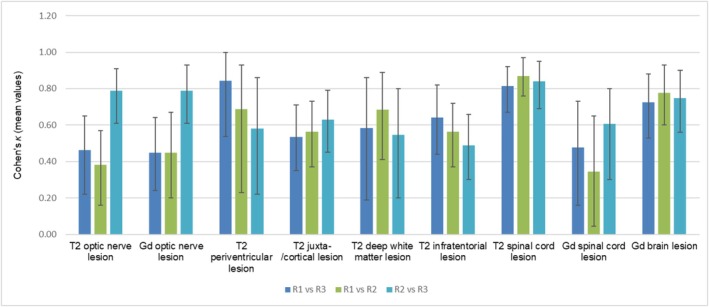 Figure 1
 Figure 2
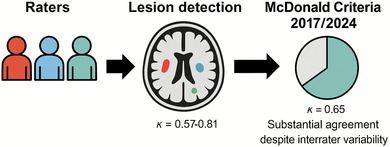 Figure 3
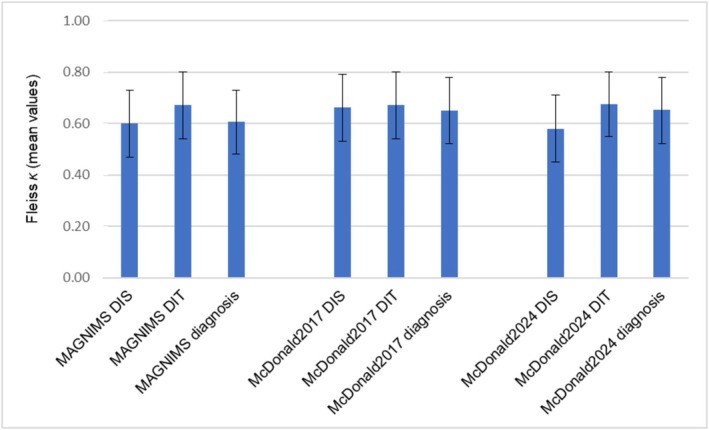 Figure 4
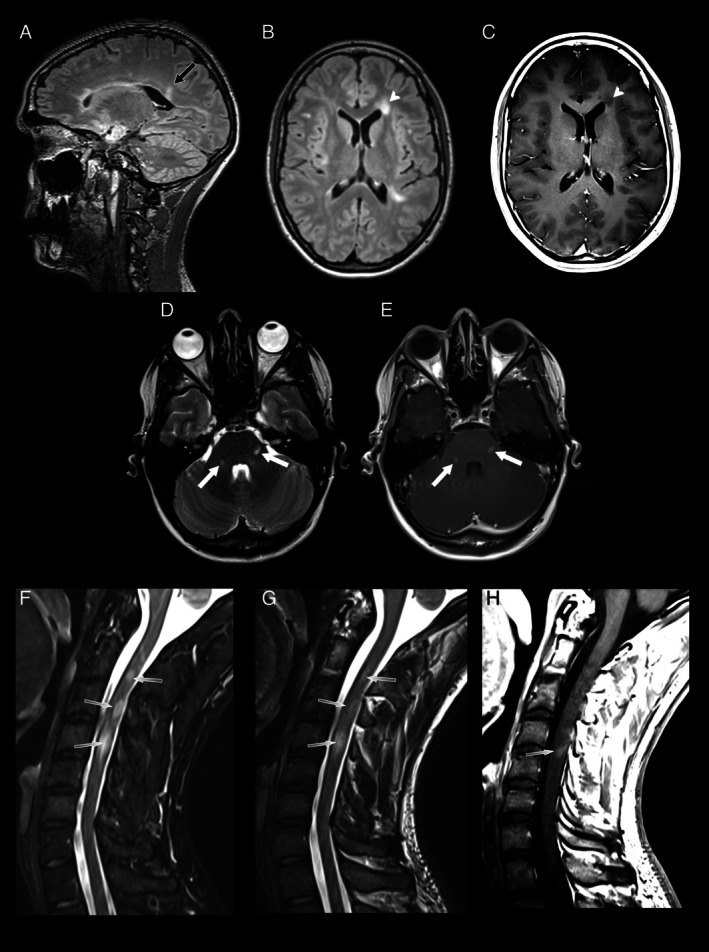 Figure 5
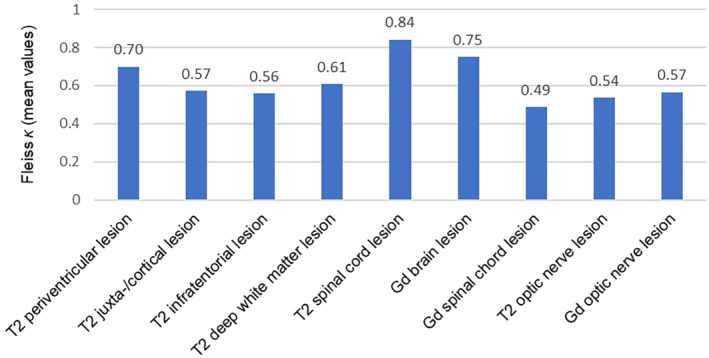 Figure 6
Peer Reviews
No public reviews on file for this paper yet. If you reviewed it on a platform where reviews are public (OpenReview, ICLR, NeurIPS, ICML), you can paste yours below so the community can read it here.
Videos
No videos yet. Explain this paper in a talk, walkthrough, or lecture? Add one.
Taxonomy
TopicsMultiple Sclerosis Research Studies · Peripheral Neuropathies and Disorders · Epilepsy research and treatment