A Simple Programmable Cas12a/crRNA Induced Walking System for Sensitive Methicillin-Resistant Staphylococcus aureus Detection via Integrated cis- and trans-Cleavage Activity
Bo Xiao, Jie Zhang

TL;DR
This paper introduces a new CRISPR-based method for detecting MRSA bacteria with high sensitivity and specificity using a programmable Cas12a system.
Contribution
A novel programmable Cas12a system using a structure-switchable probe that integrates cis- and trans-cleavage activities for MRSA detection.
Findings
The method achieved a detection limit of 2.5 CFU/ml for MRSA with high specificity.
The design simplifies probe architecture while maintaining efficient signal amplification.
The system uses a hairpin-structured locker-probe to regulate Cas12a trans-cleavage activity.
Abstract
Methicillin-resistant Staphylococcus aureus (MRSA) represents a serious threat to public health due to its strong antibiotic resistance, wide dissemination, and high infection rates. Rapid identification of MRSA strains is essential for accurate diagnosis and timely treatment of related infections. In this study, we propose an analytical method for MRSA that employs a hairpin-structured locker-probe to directly regulate the trans-cleavage activity of Cas12a. This designed locker-probe connects a target-specific aptamer to an inhibitory aptamer of the CRISPR/Cas12a system. Upon binding to the specific target, the probe undergoes a conformational change that abolishes its inhibitory effect on Cas12a. As a result, the structure-switchable probe modulates Cas12a activity in a target-dependent manner. Additionally, the sensing substrate combines a “cis-cleavage trigger” and a “trans-cleavage…
Genes, proteins, chemicals, diseases, species, mutations and cell lines named across the full text — each resolved to its canonical identifier and authoritative record.
Click any figure to enlarge with its caption.
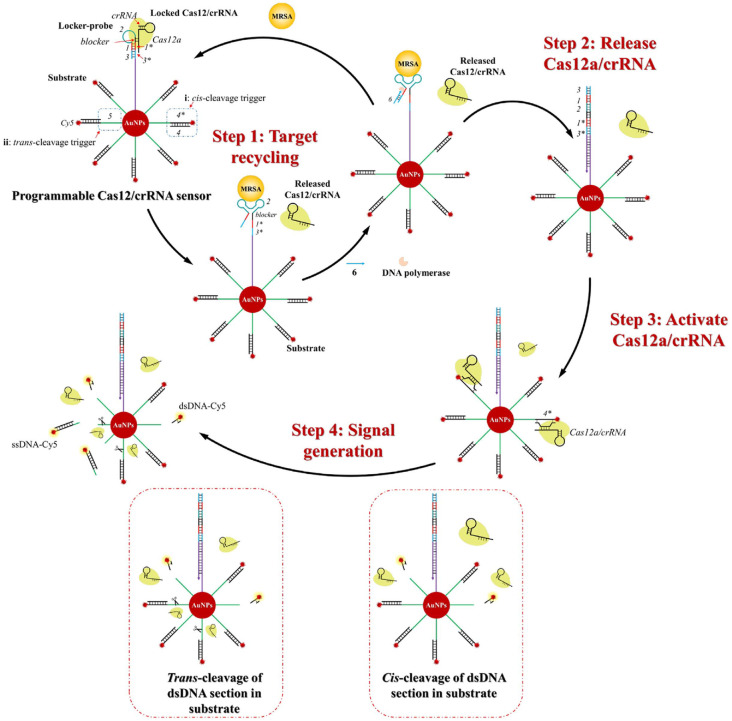 Figure 1
 Figure 2
 Figure 3
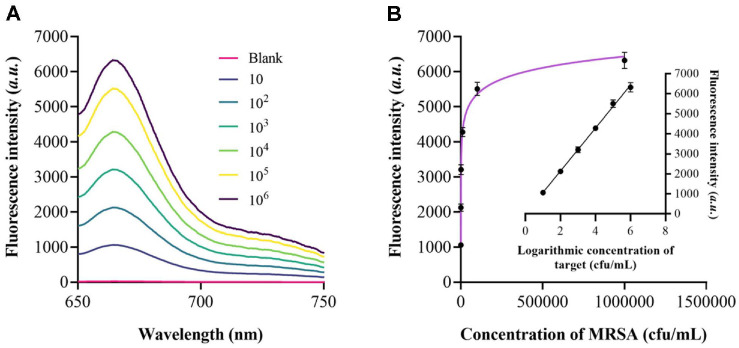 Figure 4
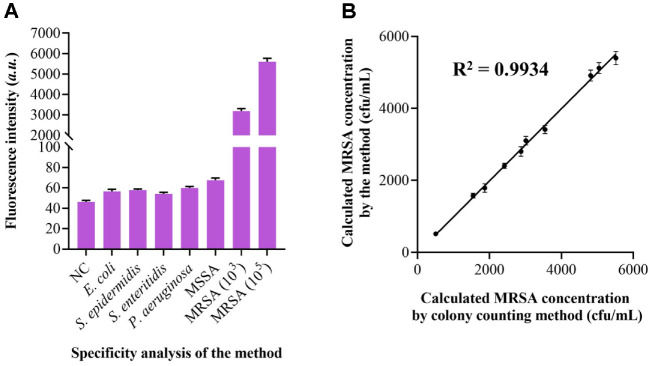 Figure 5
Peer Reviews
No public reviews on file for this paper yet. If you reviewed it on a platform where reviews are public (OpenReview, ICLR, NeurIPS, ICML), you can paste yours below so the community can read it here.
Videos
No videos yet. Explain this paper in a talk, walkthrough, or lecture? Add one.
Taxonomy
TopicsCRISPR and Genetic Engineering · Advanced biosensing and bioanalysis techniques · Biosensors and Analytical Detection