Analysis of Training Behavior in Users of a Fitness App: Cross-Sectional Study
Andrea Fuente-Vidal, Roger Prat, Juan Manuel Arribas-Marin, Oscar Bastidas-Jossa, Myriam Guerra-Balic, Begonya Garcia-Zapirain, Joel Montane, Javier Jerez-Roig

TL;DR
This study explores how users of a fitness app engage with their training, finding that factors like gender, motivation, and goals influence retention and behavior differently.
Contribution
The study identifies distinct factors affecting retention, training frequency, and adherence in a fitness app, emphasizing the need to treat them separately.
Findings
Males, subscribers, and users with intrinsic motivation showed higher retention in the fitness app.
Training frequency varied by sex, body type, and activity level, but not by fitness goals or perceived difficulty.
Adherence was higher among thin users compared to midbuilt users, but not influenced by motivation type.
Abstract
Mobile health (mHealth) apps are increasingly being used to promote physical activity (PA) and can support exercise uptake and maintenance. Despite their potential, these tools face high dropout rates and inconsistent adherence, posing a significant challenge. Understanding how users engage with fitness apps is essential for improving user experience and health outcomes. This study aims to analyze user behavior patterns in the Mammoth Hunters (MH) fitness app (Mammoth Hunters SL), focusing on retention (days from registration to user’s last recorded training session), average weekly training frequency, and adherence (alignment between planned and actual training). We examined how these outcomes are influenced by sociodemographic, motivational, and other variables. This cross-sectional study involved 2771 Mammoth Hunters app users. In a subsample (n=289), training data were…
Genes, proteins, chemicals, diseases, species, mutations and cell lines named across the full text — each resolved to its canonical identifier and authoritative record.
Click any figure to enlarge with its caption.
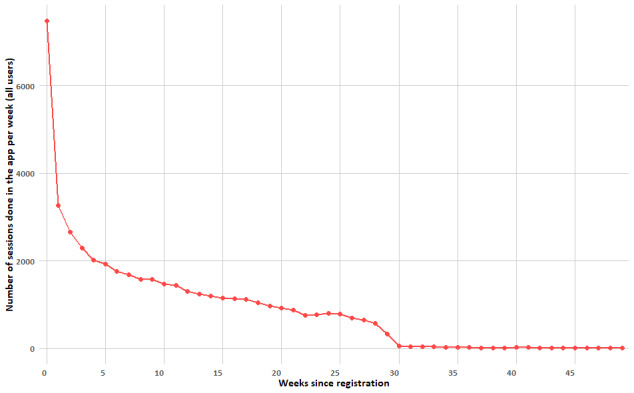 Figure 1
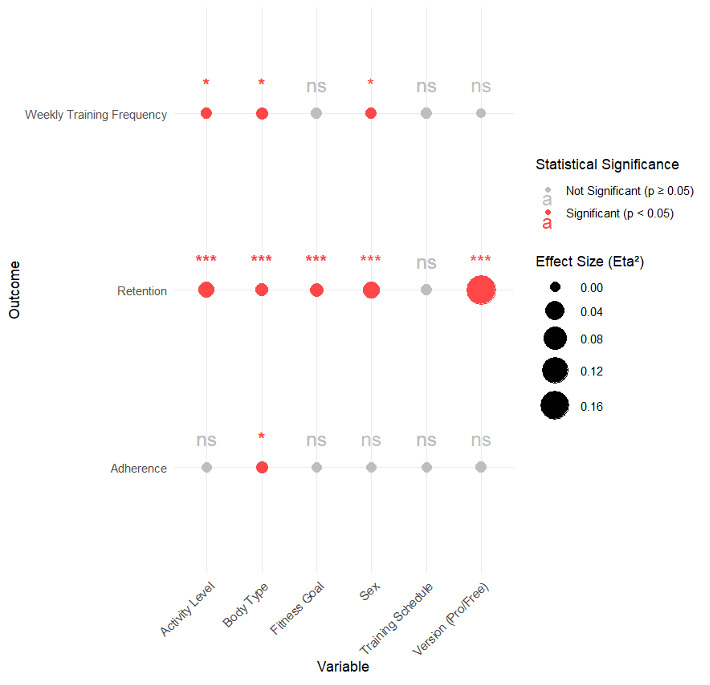 Figure 2
Peer Reviews
No public reviews on file for this paper yet. If you reviewed it on a platform where reviews are public (OpenReview, ICLR, NeurIPS, ICML), you can paste yours below so the community can read it here.
Videos
No videos yet. Explain this paper in a talk, walkthrough, or lecture? Add one.
Taxonomy
TopicsInnovative Human-Technology Interaction · Behavioral Health and Interventions · Usability and User Interface Design