Explainable Multitask Burnout Prediction Using Adaptive Deep Learning (EMBRACE) for Resident Physicians: Algorithm Development and Validation Study
Saima Alam, Mohammad Arif Ul Alam

TL;DR
EMBRACE is a deep learning framework that predicts and explains burnout in resident physicians using wearable data and SHAP-based explanations, improving clinical trust and actionability.
Contribution
EMBRACE introduces an adaptive multitask deep learning model with explainability for burnout prediction in resident physicians.
Findings
EMBRACE achieved 93% recall and 91% precision in predicting activities and burnout levels in resident physicians.
The model demonstrated 94.1% recall and 94.6% precision for stress level prediction on the WESAD dataset.
91% of participants reported satisfaction with the explainability of EMBRACE's feature importance summaries.
Abstract
Medical residency is characterized by high stress, long working hours, and demanding schedules, leading to widespread burnout among resident physicians. Although wearable sensors and machine learning (ML) models hold promise for predicting burnout, their lack of clinical explainability often limits their utility in health care settings. This paper presents EMBRACE (Explainable Multitask Burnout Prediction Using Adaptive Deep Learning), a novel framework designed to predict and explain future burnout in resident physicians through an adaptive multitask deep learning approach. The framework aims to provide clinically actionable and trustworthy burnout predictions by integrating explainable ML techniques. EMBRACE applies deep multitask learning (3 tasks) using wearable sensor data for context-aware burnout prediction and explanation. The adaptive multitask learning framework predicts…
Genes, proteins, chemicals, diseases, species, mutations and cell lines named across the full text — each resolved to its canonical identifier and authoritative record.
Click any figure to enlarge with its caption.
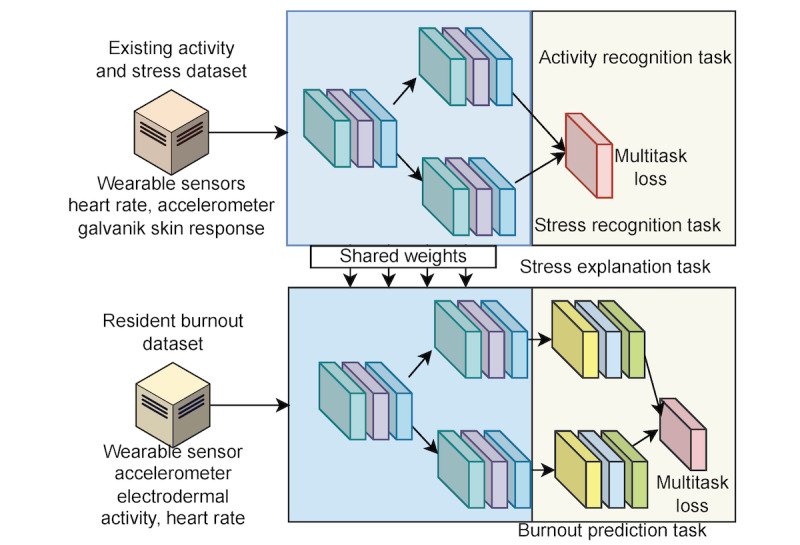 Figure 1
 Figure 2
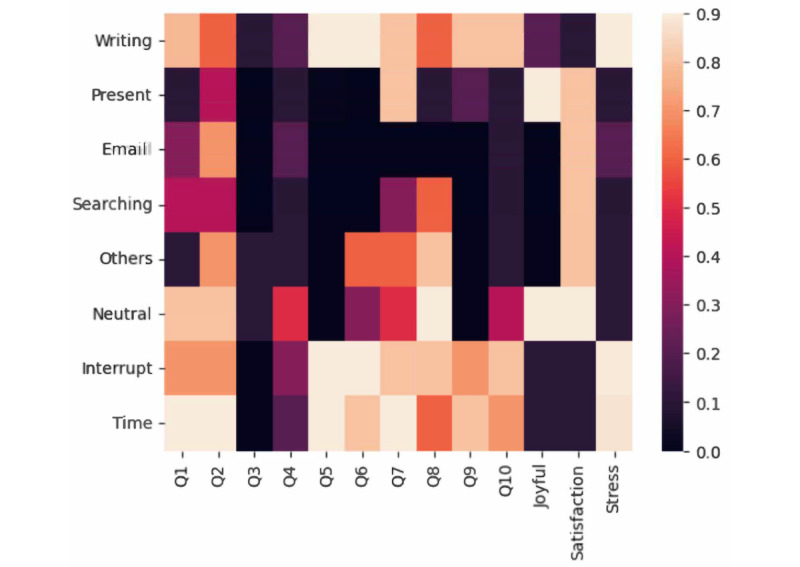 Figure 3
Peer Reviews
No public reviews on file for this paper yet. If you reviewed it on a platform where reviews are public (OpenReview, ICLR, NeurIPS, ICML), you can paste yours below so the community can read it here.
Videos
No videos yet. Explain this paper in a talk, walkthrough, or lecture? Add one.
Taxonomy
TopicsClinical Reasoning and Diagnostic Skills · Radiology practices and education · Artificial Intelligence in Healthcare and Education