Linking Patient-Reported and Clinician-Assessed Wound Status via Chatbot-Based Digital Surveillance for Wound Infection: Retrospective Observational Study
Yung-Cheng Su, Yu-Hsien Lin, Ming-Yuan Huang

TL;DR
This study shows that patients with chronic wounds are more accurate in reporting infection symptoms via a chatbot than those with acute wounds, suggesting digital monitoring systems should be tailored to wound type.
Contribution
The study introduces a chatbot-based system for comparing patient-reported and clinician-assessed wound infection symptoms, revealing differences between acute and chronic wound populations.
Findings
Chronic wound patients had higher diagnostic accuracy (AUC 0.907) compared to acute wound patients (AUC 0.702) in reporting infections.
Redness was significantly associated with infection in acute wounds, while redness and skin darkening were key in chronic wounds.
Patient self-assessment accuracy for acute wounds was lower, likely due to limited experience and contextual constraints.
Abstract
Digital wound monitoring has become increasingly feasible with the widespread use of smartphones and mobile messaging platforms. Although most previous studies have focused on chronic wounds and demonstrated the clinical benefits of remote monitoring, little is known about how patients with acute wounds perceive and report wound-related changes after discharge; these factors may affect the accuracy and reliability of patient-facing digital health systems. This study aimed to evaluate the diagnostic performance of patient-reported infection symptoms in predicting clinician-initiated callbacks within a chatbot-based wound monitoring platform. A secondary objective was to identify wound features most strongly associated with patient-reported infection and examine differences between acute and chronic wound populations. This retrospective observational study was conducted at a tertiary…
Genes, proteins, chemicals, diseases, species, mutations and cell lines named across the full text — each resolved to its canonical identifier and authoritative record.
Click any figure to enlarge with its caption.
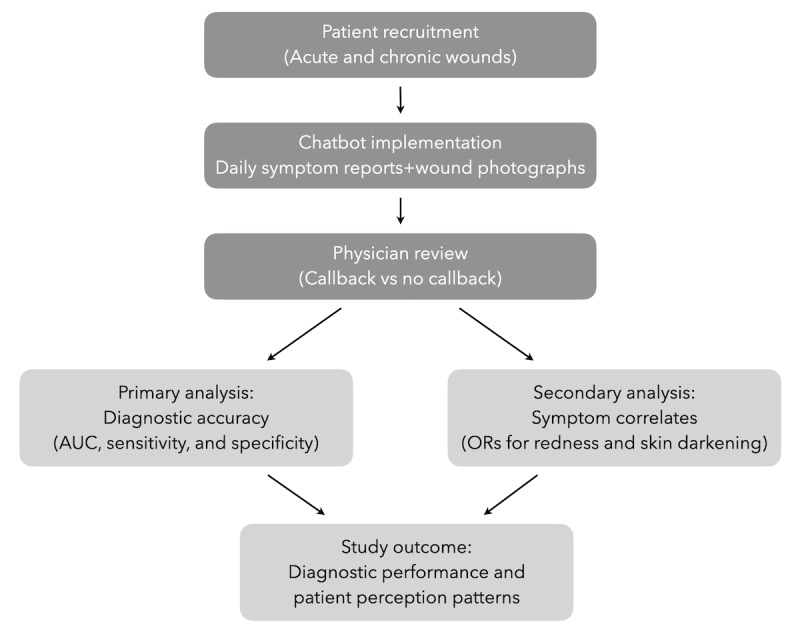 Figure 1
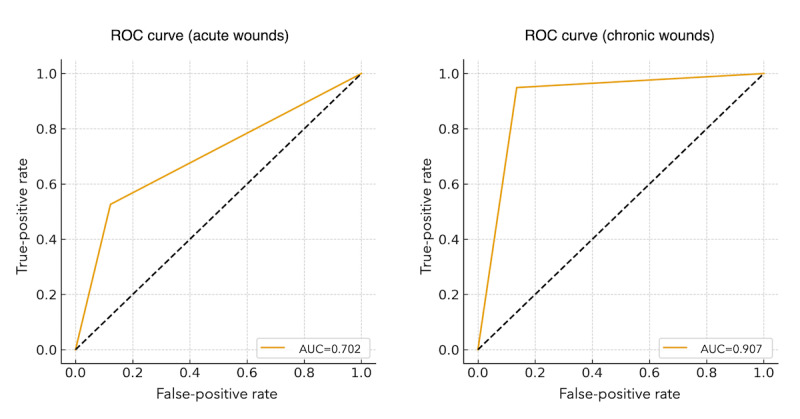 Figure 2
Peer Reviews
No public reviews on file for this paper yet. If you reviewed it on a platform where reviews are public (OpenReview, ICLR, NeurIPS, ICML), you can paste yours below so the community can read it here.
Videos
No videos yet. Explain this paper in a talk, walkthrough, or lecture? Add one.
Taxonomy
TopicsPressure Ulcer Prevention and Management · Digital Mental Health Interventions · Diagnosis and Treatment of Venous Diseases