Incidence, Predictors, and Outcomes of Major Transcatheter Aortic Valve Replacement (TAVR) Complications and Failure-to-Rescue in the Contemporary Era
Michael A Catalano, Daniel Bazianos, Ashwin Nathan, Lauren Gillinov, Omar Toubat, Alexandra E Sperry, Nicholas J Goel, Nimesh D Desai, Wilson Y Szeto, Chase R Brown, Kendall M Lawrence

TL;DR
This study analyzes major complications after TAVR procedures, finding that they are rare but linked to high mortality and increased hospital costs.
Contribution
The study identifies contemporary predictors and outcomes of major TAVR complications using a large national database.
Findings
Major TAVR complications occurred in 1.2% of cases and were associated with 26% in-hospital mortality.
Predictors of complications included younger age, bicuspid aortic valve, thoracic aneurysm, and female sex.
Complications led to longer hospital stays and significantly higher costs compared to uncomplicated cases.
Abstract
As transcatheter aortic valve replacement (TAVR) expands to lower-risk populations, understanding contemporary patterns of complications requiring surgical intervention remains critical. This study examines the incidence, predictors, and outcomes of major TAVR complications. The National Inpatient Sample (2016-2021) was queried to identify adult patients undergoing TAVR. Major complications were defined as surgical aortic valve replacement, coronary artery bypass grafting, aortic intervention, pericardial drainage, VA-ECMO, cardiac repair, or diagnosis of aortic dissection/rupture. Multivariable logistic regression identified predictors of complications and failure-to-rescue. Among 383 395 TAVRs, 4685 (1.2%) experienced major complications. Overall in-hospital mortality was 1.3%. Mortality was 26.0% in patients with major complications versus 1.0% without (P < .001). Stroke rates were…
Genes, proteins, chemicals, diseases, species, mutations and cell lines named across the full text — each resolved to its canonical identifier and authoritative record.
Click any figure to enlarge with its caption.
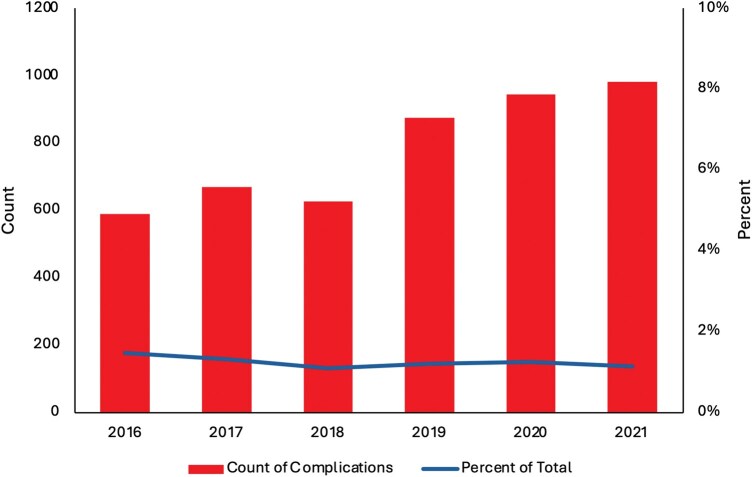 Figure 1
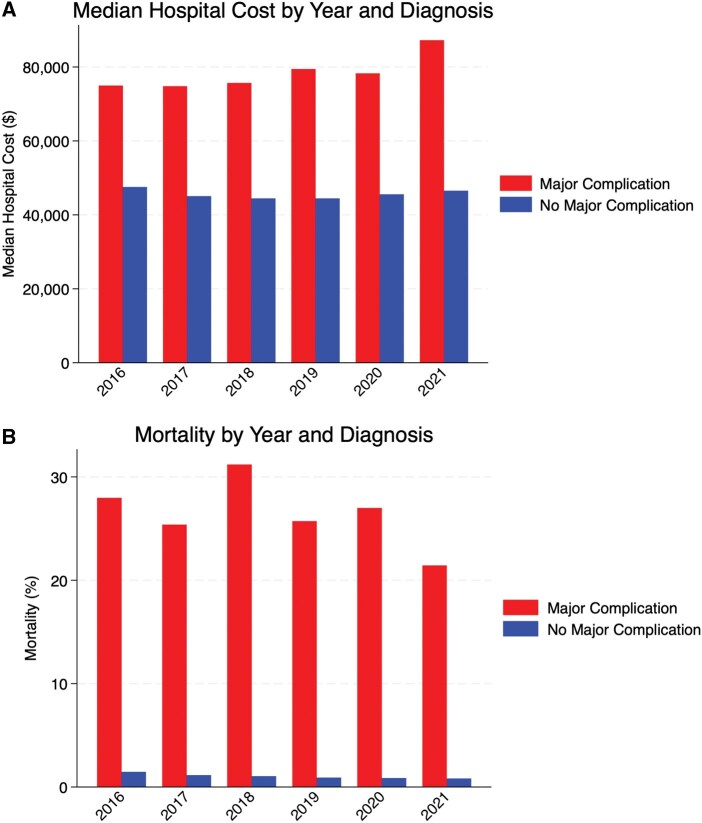 Figure 2
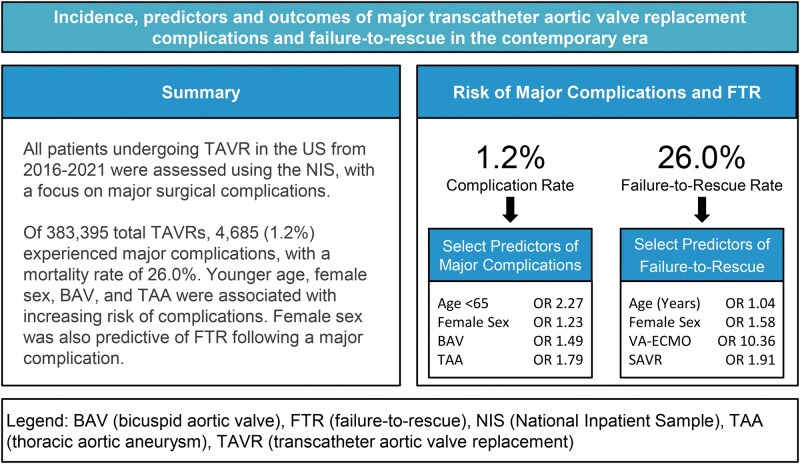 Figure 3
Peer Reviews
No public reviews on file for this paper yet. If you reviewed it on a platform where reviews are public (OpenReview, ICLR, NeurIPS, ICML), you can paste yours below so the community can read it here.
Videos
No videos yet. Explain this paper in a talk, walkthrough, or lecture? Add one.
Taxonomy
TopicsCardiac Valve Diseases and Treatments · Aortic Disease and Treatment Approaches · Congenital Heart Disease Studies