A Dirichlet‐Multinomial Gibbs Algorithm for Assessing the Accuracy of Binary Tests in the Absence of a Gold Standard
Joseph B. Kadane

TL;DR
This paper introduces a statistical method to evaluate the accuracy of multiple binary tests for a disease when no perfect diagnostic test exists.
Contribution
A novel Dirichlet-multinomial Gibbs algorithm is proposed to estimate test accuracy with conditional independence across test groups.
Findings
The model successfully estimated sensitivity and specificity for four Chlamydia tests.
The method handled missing data effectively by treating 10% of the data as randomly missing.
Conditional independence between test groups improved the accuracy of the estimates.
Abstract
Each patient is simultaneously given several binary tests for a disease. The tests are partitioned into disjoint groups, assumed to be conditionally independent between groups, but allowed to have arbitrary dependence within a group. The groups are intended to capture similar biological features of the tests. A Dirichlet‐multinomial model is employed with a Gibbs Sampler to estimate the sensitivity and specificity of the tests. The model is exemplified by data on four tests for Chlamydia, both with complete data and with a random 10% of the data treated as missing.
Genes, proteins, chemicals, diseases, species, mutations and cell lines named across the full text — each resolved to its canonical identifier and authoritative record.
Click any figure to enlarge with its caption.
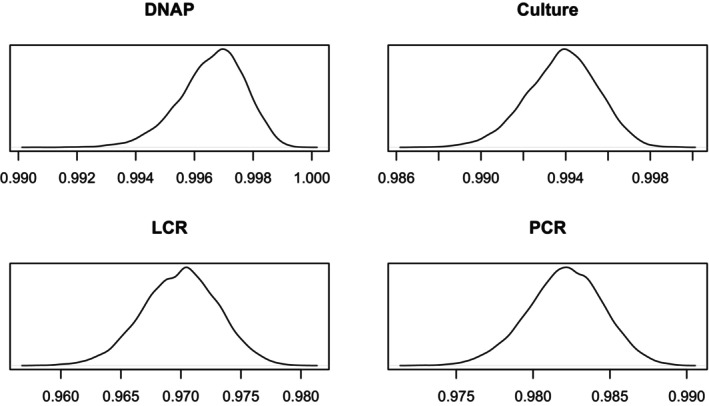 Figure 1
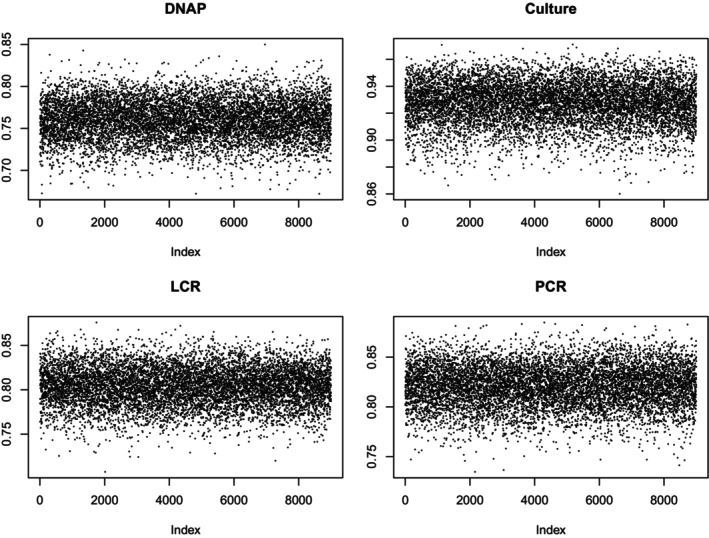 Figure 2
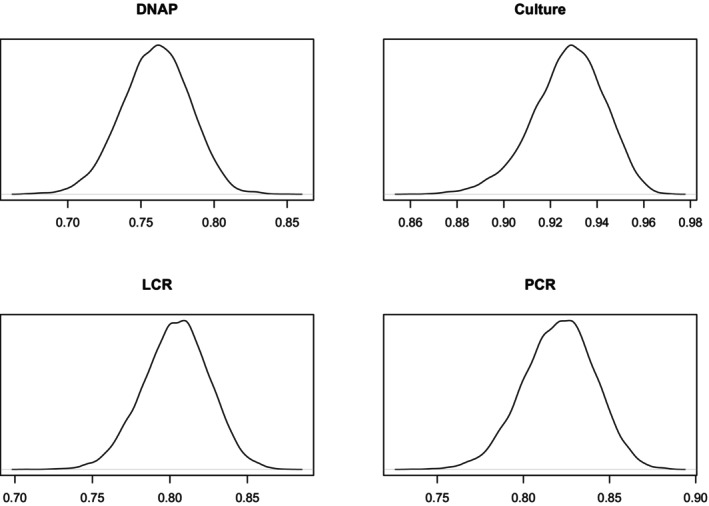 Figure 3
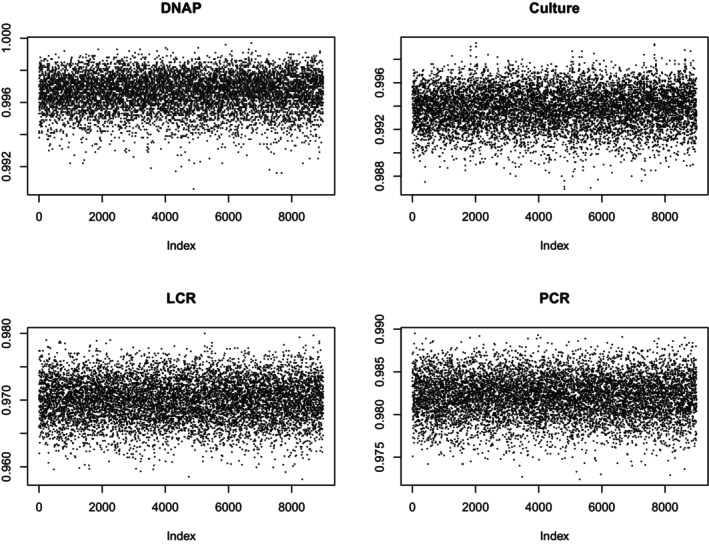 Figure 4
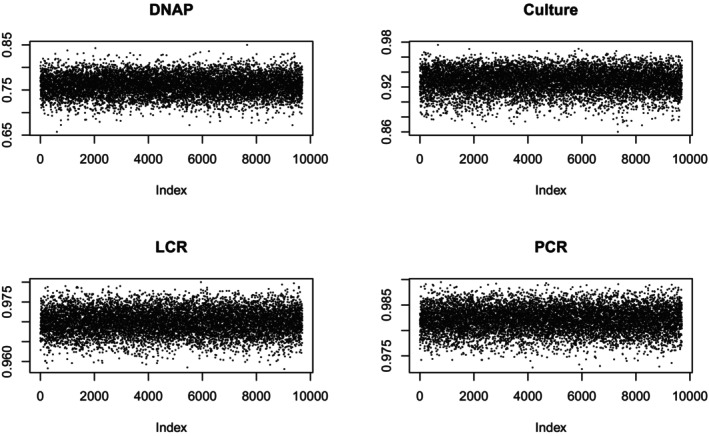 Figure 5
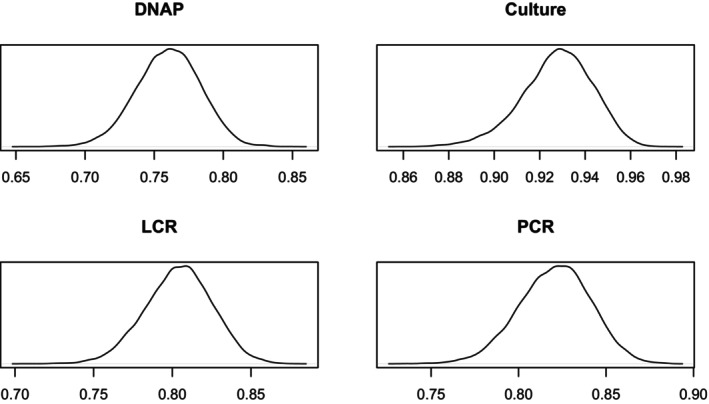 Figure 6
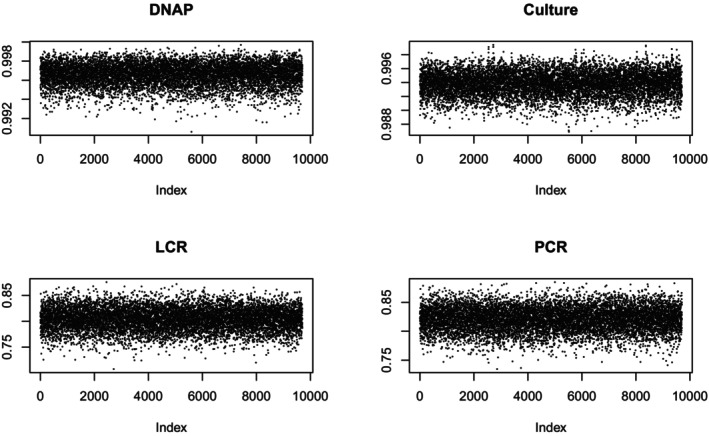 Figure 7
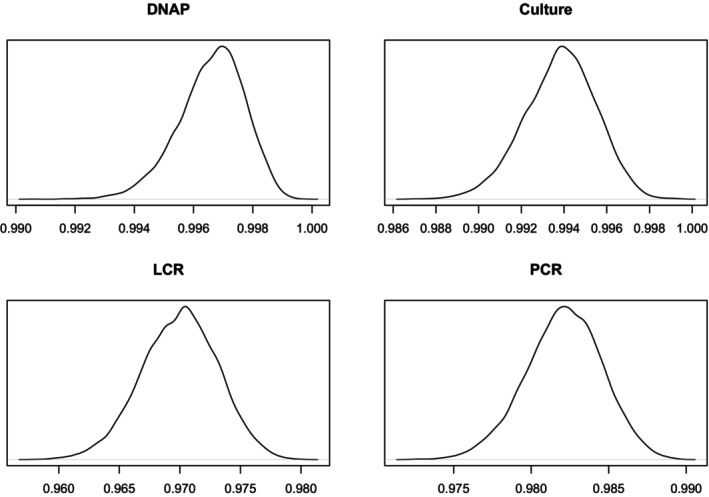 Figure 8
Peer Reviews
No public reviews on file for this paper yet. If you reviewed it on a platform where reviews are public (OpenReview, ICLR, NeurIPS, ICML), you can paste yours below so the community can read it here.
Videos
No videos yet. Explain this paper in a talk, walkthrough, or lecture? Add one.
Taxonomy
TopicsBayesian Methods and Mixture Models · Statistical Methods and Bayesian Inference · Statistical Methods in Clinical Trials