How to target the coronoid from the dorsal cortex
Simone Cassin, Valeria Vismara, Aurelien Traverso, Christos Koukos, Pietro Simone Randelli, Paolo Arrigoni

TL;DR
This study provides a safe surgical method to target the coronoid process of the ulna from the dorsal cortex using measurements based on elbow anatomy.
Contribution
The study introduces a practical, X-ray-free surgical targeting range for the coronoid process based on inter-epicondylar distance.
Findings
Mean APEX was 20.6 mm and BASE was 33.9 mm, with significant gender differences.
A safe targeting range is 2 to 3.5 cm from the olecranon's most prominent point.
Ratios of APEX and BASE to IED were 0.3 and 0.6, respectively.
Abstract
The coronoid process of the ulna is crucial for both anteroposterior and axial elbow stability. Currently, there is no safe and X-ray–free method for targeting the coronoid from the posterior cortex of the ulna, for temporary or permanent fixation. This study aims to define a range, easy to use in surgical practice, to safely target the coronoid process from the dorsal cortex of the ulna and to normalize the range based on the inter-epicondylar distance (IED). For the study, 3 different parameters were assessed: the APEX (olecranon to coronoid apex distance), BASE (olecranon to coronoid base distance), and the IED from 109 computed tomographies. The mean APEX was 20.6 mm (19.3 mm in females and 21.3 mm in males), and the mean BASE was 33.9 mm (31.9 mm in females and 35.1 mm in males). The mean IED was 59 mm (53.3 mm in females and 62.3 mm in males), the mean ratio between APEX and IED…
Click any figure to enlarge with its caption.
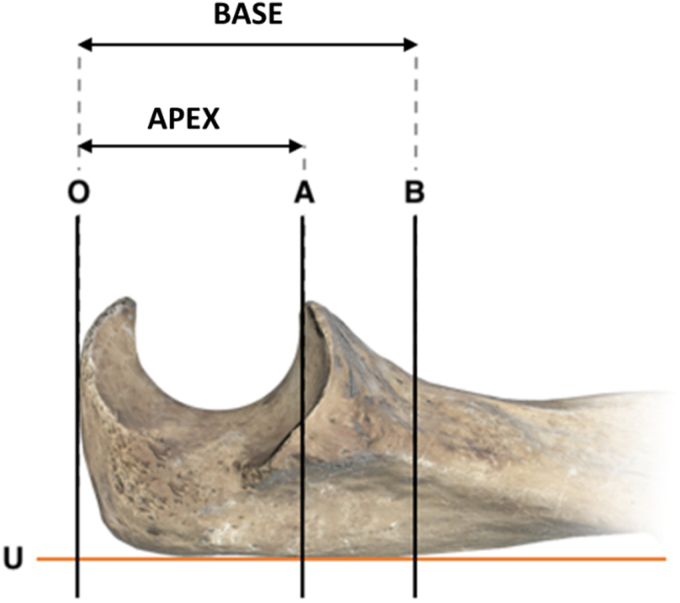 Figure 1
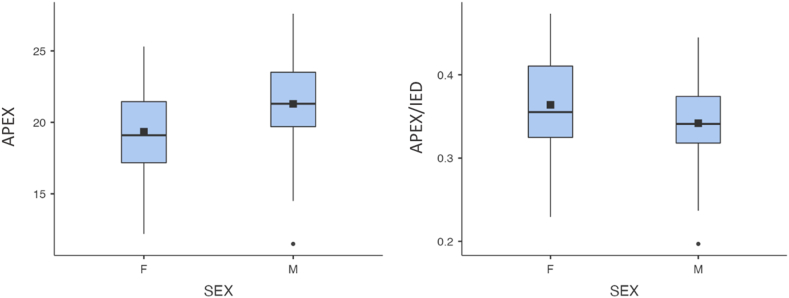 Figure 2
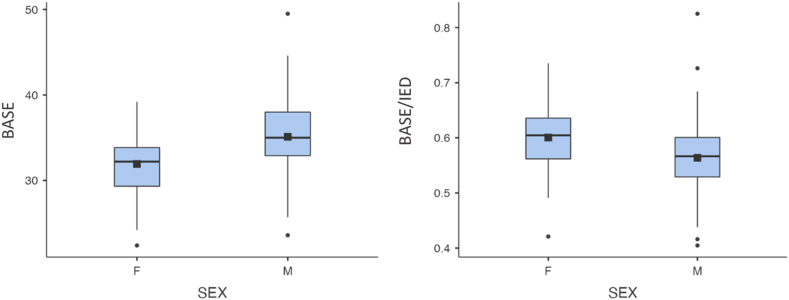 Figure 3
Peer Reviews
No public reviews on file for this paper yet. If you reviewed it on a platform where reviews are public (OpenReview, ICLR, NeurIPS, ICML), you can paste yours below so the community can read it here.
Videos
No videos yet. Explain this paper in a talk, walkthrough, or lecture? Add one.
Taxonomy
TopicsElbow and Forearm Trauma Treatment · Orthopedic Surgery and Rehabilitation · Peripheral Nerve Disorders