Interest in computer-assisted surgery on the glenoid implant positioning in the context of navigated or planned total shoulder arthroplasties
Yannis Yahiaoui, Cyril Lazerges, Michel Chammas, Bertrand Coulet

TL;DR
This study compares the use of intraoperative navigation versus preoperative planning alone in positioning glenoid implants during shoulder surgery, finding that navigation reduces implant mispositioning.
Contribution
The study provides empirical evidence that intraoperative navigation improves glenoid implant positioning accuracy compared to planning alone in total shoulder arthroplasty.
Findings
Intraoperative navigation reduced the proportion of mispositioned implants in both version and inclination.
For reverse TSA, navigation significantly reduced postoperative deviation from planned implant positioning.
Preoperative planning showed similar native glenoid parameters between navigation and planning-only groups.
Abstract
Three-dimensional planning and intraoperative navigation are beneficial for glenoid implant positioning in total shoulder arthroplasty (TSA). The respective benefits of these two techniques are still being evaluated. The aim of this study was to evaluate the contribution of intraoperative navigation to glenoid implant positioning, compared with planning alone. Our hypothesis is that the use of intraoperative navigation can help to come closer to the planned positioning of the implant, compared with standard instrumentation. This monocentric, ongoing study included 205 shoulders (197 patients) operated between 2018 and 2024 for a TSA, anatomic or reverse. All patients benefited from preoperative planning (Equinoxe Planning App; Exactech, Gainesville, FL, USA), enabling the collection of native glenoid parameters. Postoperatively, these were assessed using the same method via the…
Genes, proteins, chemicals, diseases, species, mutations and cell lines named across the full text — each resolved to its canonical identifier and authoritative record.
Click any figure to enlarge with its caption.
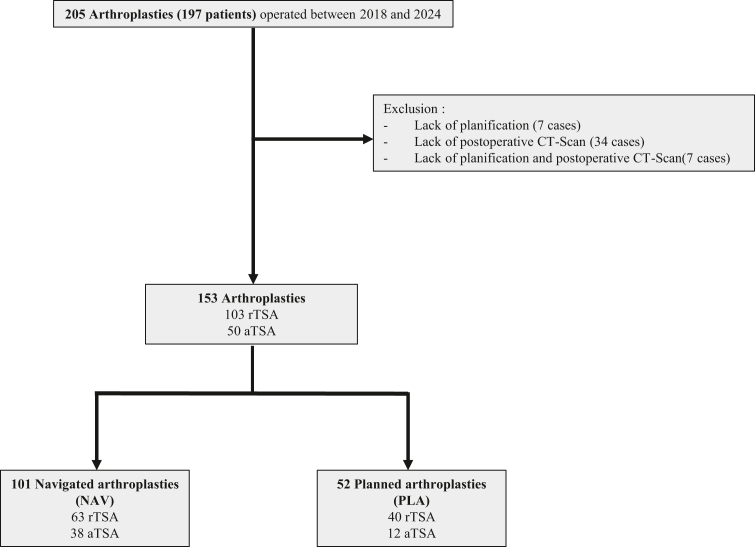 Figure 1
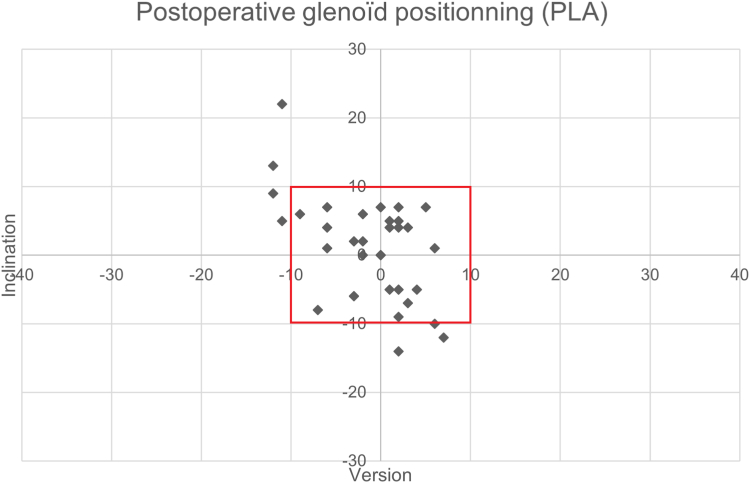 Figure 2
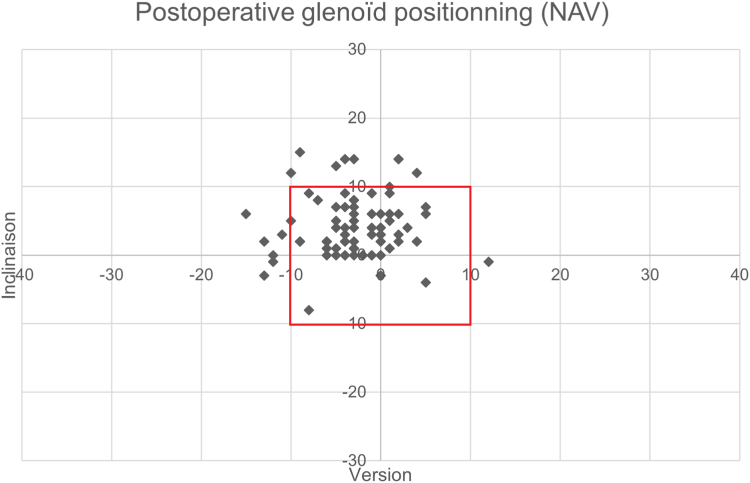 Figure 3
Peer Reviews
No public reviews on file for this paper yet. If you reviewed it on a platform where reviews are public (OpenReview, ICLR, NeurIPS, ICML), you can paste yours below so the community can read it here.
Videos
No videos yet. Explain this paper in a talk, walkthrough, or lecture? Add one.
Taxonomy
TopicsShoulder Injury and Treatment · Shoulder and Clavicle Injuries · Nerve Injury and Rehabilitation