Long-term outcomes of arthroscopic Bankart repair: a 10-year follow-up study
Shogo Sugawara, Nobuyuki Yamamoto, Yusuke Koibuchi, Kazuma Sasaki, Rei Kimura, Atsushi Arino, Jun Kawakami, Hideaki Nagamoto, Toshimi Aizawa, Eiji Itoi

TL;DR
A 10-year follow-up study found that arthroscopic Bankart repair has a 28% recurrence rate but remains a reliable long-term treatment for shoulder instability.
Contribution
This study provides long-term outcomes (up to 14 years) of arthroscopic Bankart repair, a procedure for shoulder instability.
Findings
The 10-year recurrence rate of shoulder dislocation after ABR was 28%.
72% of patients returned to sports fully, and patient satisfaction remained high despite some recurrences.
Mild to moderate osteoarthritis was observed in 2 shoulders, but no revision surgeries were needed.
Abstract
Arthroscopic Bankart repair (ABR) is the gold standard for anterior shoulder dislocation, with many studies demonstrating favorable short-term outcomes. However, few reports focus on the long-term outcomes, partly due to a challenge of following up younger patients. This study aims to evaluate the long-term outcomes of ABR. This study included 32 shoulders (19 males, 13 females; mean age at surgery: 31 years) out of 55 shoulders that underwent ABR at our institution between 2011 and 2019. Inclusion criteria required a minimum follow-up period of 5 years, and data were collected through telephone surveys or direct examinations. The survey assessed recurrent dislocation or subluxation, shoulder pain, apprehension, return to sports (complete, partial, or inability), and revision surgery. Direct examinations included physical assessments and plain x-rays. The Rowe score and Western Ontario…
Genes, proteins, chemicals, diseases, species, mutations and cell lines named across the full text — each resolved to its canonical identifier and authoritative record.
Click any figure to enlarge with its caption.
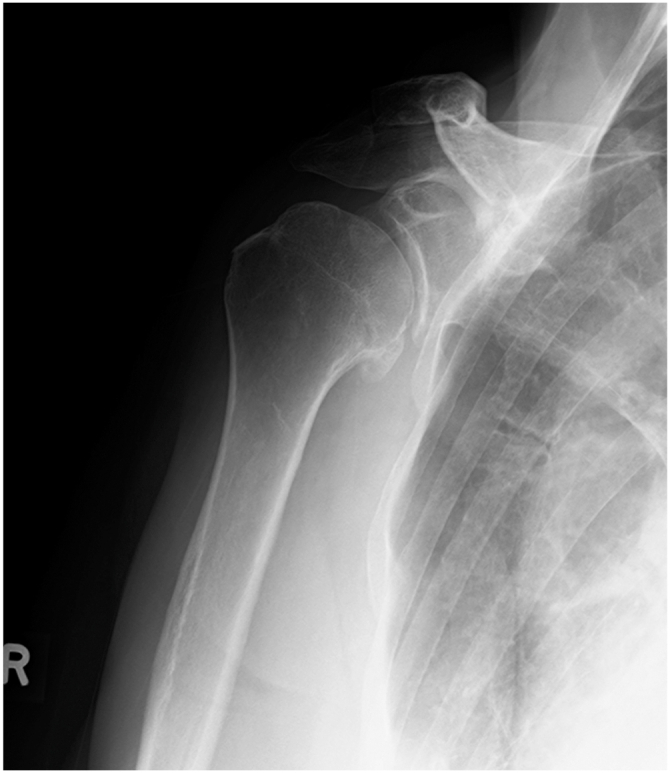 Figure 1
Peer Reviews
No public reviews on file for this paper yet. If you reviewed it on a platform where reviews are public (OpenReview, ICLR, NeurIPS, ICML), you can paste yours below so the community can read it here.
Videos
No videos yet. Explain this paper in a talk, walkthrough, or lecture? Add one.
Taxonomy
TopicsShoulder Injury and Treatment · Shoulder and Clavicle Injuries · Hip disorders and treatments