Genomic‐Based Epidemiological Analysis of the Post‐Pandemic Mycoplasma pneumoniae Resurgence
Hongbo Liu, Xiaoyi Zheng, Xinying Du, Yule Wang, Ying Xiang, Qi Wang, Sai Tian, Yufan Xian, Wenbin Chen, Hongbo Liu, Hui Wang, Chao Wang, Mingjuan Yang, Huiqun Jia, Xiaoying Li, Yunjie Dan, Libo Tong, Guohong Deng, Huiling Li, Fusheng Wang, Hongbin Song, Shaofu Qiu

TL;DR
This study tracks the resurgence of Mycoplasma pneumoniae in China after the pandemic, identifying new genetic lineages and a common mutation linked to resistance.
Contribution
The study introduces a new sequencing method and identifies three new Chinese clades of M. pneumoniae during the post-pandemic resurgence.
Findings
Three new main Chinese clades of M. pneumoniae emerged and co-circulated in China.
96.31% of isolates had the A2063G mutation, suggesting potential drug resistance.
Phylogenetic analysis revealed six distinct global lineages of M. pneumoniae.
Abstract
Mycoplasma pneumoniae infections resurged globally in 2023–2024 following a significant decline during the coronavirus disease 2019 (COVID‐19) pandemic. To understand the genomic epidemiology of this resurgence in China, a nationwide 1‐year genomic surveillance identified 9907 patients infected with M. pneumoniae, resulting in an overall positive rate of 10.05%. We developed a hybrid capture‐based targeted next‐generation sequencing (hc‐tNGS) assay, obtaining 271 high‐quality genomes directly from clinical samples. Phylogenetic analysis of a global collection of 562 M. pneumoniae genomes identified six distinct lineages, including three newly emerged main Chinese clades (MCCs) that co‐circulated across various regions of China. Among these MCCs, one clade, comprising P1‐1, ST17, and L4, was localized in Taiwan, while two others—P1‐1, ST3, and L6 clade, and P1‐2, ST14 and L2…
Genes, proteins, chemicals, diseases, species, mutations and cell lines named across the full text — each resolved to its canonical identifier and authoritative record.
Click any figure to enlarge with its caption.
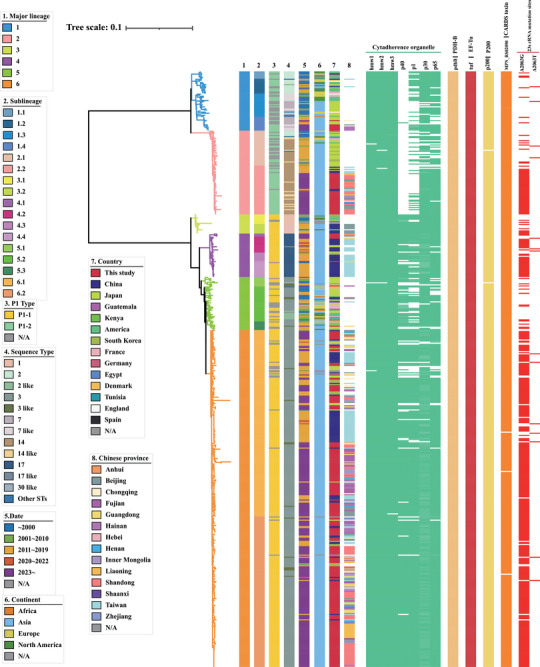 Figure 1
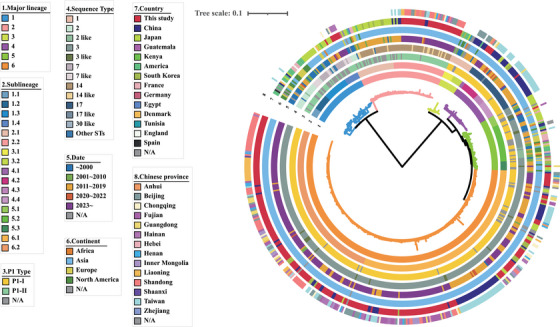 Figure 2
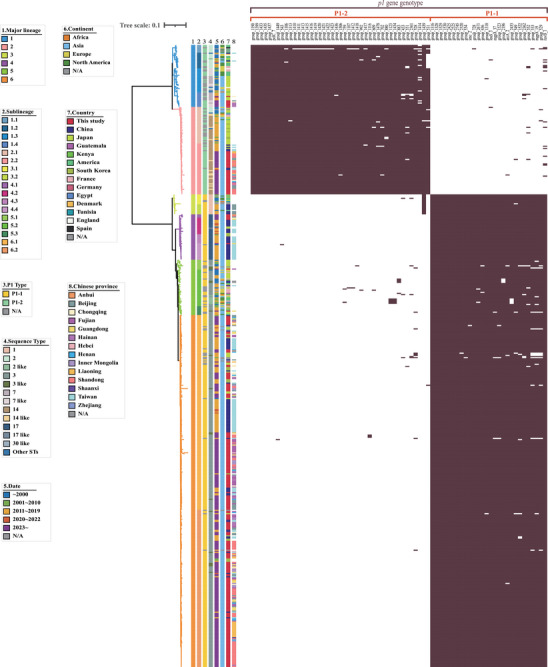 Figure 3
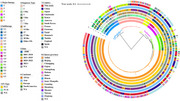 Figure 4
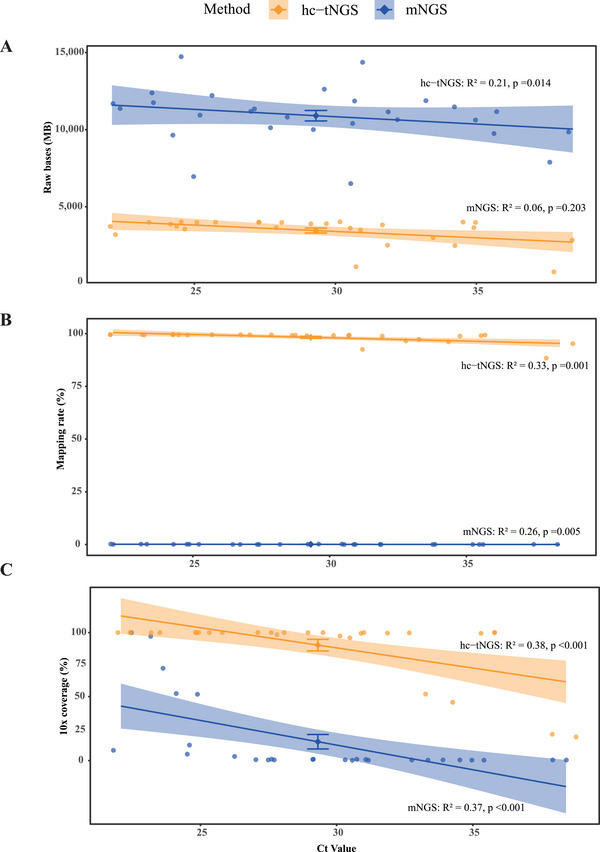 Figure 5
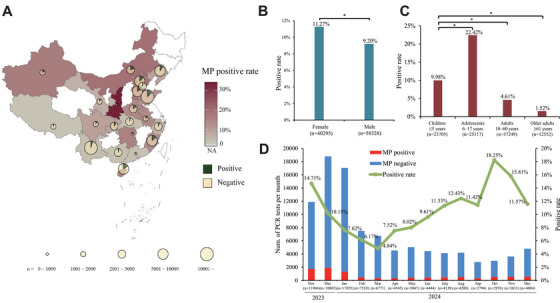 Figure 6
Peer Reviews
No public reviews on file for this paper yet. If you reviewed it on a platform where reviews are public (OpenReview, ICLR, NeurIPS, ICML), you can paste yours below so the community can read it here.
Videos
No videos yet. Explain this paper in a talk, walkthrough, or lecture? Add one.
Taxonomy
TopicsMicrobial infections and disease research · Pneumonia and Respiratory Infections · vaccines and immunoinformatics approaches