Skeletal muscle‐specific PGC‐1α‐b overexpression prevents eccentric contraction‐induced muscle injury through an utrophin‐independent pathway in mice
Azuma Naito, Nao Tokuda, Nao Yamauchi, Ayaka Niibori, Kazuma Okada, Koichi Himori, Yuki Ashida, Takashi Yamada

TL;DR
A protein called PGC-1α-b helps protect muscle fibers from injury caused by certain types of exercise in mice, even without another protein called utrophin.
Contribution
PGC-1α-b overexpression protects glycolytic muscle fibers from ECC-induced injury independently of utrophin.
Findings
PGC-1α-b transgenic mice showed rapid recovery of muscle torque after injury.
These mice had minimal membrane damage and calpain-1 activation.
PGC-1α-b preserved excitation-contraction coupling proteins and increased mitochondrial markers.
Abstract
Slower oxidative fibers are more resistant to eccentric contraction (ECC)‐induced muscle damage than fast‐twitch glycolytic fibers, but the mechanisms remain unclear. This study investigated the roles of the exercise‐inducible PGC‐1α isoform PGC‐1α‐b and utrophin in protecting against ECC‐induced damage. ECCs were induced by supramaximal electrical stimulation of the left triceps surae in C57BL/6N wild‐type (WT), PGC‐1α‐b transgenic (Tg), utrophin knockout (Utrn KO), and PGC‐1α‐b Tg/Utrn KO mice. Although the proportion of fast‐type myosin heavy chain (MyHC) IIb in the gastrocnemius muscle was modestly lower in PGC‐1α‐b Tg and PGC‐1α‐b Tg/Utrn KO mice than in WT and Utrn KO mice, MyHC IIb remained the predominant isoform. At 3 days post injury (dpi), WT and Utrn KO mice exhibited reduced maximum isometric torque (MIT), Evans blue dye (EBD) staining in MyHC IIb‐positive fibers, and…
Genes, proteins, chemicals, diseases, species, mutations and cell lines named across the full text — each resolved to its canonical identifier and authoritative record.
Click any figure to enlarge with its caption.
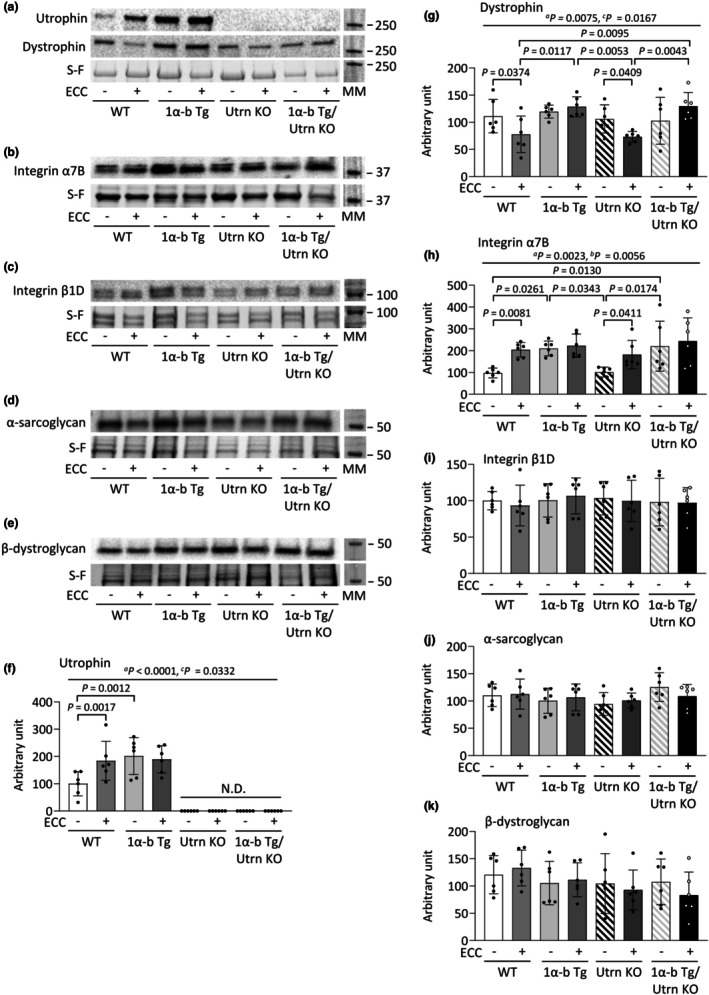 Figure 1
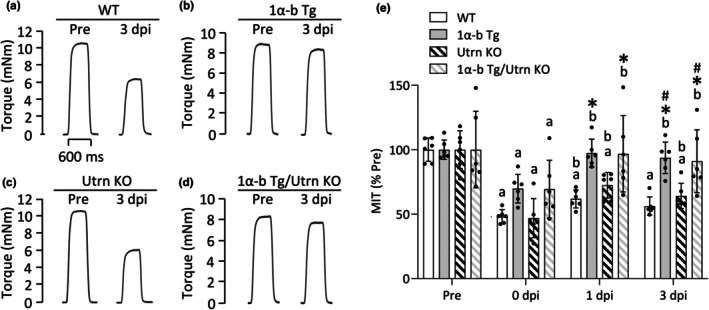 Figure 2
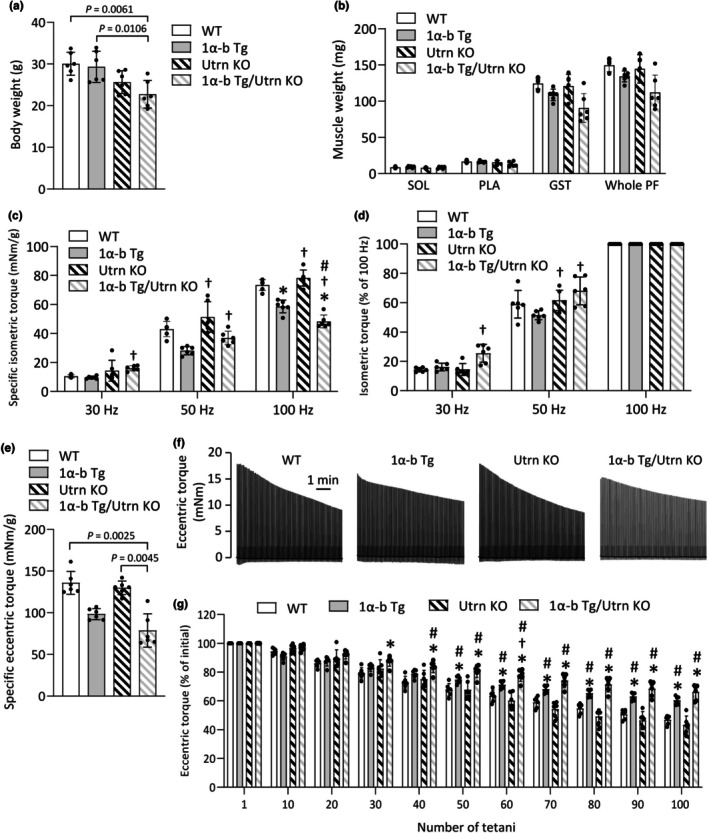 Figure 3
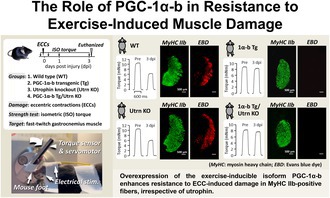 Figure 4
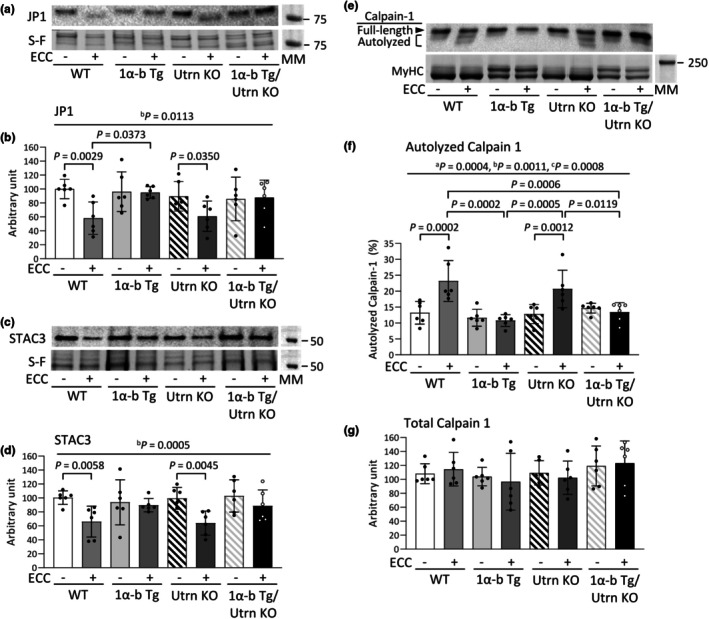 Figure 5
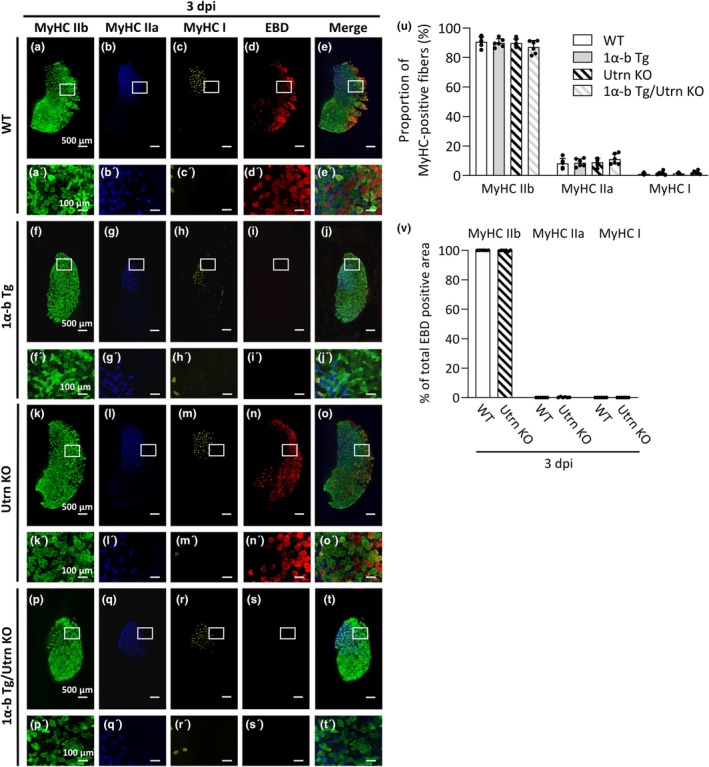 Figure 6
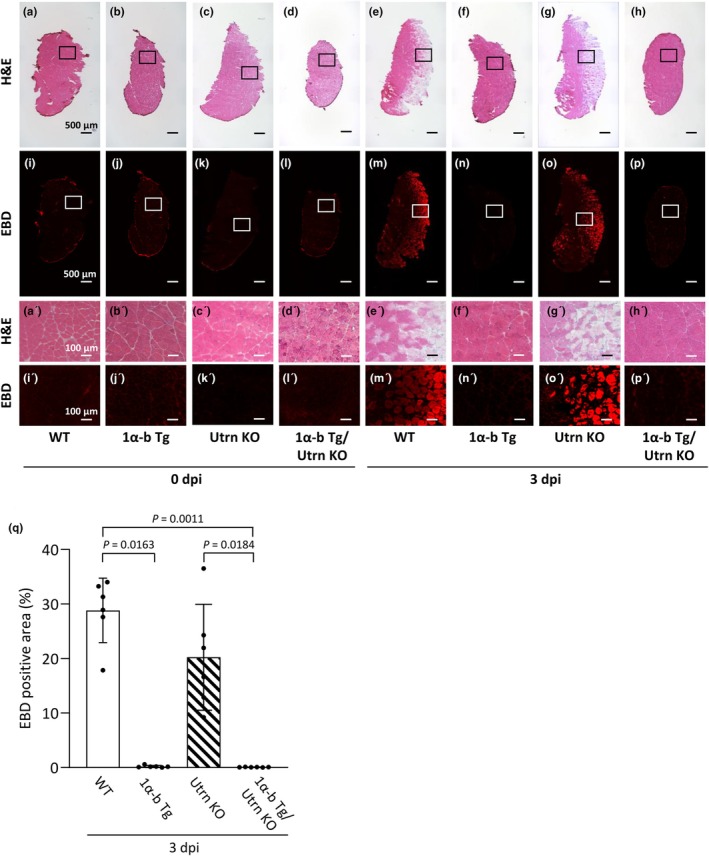 Figure 7
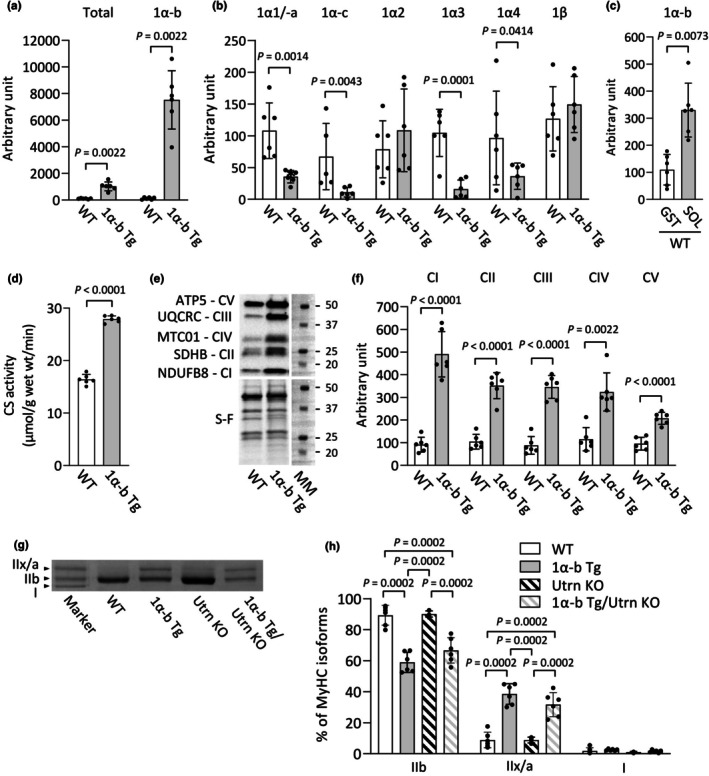 Figure 8
Peer Reviews
No public reviews on file for this paper yet. If you reviewed it on a platform where reviews are public (OpenReview, ICLR, NeurIPS, ICML), you can paste yours below so the community can read it here.
Videos
No videos yet. Explain this paper in a talk, walkthrough, or lecture? Add one.
Taxonomy
TopicsMuscle Physiology and Disorders · Exercise and Physiological Responses · Cardiomyopathy and Myosin Studies