Efficacy and Safety of PEGylated Recombinant Human Growth Hormone in Children With Growth Hormone Deficiency and Idiopathic Short Stature: A Real‐World Cohort Study
Liping Ge, Canmiao Zhao, Yang Yang, Lijun Xu, Meiyuan Sun, Yanfang Su, Fang Xu, Qi Huang, Na Tao

TL;DR
This study shows that PEGylated human growth hormone effectively and safely improves height in children with growth hormone deficiency and idiopathic short stature.
Contribution
The study provides real-world evidence of PEG-rhGH efficacy and safety in Chinese children with GHD and ISS.
Findings
PEG-rhGH significantly improved height standard deviation scores in both GHD and ISS groups over 18 months.
No significant differences in growth outcomes or safety were observed between the GHD and ISS groups.
Children with ISS may need longer treatment or higher doses to achieve normal height due to reduced GH sensitivity.
Abstract
Growth hormone deficiency (GHD) and idiopathic short stature (ISS) are common causes of short stature in children. In China, PEGylated recombinant human GH (PEG‐rhGH, Jintrolong) has been approved for the treatment of both conditions. This study aimed to evaluate the efficacy and safety of PEG‐rhGH in children diagnosed with GHD or ISS and to compare clinical outcomes between the two groups. This real‐world study included 91 treatment‐naïve children with short stature at Kunming Children’s Hospital between 2020 and 2021. Participants were categorized into the GHD group (n = 39) and the ISS group (n = 52) based on etiological diagnosis. All subjects received weekly subcutaneous PEG‐rhGH injections at an initial dose of 0.20 mg/kg/wk and were followed for 18 months. Growth‐related parameters were assessed throughout the study. PEG‐rhGH treatment significantly improved height standard…
Genes, proteins, chemicals, diseases, species, mutations and cell lines named across the full text — each resolved to its canonical identifier and authoritative record.
Click any figure to enlarge with its caption.
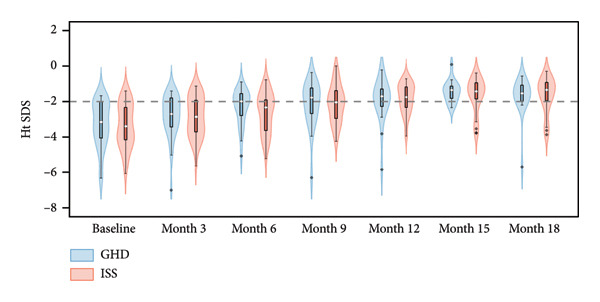 Figure 1
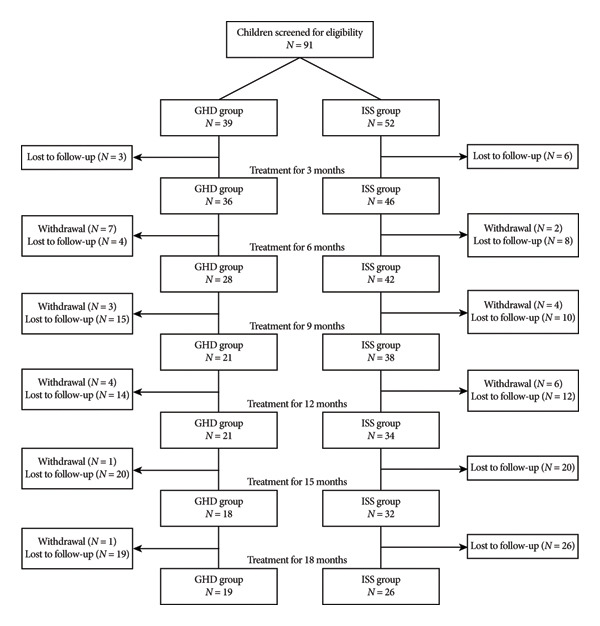 Figure 2
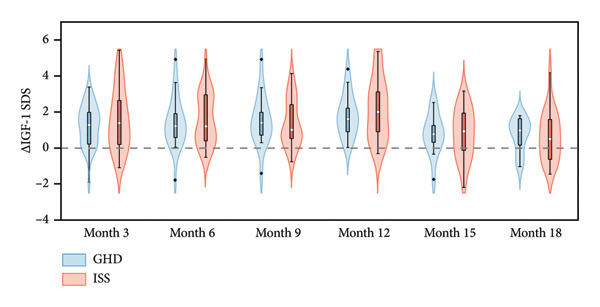 Figure 3
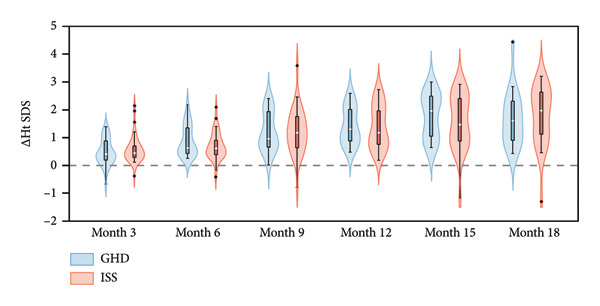 Figure 4
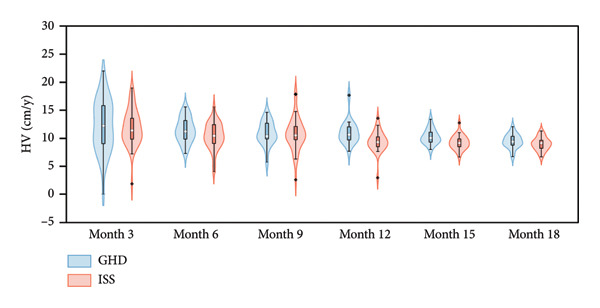 Figure 5
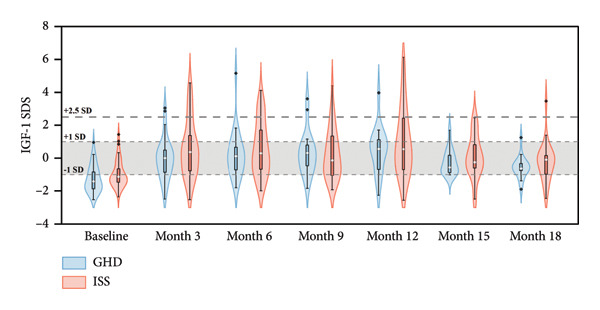 Figure 6
Peer Reviews
No public reviews on file for this paper yet. If you reviewed it on a platform where reviews are public (OpenReview, ICLR, NeurIPS, ICML), you can paste yours below so the community can read it here.
Videos
No videos yet. Explain this paper in a talk, walkthrough, or lecture? Add one.
Taxonomy
TopicsGrowth Hormone and Insulin-like Growth Factors · Sexual Differentiation and Disorders · Pituitary Gland Disorders and Treatments