Manganese Oxide as an Electrochemical Sensor for Carbamazepine and Sulfamethoxazole in Wastewater Samples
Pheladi Lizzy Mokaba, Collen Nepfumbada, Boipelo Nichollette Mathe, Aitor Larranaga, Ntuthuko Wonderboy Hlongwa, Usisipho Feleni

TL;DR
A new sensor using manganese oxide nanoparticles detects two pharmaceuticals in wastewater with high sensitivity and accuracy.
Contribution
A novel MnO2NP-modified electrode enables simultaneous detection of carbamazepine and sulfamethoxazole at ultra-low concentrations.
Findings
The sensor achieved detection limits of 0.106 nM for carbamazepine and 0.082 nM for sulfamethoxazole.
Recovery tests in real wastewater showed 95–110% for carbamazepine and 90–105% for sulfamethoxazole.
The sensor demonstrated excellent selectivity, stability, and practical potential for monitoring pharmaceutical pollutants.
Abstract
The extensive use of pharmaceutical compounds poses a growing threat to environmental and public health. Carbamazepine (CBZ) and sulfamethoxazole (SMX), widely used in veterinary and human medicine, are persistent pollutants often detected in water bodies. Their presence at trace levels can contribute to the development of antibiotic resistance. In this study, a novel electrochemical sensor based on manganese oxide nanoparticles (MnO2NPs) modified screen‐printed carbon electrode (SPCE) was fabricated for the detection of CBZ and SMX. The effects of pH, scan rate, and analyte concentration were systematically investigated. Under optimized conditions, the sensor exhibited excellent sensitivity with detection limits of 0.106 nanomolar (CBZ) and 0.082 nanomolar (SMX), respectively within a linear range of 0.97–5.82 nanomolar. The sensor showed outstanding selectivity and stability, and its…
Genes, proteins, chemicals, diseases, species, mutations and cell lines named across the full text — each resolved to its canonical identifier and authoritative record.
Click any figure to enlarge with its caption.
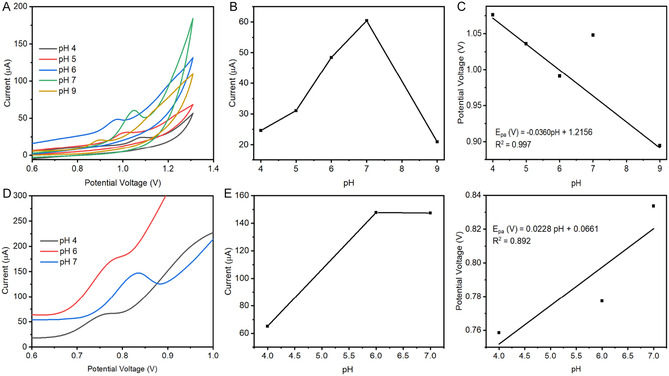 Figure 1
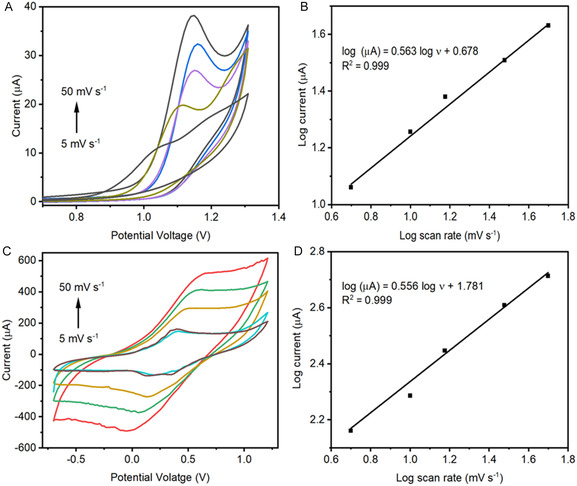 Figure 2
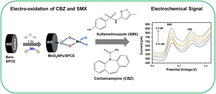 Figure 3
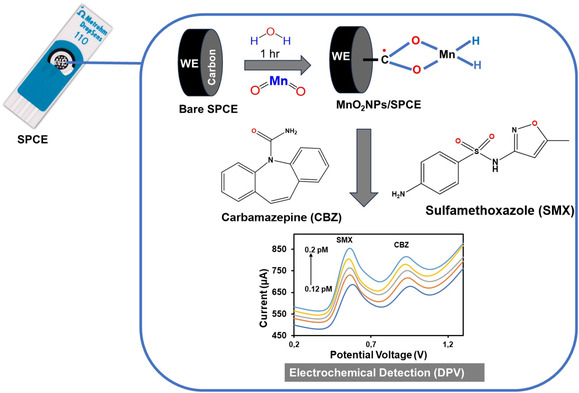 Figure 4
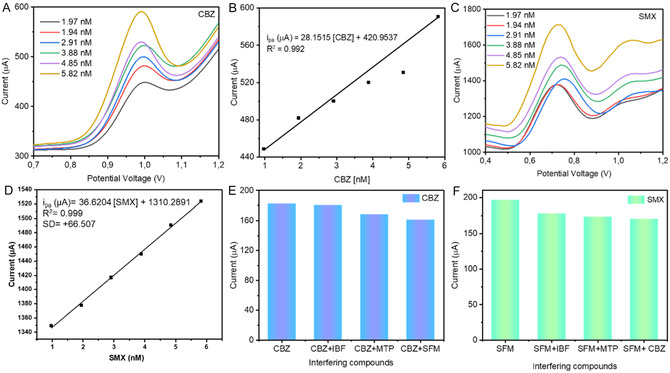 Figure 5
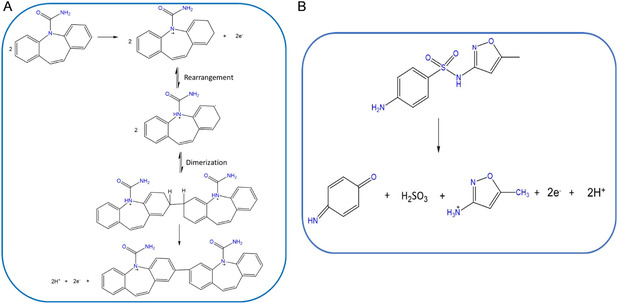 Figure 6
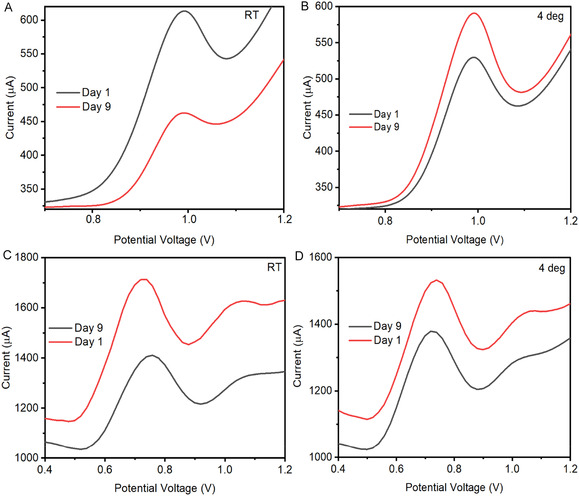 Figure 7
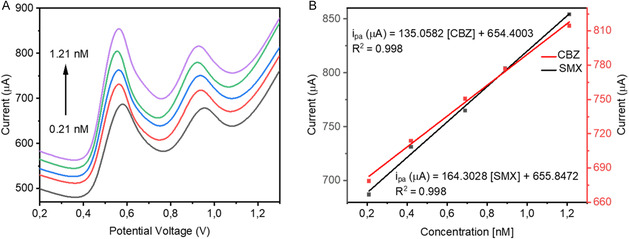 Figure 8
Peer Reviews
No public reviews on file for this paper yet. If you reviewed it on a platform where reviews are public (OpenReview, ICLR, NeurIPS, ICML), you can paste yours below so the community can read it here.
Videos
No videos yet. Explain this paper in a talk, walkthrough, or lecture? Add one.
Taxonomy
TopicsElectrochemical sensors and biosensors · Advanced biosensing and bioanalysis techniques · Pharmaceutical and Antibiotic Environmental Impacts