How Pragmatic Are Sarcopenia Intervention Studies? A Systematic Review
Sophie Van Heden, Zoubayda Baoubbou, Dolores Sanchez‐Rodriguez, Yoke Mun Chan, Charlotte Beaudart

TL;DR
This review evaluates how real-world sarcopenia treatment trials are, finding they often lack practical applicability despite growing research.
Contribution
The study introduces a systematic assessment of sarcopenia RCTs' pragmatism using the PRECIS-2 tool, identifying design gaps for real-world relevance.
Findings
Sarcopenia RCTs show a balance of explanatory and pragmatic traits but lack real-world applicability in key areas like eligibility and follow-up.
Trials in Asia and those using Asian sarcopenia criteria (e.g., AWGS) demonstrated higher pragmatism scores in specific domains.
Organization and recruitment were the most pragmatic aspects, while adherence and follow-up remained overly controlled.
Abstract
Sarcopenia is an age‐related muscle disease often accompanied by comorbidities, mobility issues and cognitive decline, which can limit treatment adherence in older adults. Owing to the reversible nature of sarcopenia, there has been a growing number of randomized controlled trials conducted in recent years. Yet, many randomized controlled trials (RCTs) are conducted under ideal conditions (explanatory trials), limiting their real‐world applicability. In contrast, pragmatic trials aim to better reflect the complexities of clinical practice. This study is aimed at assessing the level of pragmatism in current sarcopenia RCTs and identifying design gaps to further improve the clinical relevance and feasibility of future trials in the real world. A systematic review was conducted on MEDLINE (via Ovid), Embase and Cochrane Central Register of Controlled Trials (PRISMA guidelines; PROSPERO:…
Genes, proteins, chemicals, diseases, species, mutations and cell lines named across the full text — each resolved to its canonical identifier and authoritative record.
Click any figure to enlarge with its caption.
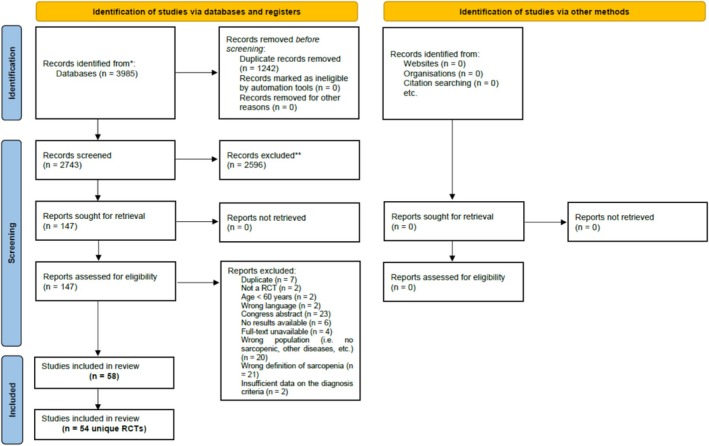 Figure 1
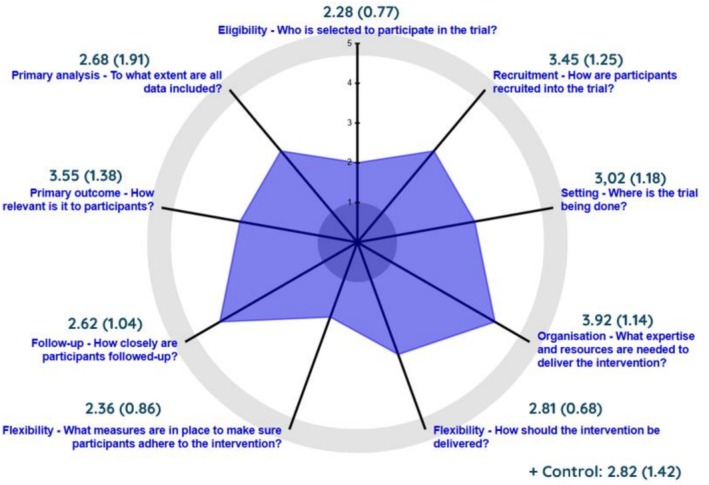 Figure 2
Peer Reviews
No public reviews on file for this paper yet. If you reviewed it on a platform where reviews are public (OpenReview, ICLR, NeurIPS, ICML), you can paste yours below so the community can read it here.
Videos
No videos yet. Explain this paper in a talk, walkthrough, or lecture? Add one.
Taxonomy
TopicsNutrition and Health in Aging · Frailty in Older Adults · Cerebral Palsy and Movement Disorders