Alpha‐synuclein quantitative seed amplification assay predicts conversion to dementia
Stefan Bräuer, Verena Sondermann, Iñaki Schniewind, Tom Hähnel, Elisabeth Dinter, Luca Kleineidam, Melina Stark, Matthias Schmid, Sebastian Sodenkamp, Christoph Laske, Eike Spruth, Josef Priller, Daniel Janowitz, Katharina Bürger, Ingo Kilimann, Stefan Teipel, Alexander Storch

TL;DR
A new test called qnSAA can predict dementia risk by measuring alpha-synuclein levels in cerebrospinal fluid.
Contribution
The study introduces a quantitative version of the alpha-synuclein seed amplification assay (qnSAA) for improved dementia risk prediction.
Findings
qnSAA results correlate with cognitive performance and reflect biomarker progression over time.
Participants with fast qnSAA kinetics had a 75% chance of converting to dementia.
qnSAA can identify clinically relevant differences between patient populations at risk for dementia.
Abstract
The alpha‐synuclein seed amplification assay (SAA) has shown excellent performance in the detection of Lewy body pathology in cerebrospinal fluid (CSF). Lewy body pathology is prognostically relevant in patients at risk for dementia. Current assays only provide binary results, so there is a need to quantify the extent of pathology in living patients. In addition to the “standard” SAA, we developed a quantitative SAA (qnSAA) and measured 432 CSF samples (216 baseline–follow‐up pairs). qnSAA results correlated with cognitive performance. Seventy‐five percent of participants with fast qnSAA kinetics converted to dementia in the observed interval. Overall, participants with fast qnSAA kinetics accounted for 27.3% of dementia converters in the entire cohort. Findings demonstrate promising properties of qnSAA measurements in a cohort of patients at risk for dementia. qnSAA results showed…
Genes, proteins, chemicals, diseases, species, mutations and cell lines named across the full text — each resolved to its canonical identifier and authoritative record.
Click any figure to enlarge with its caption.
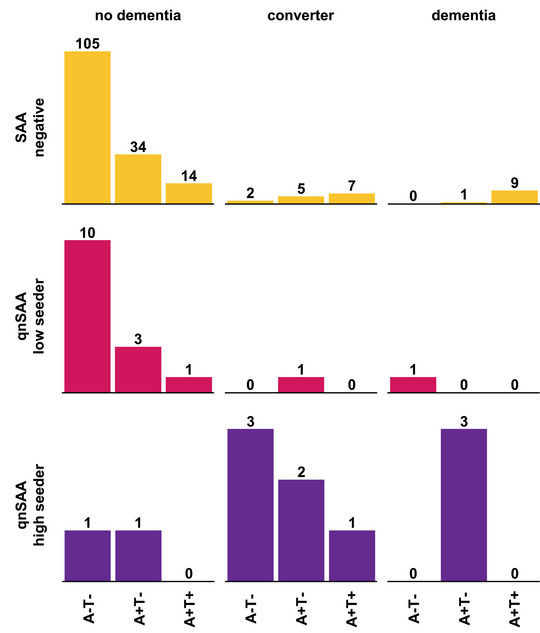 Figure 1
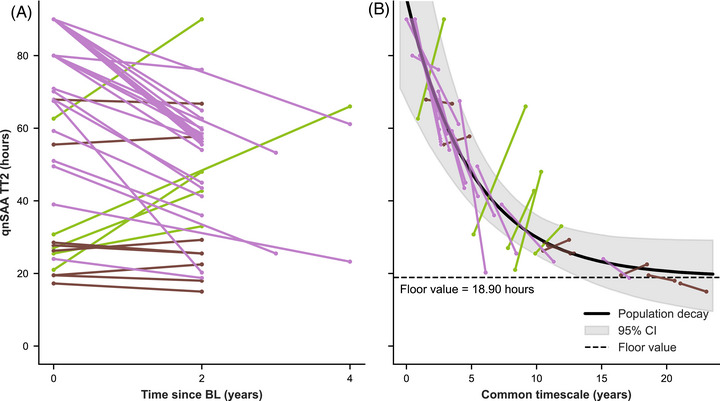 Figure 2
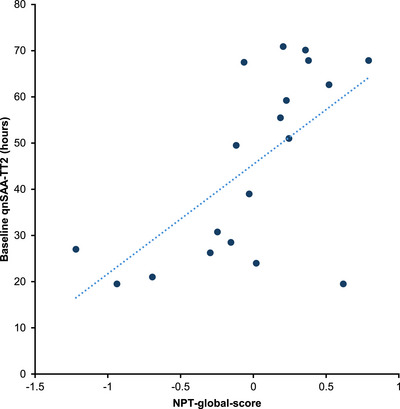 Figure 3
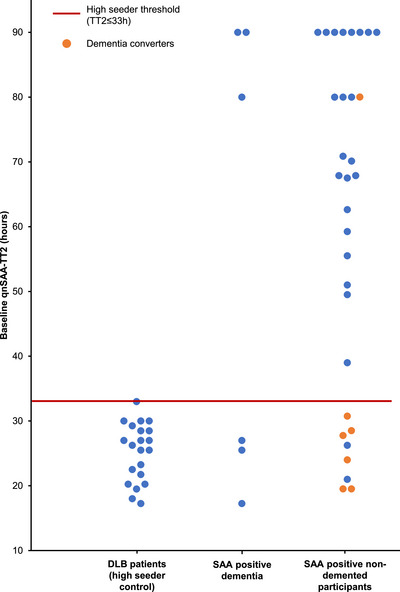 Figure 4
Peer Reviews
No public reviews on file for this paper yet. If you reviewed it on a platform where reviews are public (OpenReview, ICLR, NeurIPS, ICML), you can paste yours below so the community can read it here.
Videos
No videos yet. Explain this paper in a talk, walkthrough, or lecture? Add one.
Taxonomy
TopicsParkinson's Disease Mechanisms and Treatments · Dementia and Cognitive Impairment Research · Neurological disorders and treatments