Evolutionary dynamics of FoxQ2 transcription factors across metazoans reveals three ancient paralogs
Giacomo Gattoni, Che-Yi Lin, Joshua R. York, Colin Shew, Daniel Keitley, Carole LaBonne, Jr-Kai Yu, J. Andrew Gillis, Elia Benito-Gutiérrez

TL;DR
This study reveals the evolutionary history of FoxQ2 transcription factors, identifying three ancient paralogs and their distinct expression patterns in different animal groups.
Contribution
The discovery of three ancient FoxQ2 paralogs and their distinct expression patterns in chordates provides new insights into their evolutionary dynamics and functional diversification.
Findings
Three ancient FoxQ2 paralogs (FoxQ2I, FoxQ2II, FoxQ2III) were identified in bilaterians.
FoxQ2I and FoxQ2II show conserved anterior expression, while FoxQ2III is expressed in the gut endoderm of chordates.
Early duplication of FoxQ2I/II is proposed to have enabled subfunctionalization and accelerated evolutionary rates.
Abstract
FoxQ2 is a highly conserved Forkhead-box transcription factor expressed anteriorly in cnidarians and bilaterians, yet its evolution is marked by rapid divergence and lineage-specific duplications or losses. Moreover, its presence and localization in vertebrate groups remains unclear. To reconcile these conflicting reports of conservation and divergence, we combine phylogenetic and synteny analyses of FoxQ2 sequences from 21 animal phyla. We uncover three ancient FoxQ2 paralogs in bilaterians—FoxQ2I, FoxQ2II, and FoxQ2III. All three were present in the chordate ancestor, and two are retained in vertebrates, indicating a richer FoxQ2 repertoire in vertebrates than previously recognized. To assess FoxQ2 expression, we analyzed mollusk, acoel, amphioxus, and zebrafish single-cell transcriptomic datasets, and conducted fluorescent in situ hybridization in amphioxus, lamprey, skate,…
Genes, proteins, chemicals, diseases, species, mutations and cell lines named across the full text — each resolved to its canonical identifier and authoritative record.
Click any figure to enlarge with its caption.
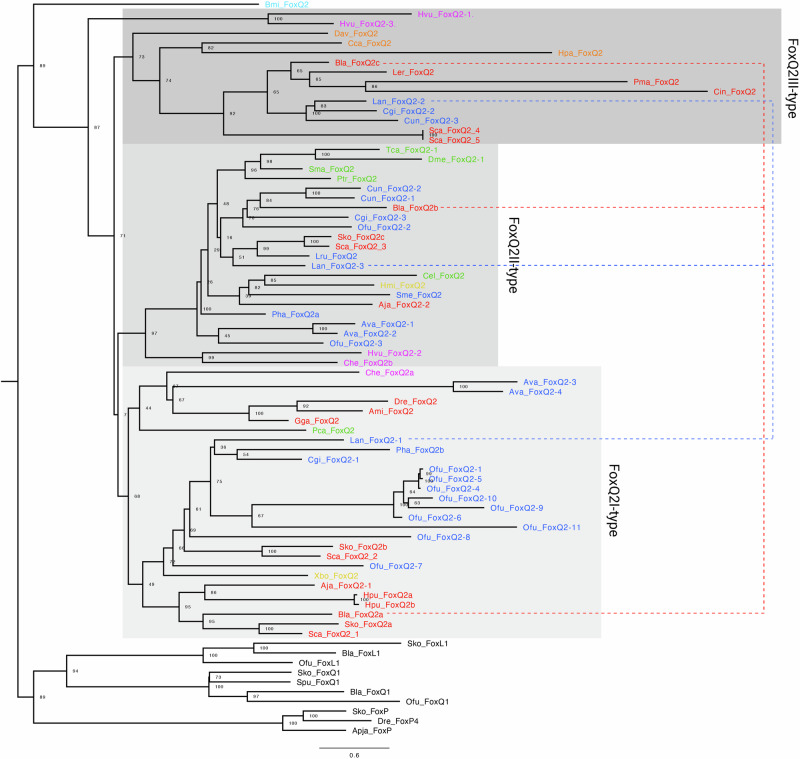 Figure 1
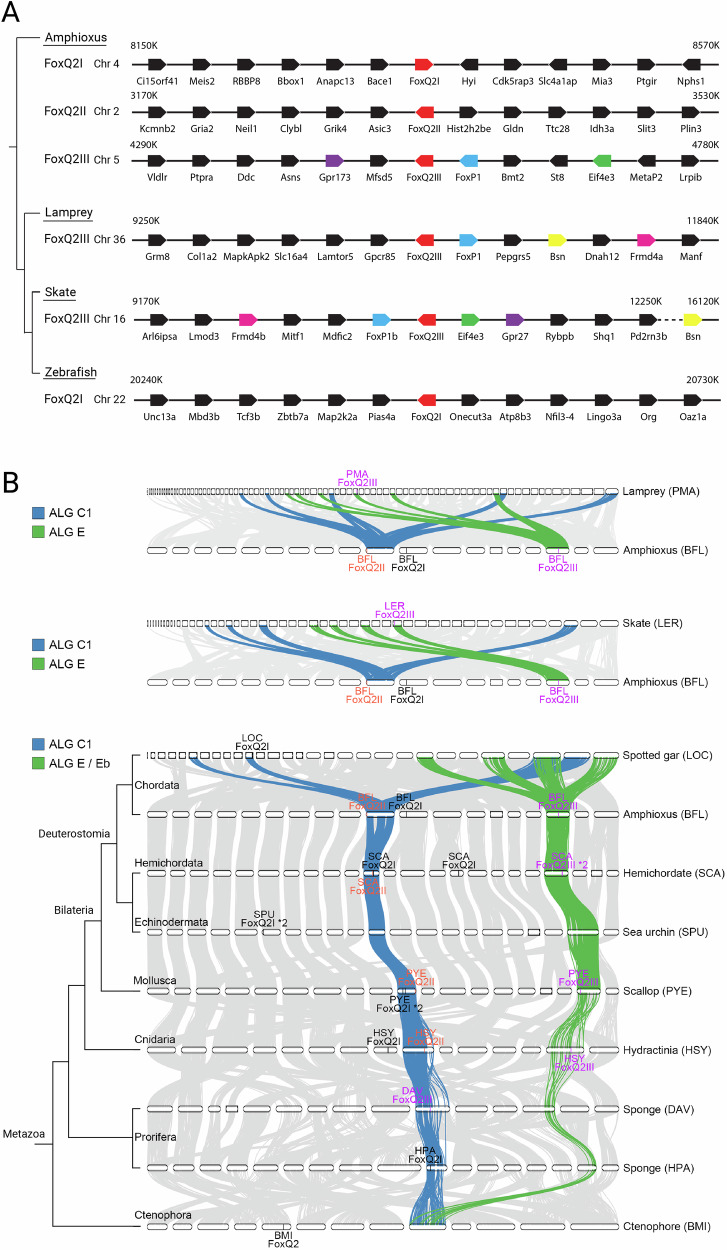 Figure 2
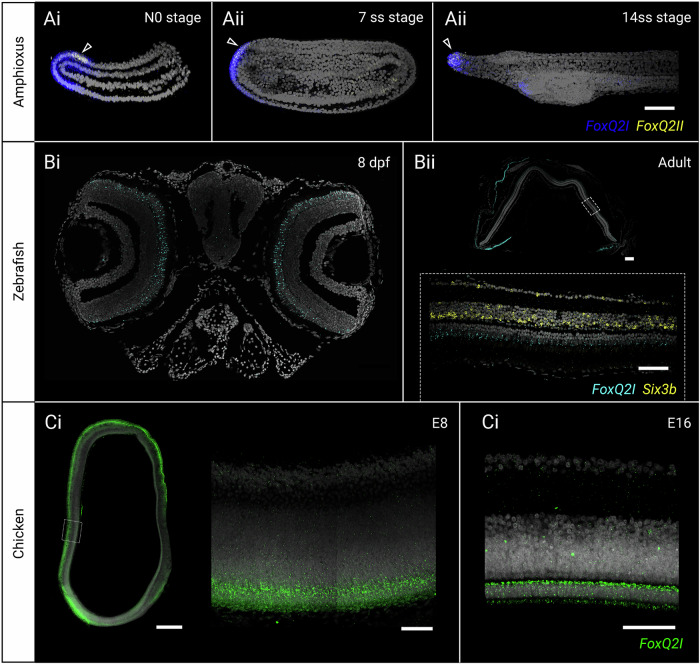 Figure 3
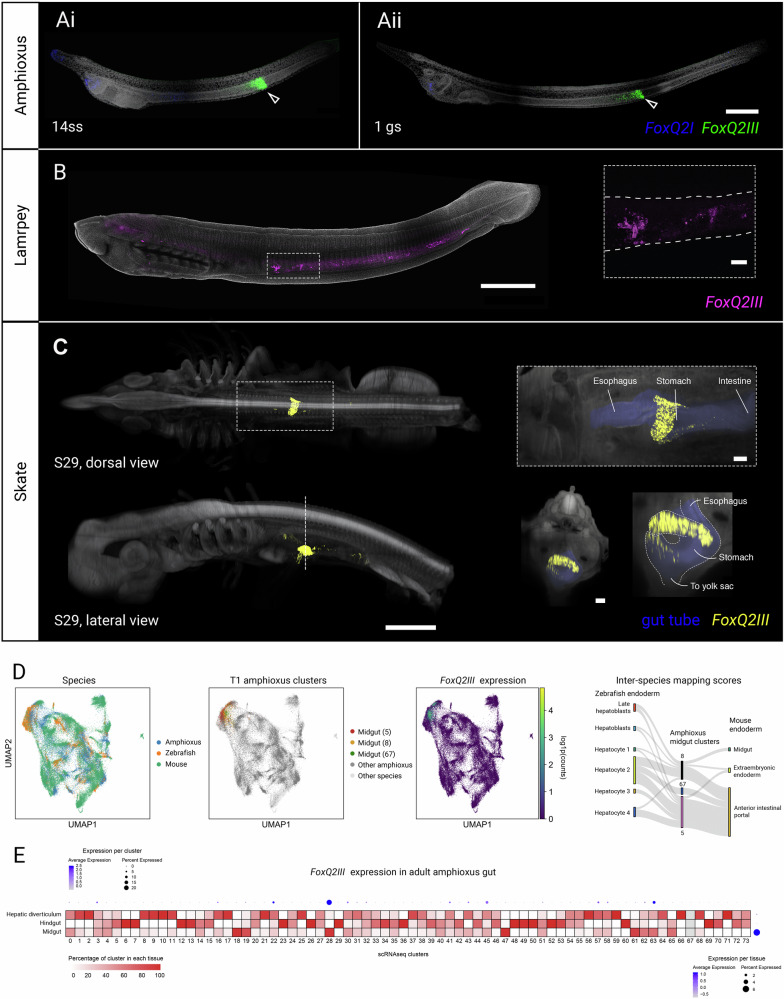 Figure 4
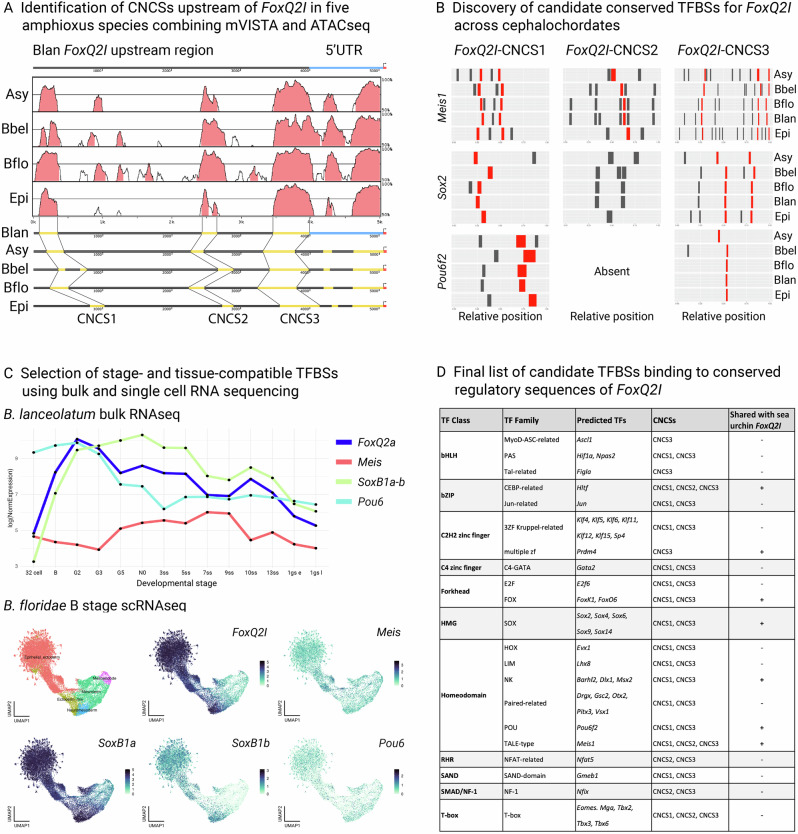 Figure 5
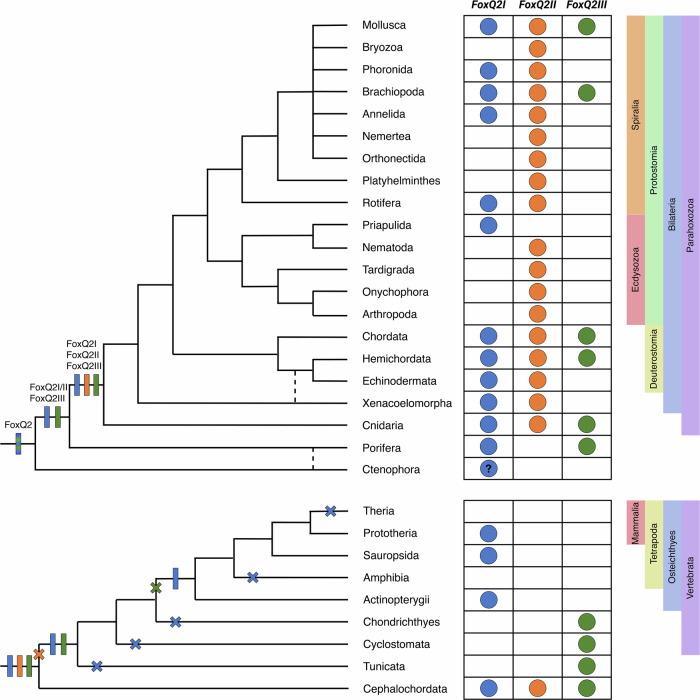 Figure 6
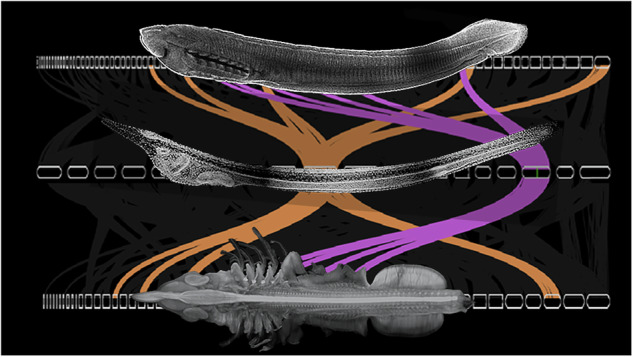 Figure 7
Peer Reviews
No public reviews on file for this paper yet. If you reviewed it on a platform where reviews are public (OpenReview, ICLR, NeurIPS, ICML), you can paste yours below so the community can read it here.
Videos
No videos yet. Explain this paper in a talk, walkthrough, or lecture? Add one.
Taxonomy
TopicsHippo pathway signaling and YAP/TAZ · FOXO transcription factor regulation · Developmental Biology and Gene Regulation