Computational network models for forecasting and control of mental health trajectories in digital applications
Janik Fechtelpeter, Christian Rauschenberg, Christian Goetzl, Selina Hiller, Eva Wierzba, Niklas Emonds, Silvia Krumm, Ulrich Reininghaus, Daniel Durstewitz, Georgia Koppe

TL;DR
This paper explores how advanced computational models can predict and help manage mental health states in real time using data from daily life tracking.
Contribution
The study introduces and validates nonlinear state-space models for accurate and interpretable forecasting of mental health dynamics.
Findings
Nonlinear PLRNN models outperformed others in forecasting mental health states and responses to interventions.
The models revealed interpretable psychological network structures with key influence points like 'relaxed' states.
Simulated perturbations using these models linked network structure directly to intervention planning.
Abstract
Ecological momentary assessment (EMA) enables fine-grained tracking of affective and behavioral states in daily life. Accurately forecasting these states and their responses to interventions can guide adaptive mental health strategies. Network-based models are commonly used to capture such psychological dynamics, but most existing approaches make linear assumptions, and are rarely evaluated on forecasting performance. More flexible nonlinear models could better match evidence that psychological processes unfold in nonlinear, context-dependent ways and may offer superior predictive accuracy, but their internal dynamics are typically less interpretable. Here, we benchmarked a spectrum of models across three 40 day micro-randomized trials (N = 145), spanning linear network models, nonlinear state-space models (SSMs) based on piecewise-linear recurrent neural networks (PLRNNs), and…
Genes, proteins, chemicals, diseases, species, mutations and cell lines named across the full text — each resolved to its canonical identifier and authoritative record.
Click any figure to enlarge with its caption.
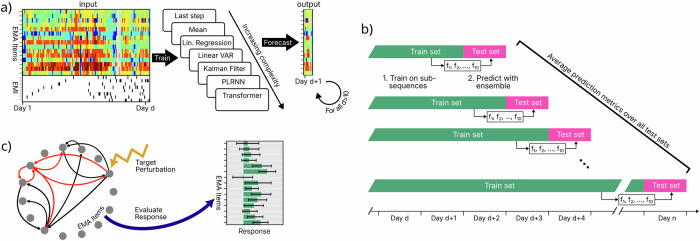 Figure 1
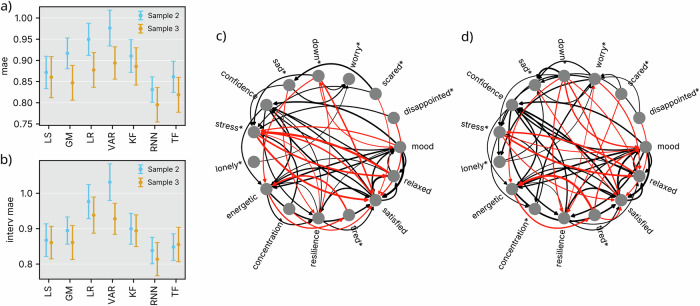 Figure 2
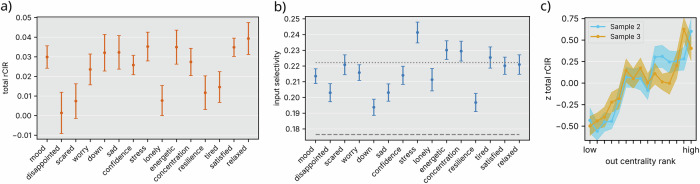 Figure 3
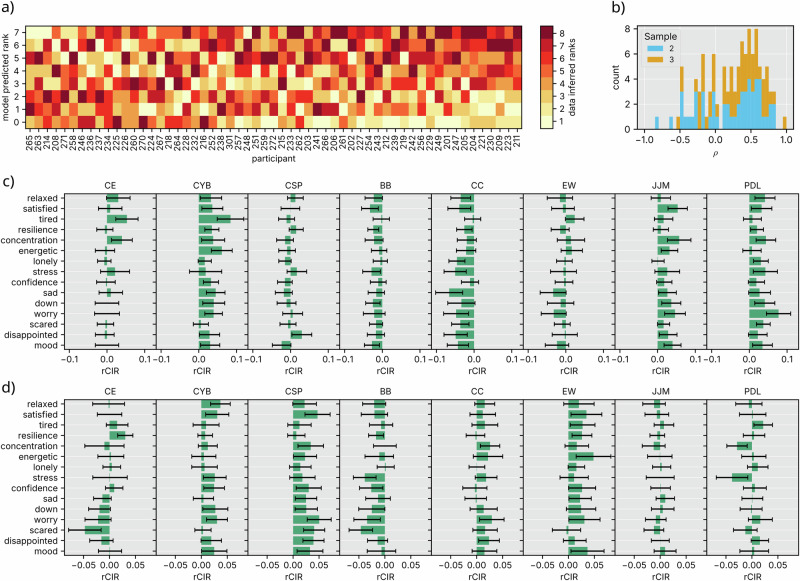 Figure 4
Peer Reviews
No public reviews on file for this paper yet. If you reviewed it on a platform where reviews are public (OpenReview, ICLR, NeurIPS, ICML), you can paste yours below so the community can read it here.
Videos
No videos yet. Explain this paper in a talk, walkthrough, or lecture? Add one.
Taxonomy
TopicsMental Health Research Topics · Digital Mental Health Interventions · Functional Brain Connectivity Studies