Transcriptomic signatures in brain and blood related to cognitive and psychiatric phenotypes of Prader–Willi syndrome
Shokouh Shahrokhi, Emma K. Baker, Michael See, Mirana Ramialison, Dinusha Gamage, Fernando J. Rossello, Helen Heussler, Michael Duhig, Robert D. Nicholls, Anthony J. Hannan, Melissa C. Southey, Olivia Veatch, Waheeda Hossain, Minh Bui, David J. Amor, Merlin G. Butler

TL;DR
This study identifies gene expression patterns in the brain and blood of individuals with Prader-Willi syndrome that are linked to cognitive and behavioral symptoms.
Contribution
The study reveals consistent gene dysregulation in PWS brains and links RPS18 expression in blood to cognitive and behavioral traits.
Findings
PWS brains show increased interneuron proportions and dysregulated genes across all cell types.
RPS18 is the only protein-coding gene upregulated in PWS prefrontal cortex across all comparisons.
Higher RPS18 levels in blood correlate with intellectual functioning and challenging behaviors in young PWS patients.
Abstract
This study defined gene expression changes across different cell types in prefrontal cortex (PFC) of donors with Prader-Willi syndrome (PWS) compared to controls and examined relationships between these changes in blood and PWS symptoms. 8,338 long non-coding RNAs and 17,079 protein-coding genes were examined using single-nucleus RNA-sequencing (snRNA-seq) in the PFC of 8 donors with PWS (4 deletion, 4 non-deletion), and 4 age- and sex-matched neurotypical controls. snRNA-seq analyses showed an increased proportion of interneurons in both PWS groups compared to controls. Fifty-four genes and related pathways were consistently dysregulated across all cell types in the PFC of the PWS group compared to controls, with RPS18 being the only protein-coding gene upregulated in PWS PFC across all comparisons. Increase in RPS18 mRNA levels in peripheral blood mononuclear cells (PBMCs) of another…
Genes, proteins, chemicals, diseases, species, mutations and cell lines named across the full text — each resolved to its canonical identifier and authoritative record.
Click any figure to enlarge with its caption.
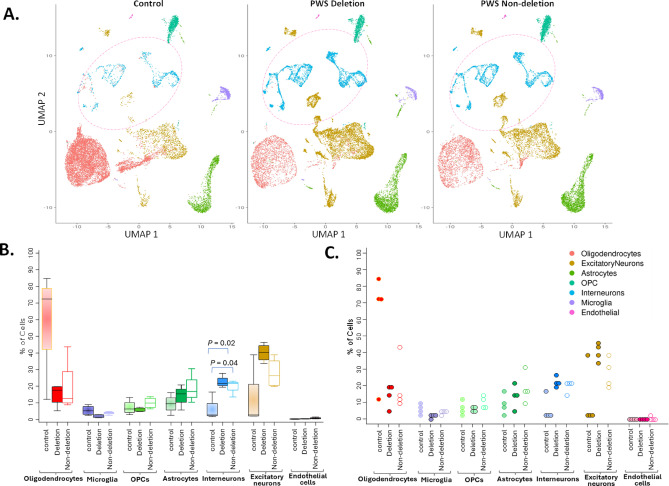 Figure 1
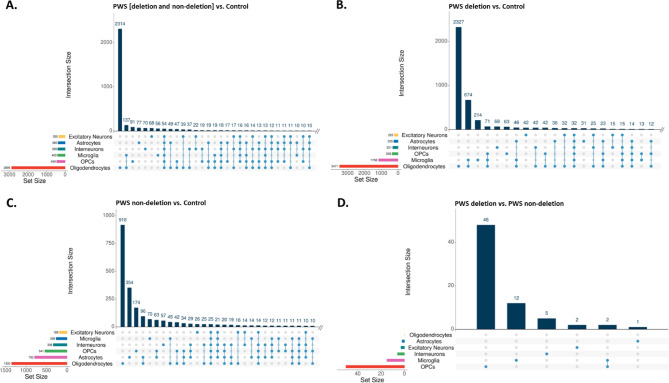 Figure 2
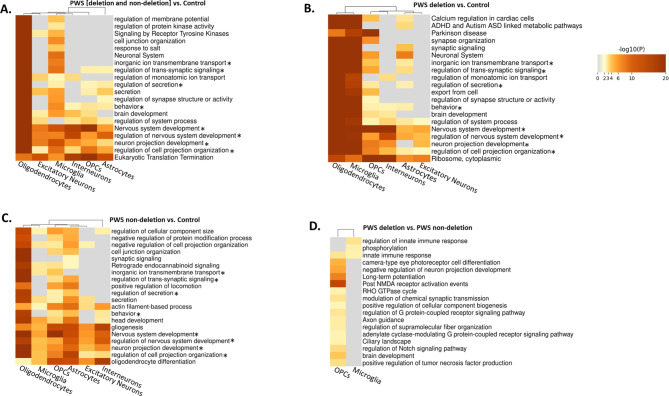 Figure 3
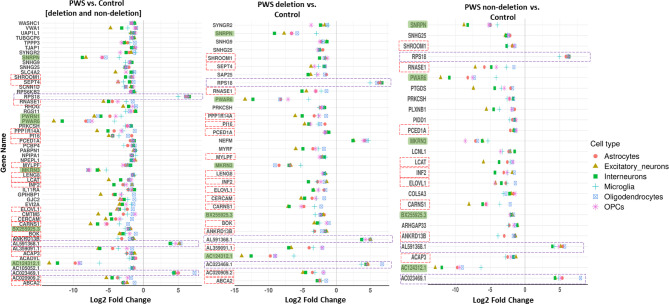 Figure 4
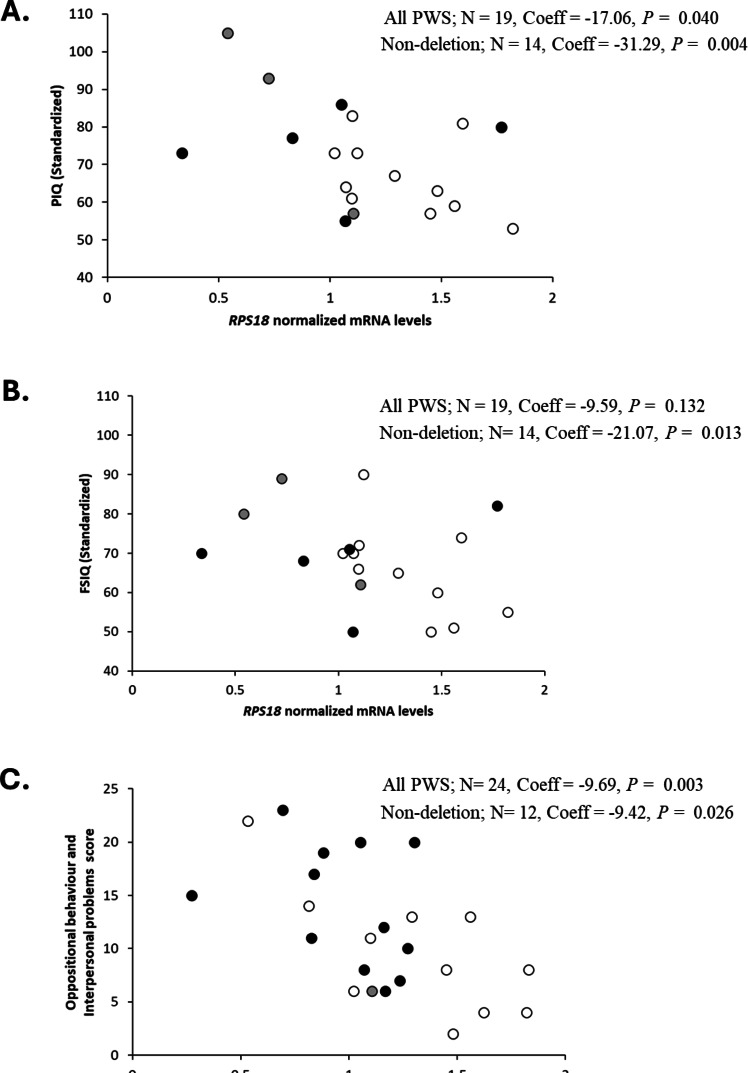 Figure 5
Peer Reviews
No public reviews on file for this paper yet. If you reviewed it on a platform where reviews are public (OpenReview, ICLR, NeurIPS, ICML), you can paste yours below so the community can read it here.
Videos
No videos yet. Explain this paper in a talk, walkthrough, or lecture? Add one.
Taxonomy
TopicsGenetic Syndromes and Imprinting · Neurogenetic and Muscular Disorders Research · Williams Syndrome Research