Congophilic fibrillary glomerulonephritis recurrence post-renal transplant: diagnostic challenges and proteomic insights
Hiroshi Watanabe, Michiko Nagamine, Yukako Shintani-domoto, Kunio Kawanishi, Kousuke Ishino, Tsukasa Nakamura, Shinji Sumiyoshi, Eiichi Konishi

TL;DR
This paper reports a rare case of kidney disease recurrence after a transplant, highlighting diagnostic challenges and the role of a specific protein marker.
Contribution
The study presents the first documented case of congophilic FGN recurrence after renal transplant and confirms DNAJB9 as a diagnostic biomarker.
Findings
FGN can recur in transplanted kidneys with amyloidosis-like features.
DNAJB9 detection via LC-MS/MS is essential for accurate diagnosis.
CR positivity and fibril characteristics support amyloidosis-like presentation in recurrence.
Abstract
Fibrillary glomerulonephritis (FGN) is a rare kidney disease characterized by the deposition of Congo red (CR) negative fibrils measuring 12 to 24 nm in diameter on electron microscopy. Recently, DnaJ heat shock protein family (Hsp40) member B9 (DNAJB9) detected by liquid chromatography-tandem mass spectrometry (LC-MS/MS) was discovered to be a sensitive and specific biomarker for FGN. This report presents the first documented case of recurrent congophilic FGN, a rare glomerular disease with features resembling amyloidosis, occurring two years and eight months after a renal transplant. Diagnosis of both primary and recurrent FGN was confirmed through DNAJB9 detection using advanced laser microdissection and LC-MS/MS techniques. The recurrent FGN exhibited features consistent with amyloidosis, including CR positivity, characteristic microscopic findings, and fibrils on electron…
Genes, proteins, chemicals, diseases, species, mutations and cell lines named across the full text — each resolved to its canonical identifier and authoritative record.
Click any figure to enlarge with its caption.
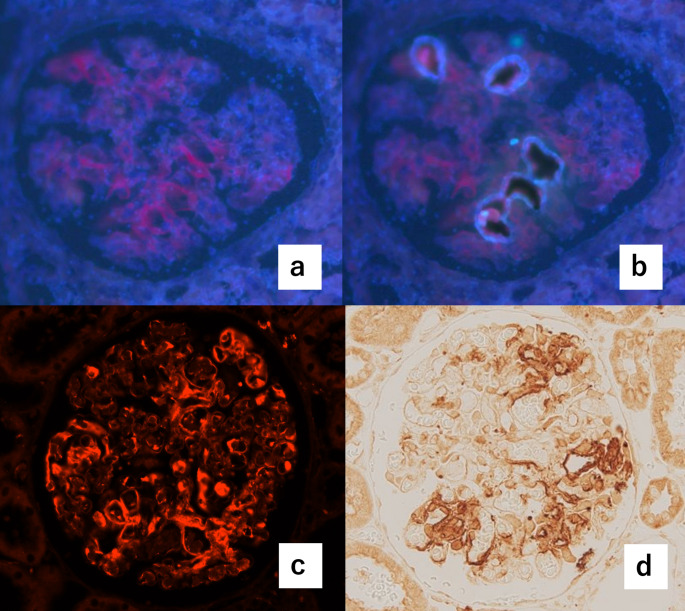 Figure 1
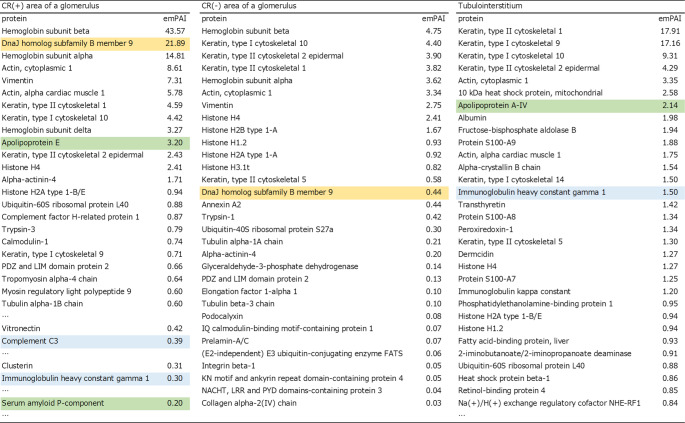 Figure 2
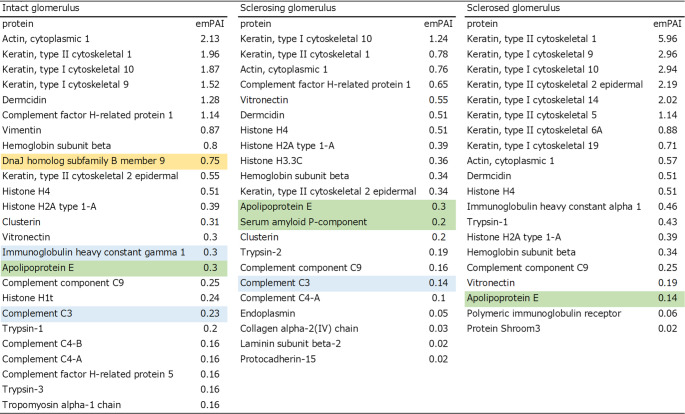 Figure 3
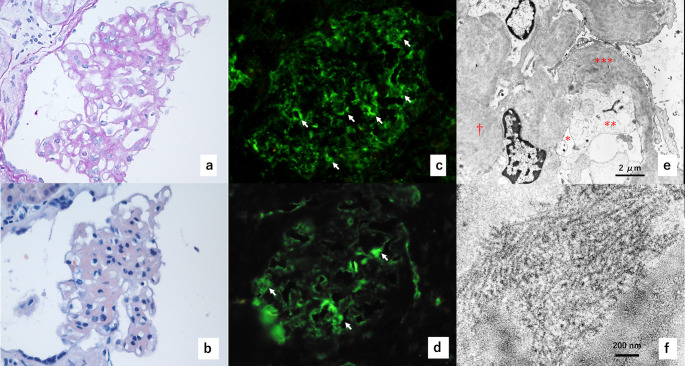 Figure 4
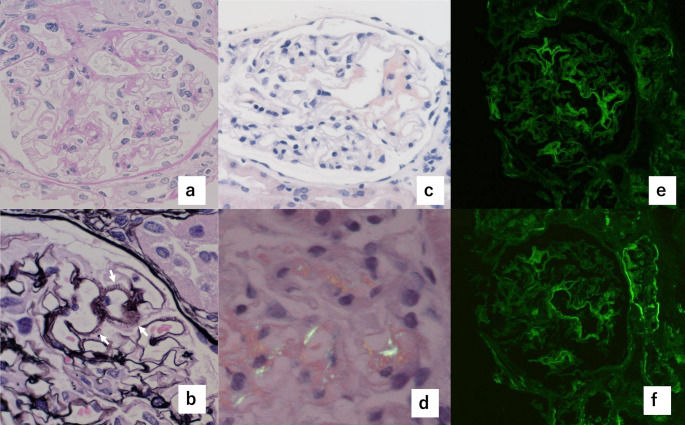 Figure 5
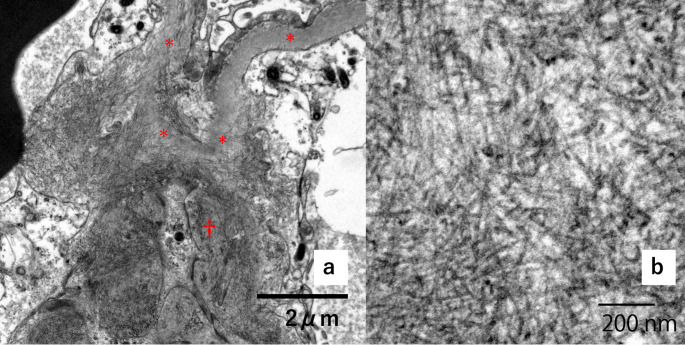 Figure 6
Peer Reviews
No public reviews on file for this paper yet. If you reviewed it on a platform where reviews are public (OpenReview, ICLR, NeurIPS, ICML), you can paste yours below so the community can read it here.
Videos
No videos yet. Explain this paper in a talk, walkthrough, or lecture? Add one.
Taxonomy
TopicsAmyloidosis: Diagnosis, Treatment, Outcomes · Alzheimer's disease research and treatments · Dermatological and Skeletal Disorders