Prevalence of body dysmorphic disorder, gender differences and association with body mass index among medical students in Pakistan
Mohammad Abdullah Hameed, Taneer Abbas, Muhammad Muneeb Warriach, Natasha Nadeem, Ambreen Tauseef, Mohsin Ali Syed

TL;DR
This study found that about 5% of medical students in Pakistan have body dysmorphic disorder, with no link to body mass index and equal rates in both genders.
Contribution
The study reports the prevalence of BDD among Pakistani medical students using DSM-5 criteria and reveals no association with BMI.
Findings
BDD prevalence was 4.65% among medical students, equally affecting males and females.
No significant association was found between BDD and BMI.
Females reported significantly higher skin-related concerns compared to males.
Abstract
Body dysmorphic disorder (BDD) is a mental disorder characterised by a preoccupation with some perceived defects or flaws in an individual’s physical appearance which often go unnoticed by others. The preoccupation causes marked stress and impairment of a person’s normal functioning. Limited studies have examined the prevalence based on the newer DSM-5 criteria for BDD, with very few done in Pakistan thus far. Studies on the association of BDD with BMI are limited and have yielded conflicting results. This study aimed to assess the point prevalence of BDD and gender differences, along with its association with BMI in medical students. This cross-sectional study recruited medical students in a medical university in Lahore. Systematic random sampling was employed, the participants’ BMI was measured and a standard self-report questionnaire was filled by participants. Pearson’s Chi-Square…
Genes, proteins, chemicals, diseases, species, mutations and cell lines named across the full text — each resolved to its canonical identifier and authoritative record.
Click any figure to enlarge with its caption.
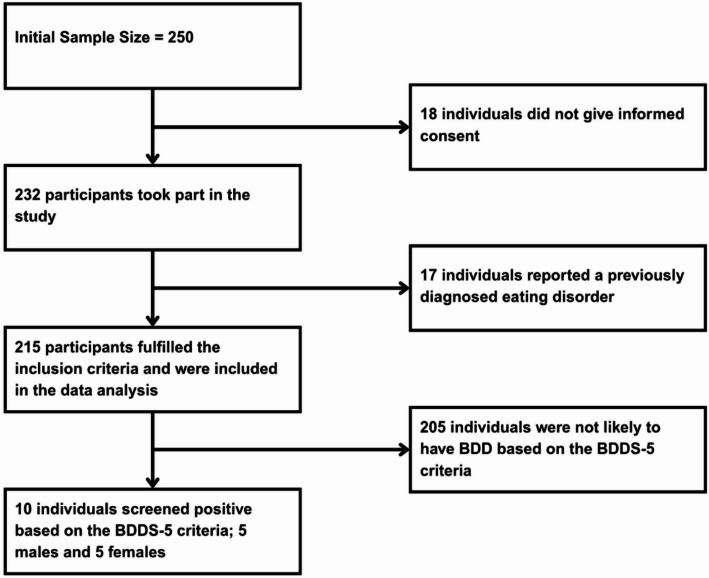 Figure 1
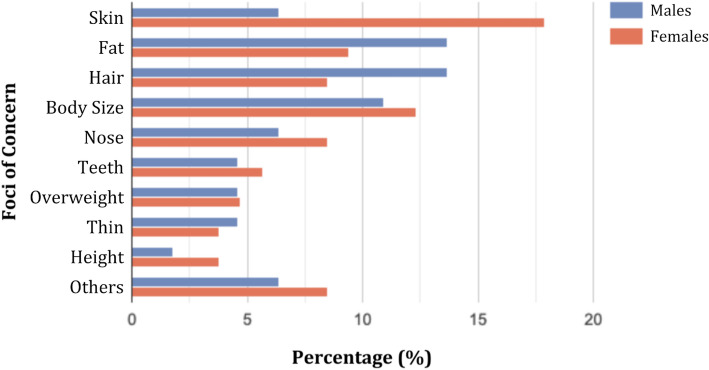 Figure 2
Peer Reviews
No public reviews on file for this paper yet. If you reviewed it on a platform where reviews are public (OpenReview, ICLR, NeurIPS, ICML), you can paste yours below so the community can read it here.
Videos
No videos yet. Explain this paper in a talk, walkthrough, or lecture? Add one.
Taxonomy
TopicsBody Image and Dysmorphia Studies · Tattoo and Body Piercing Complications · Eating Disorders and Behaviors