Amyloid‐beta (1–40) peptide is associated with systemic metabolic health
Kateryna Sopova, Dimitrios Delialis, Evmorfia Aivalioti, Georgios Georgiopoulos, Stravros Athanasopoulos, Georgios Zervas, Christina Konstantaki, Marco Sachse, Martin Sigl, Daniel Duerschmied, Simon Tual‐Chalot, Kimon Stamatelopoulos, Konstantinos Stellos

TL;DR
Higher levels of the Aβ40 peptide in blood are linked to metabolic issues like diabetes and liver disease, even in people without heart disease.
Contribution
Aβ40 is identified as a novel blood biomarker for early metabolic dysfunction and end-organ damage.
Findings
Higher Aβ40 levels are independently associated with metabolic syndrome and dyslipidemia after adjusting for traditional risk factors.
Aβ40 is linked to insulin resistance and increased risk of diabetes mellitus and liver fibrosis.
The associations remain significant even after controlling for cardiovascular risk factors.
Abstract
Amyloid‐beta 1–40 peptide (Aβ40) has recently emerged as a blood‐based biomarker of cardiovascular disease (CVD). However, whether plasma levels of Aβ40 are associated with metabolic traits in humans without established CVD remains poorly understood. Aβ40 was measured in plasma by ELISA and metabolic traits (waist circumference, fasting triglycerides, fasting HDL cholesterol and fasting glucose) were determined in a general population (n = 449) of individuals who did not have clinically overt CVD. Triglyceride‐glucose index (TyG) was used to calculate the risk for insulin resistance. BARD score was used to calculate the risk for metabolic liver disease. Aβ40 levels were associated with the presence of metabolic syndrome (OR: 1.41 95% CI: 1.13–1.76, p = .003), and with higher odds for increasing incidence of metabolic syndrome components, characterized by decreased HDL‐C levels (OR:…
Genes, proteins, chemicals, diseases, species, mutations and cell lines named across the full text — each resolved to its canonical identifier and authoritative record.
Click any figure to enlarge with its caption.
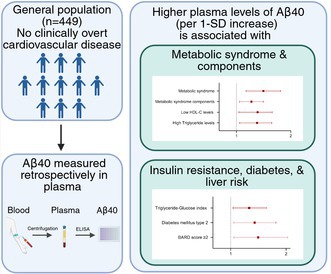 Figure 1
Peer Reviews
No public reviews on file for this paper yet. If you reviewed it on a platform where reviews are public (OpenReview, ICLR, NeurIPS, ICML), you can paste yours below so the community can read it here.
Videos
No videos yet. Explain this paper in a talk, walkthrough, or lecture? Add one.
Taxonomy
TopicsAlzheimer's disease research and treatments · Advanced Glycation End Products research · Amyloidosis: Diagnosis, Treatment, Outcomes