Effect of evidence-based education program with mentoring system for prevention of ventilator-associated pneumonia on nurses’ competency to improve quality care for patients in the intensive care unit: a quasi-experimental study in a tertiary hospital in Bangladesh
Nahida Akhter, Xintong Zhou, Sameh Elhabashy, K. A. T. M. Ehsanul Huq, Miho Okamoto, Md. Abdul Latif, Abdulfatai Olamilekan Babaita, Michiko Moriyama

TL;DR
This study shows that training and mentoring ICU nurses in Bangladesh improved their skills and motivation to prevent ventilator-associated pneumonia, leading to better patient care.
Contribution
The study introduces an evidence-based education and mentoring system to enhance ICU nurses' competency in VAP prevention in low-resource settings.
Findings
EBP training significantly improved nurses' skills, knowledge, practice, motivation, and work engagement (p < 0.001).
88.5% of nurses achieved high skill scores after training, with 84.6% maintaining high performance during implementation.
Positive correlations were found between knowledge, skills, motivation, and work engagement after EBP implementation.
Abstract
Nurses’ skills, knowledge, practice, motivation, and work engagement are crucial for achieving better outcomes in intensive care unit (ICU) patients. Evidence-based in-service training and monitoring of nurses’ behavior can significantly enhance the quality of care for ICU patients. This study evaluates the effectiveness of an Evidence-Based Practice (EBP) training and mentoring system in improving ICU nurses’ competencies including skills, knowledge, clinical practices, motivation and work engagement for preventing ventilator-associated pneumonia (VAP) in a tertiary hospital in Bangladesh. A quasi-experimental pre- and post-intervention study was conducted from October 2024 to April 2025 in the ICU of Dhaka Medical College Hospital (DMCH) in Bangladesh. We provided a competency-based educational program to nurses who worked in the ICU, focused on EBP for VAP prevention, with mentoring…
Genes, proteins, chemicals, diseases, species, mutations and cell lines named across the full text — each resolved to its canonical identifier and authoritative record.
Click any figure to enlarge with its caption.
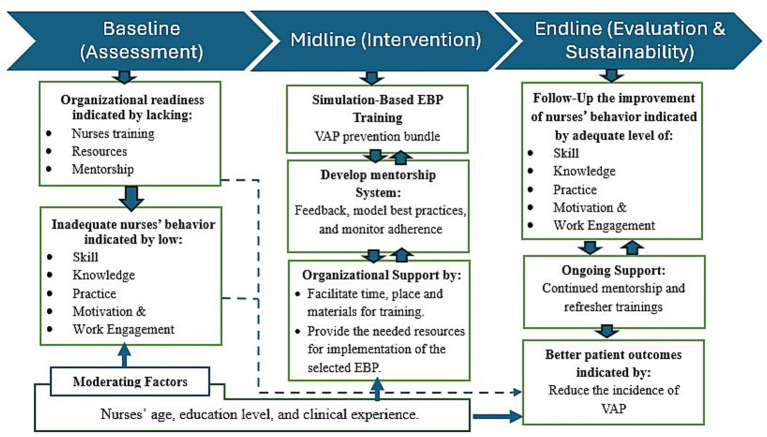 Figure 1
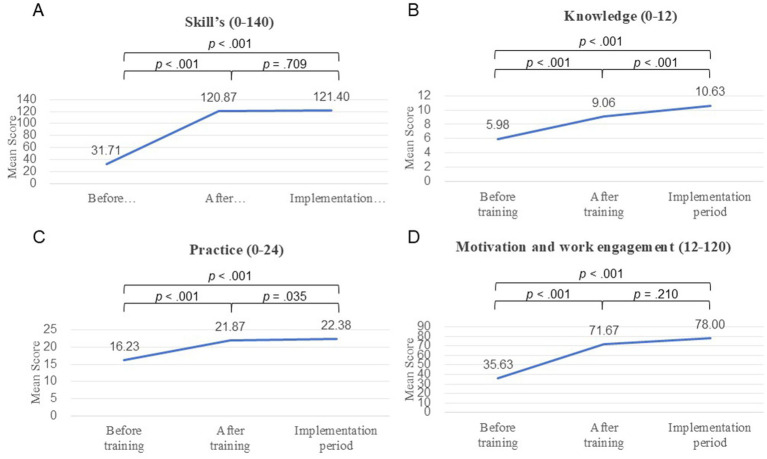 Figure 2
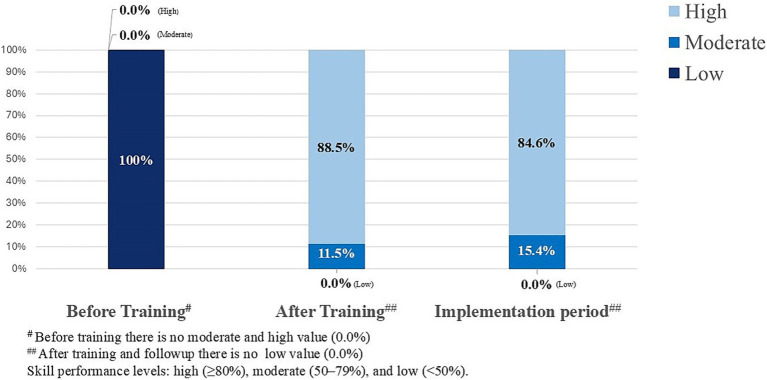 Figure 3
Peer Reviews
No public reviews on file for this paper yet. If you reviewed it on a platform where reviews are public (OpenReview, ICLR, NeurIPS, ICML), you can paste yours below so the community can read it here.
Videos
No videos yet. Explain this paper in a talk, walkthrough, or lecture? Add one.
Taxonomy
TopicsNosocomial Infections in ICU · Health Sciences Research and Education · Simulation-Based Education in Healthcare