Quantifying emergent complexity
Erik Hoel

TL;DR
The paper introduces a new theory to determine how different scales of complex systems contribute to their causal workings, offering a way to measure emergent complexity.
Contribution
Causal Emergence 2.0 is introduced as a mathematical framework to quantify how causation is distributed across scales of complex systems.
Findings
Causal Emergence 2.0 identifies which scales irreducibly contribute to a system’s causal workings.
The theory measures emergent complexity by how widely distributed causation is across system scales.
The framework provides a principled way to compare and choose modeling scales in scientific analysis.
Abstract
Complex systems can be described at myriad different scales, and their causal workings often have a multiscale structure (e.g., a computer can be described at the microscale of its hardware circuitry, the mesoscale of its machine code, and the macroscale of its operating system). While scientists study and model systems across the full hierarchy of their scales, from microphysics to macroeconomics, there is debate about what the macroscales of systems can possibly add beyond mere compression. To resolve this long-standing issue, here, a new theory of emergence is introduced that can distinguish which scales irreducibly contribute to a system’s causal workings. The theory’s application is demonstrated in coarse grains of Markov chains, revealing a novel measure of emergent complexity: how widely distributed a system’s causal contributions are across its hierarchy of scales. •A new…
Click any figure to enlarge with its caption.
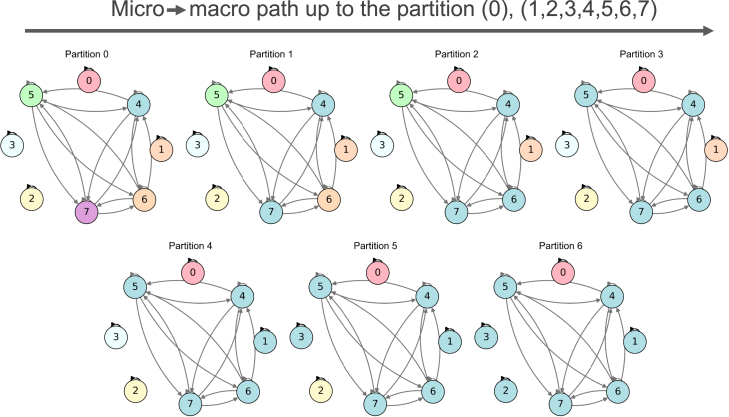 Figure 1
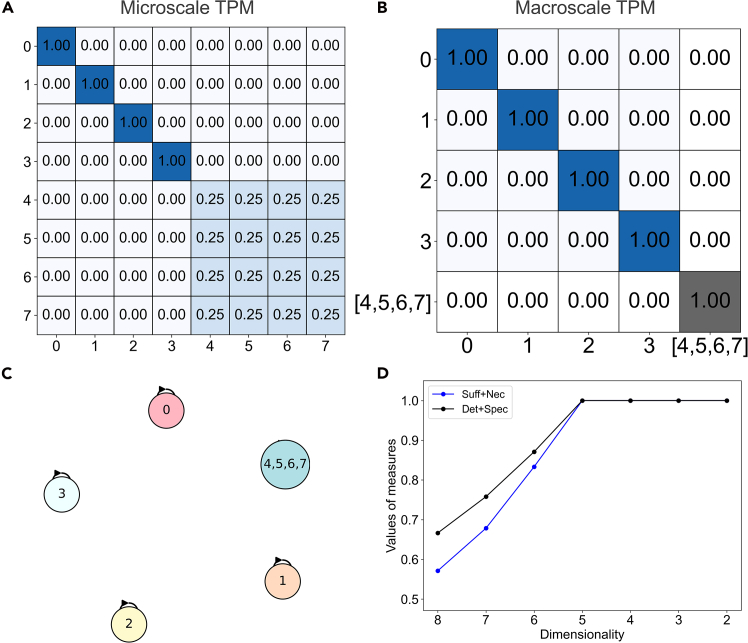 Figure 2
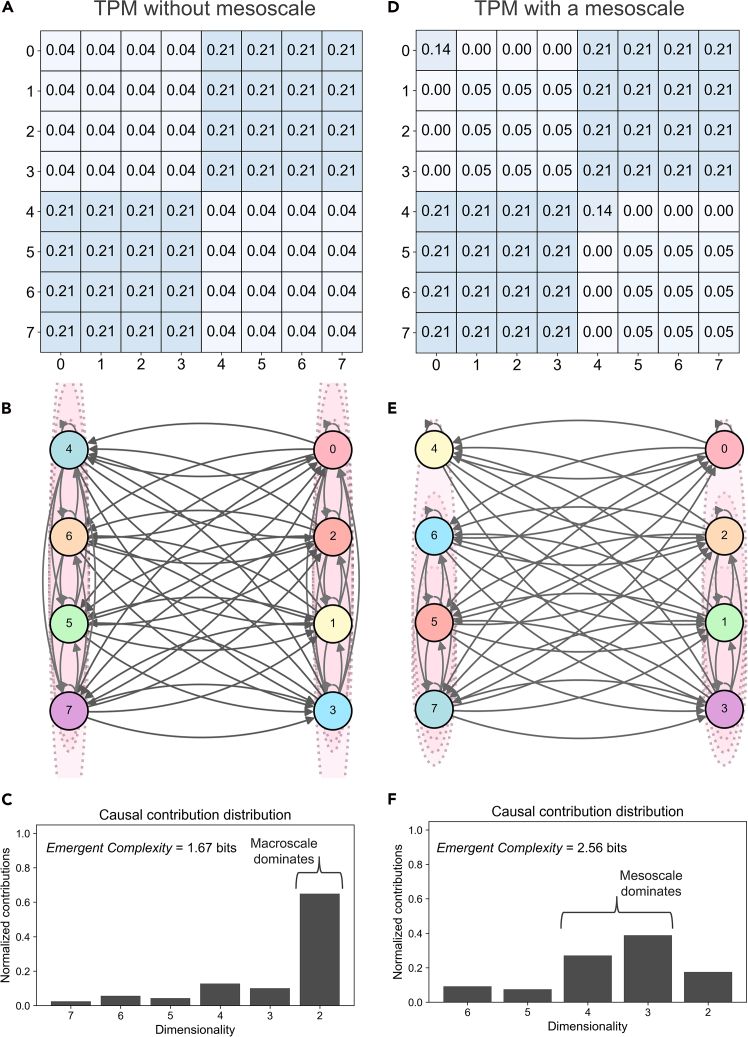 Figure 3
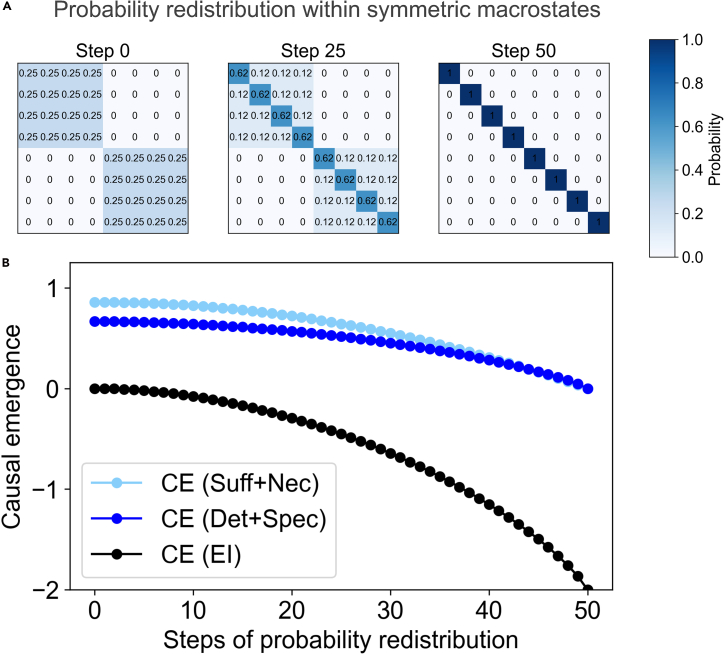 Figure 4
Peer Reviews
No public reviews on file for this paper yet. If you reviewed it on a platform where reviews are public (OpenReview, ICLR, NeurIPS, ICML), you can paste yours below so the community can read it here.
Videos
No videos yet. Explain this paper in a talk, walkthrough, or lecture? Add one.
Taxonomy
TopicsComplex Systems and Time Series Analysis · Advanced Thermodynamics and Statistical Mechanics · Chaos, Complexity, and Education