Clonal replacement by a P1-1/ST3 lineage in pediatric Mycoplasma pneumoniae, Jinan, China, 2021–2024
Ming Fang, Xiao Wang, Xiaolin Yu, Jianmei Yu, Lu Yuan, Shuang Wang, Haijian Zhou, Ti Liu, Huaning Zhang, Zengqiang Kou

TL;DR
A study in China found that a specific strain of Mycoplasma pneumoniae became dominant in children with pneumonia after a decline during the pandemic, and this strain is resistant to certain antibiotics.
Contribution
The study identifies a clonal replacement event by the P1-1/ST3 lineage in pediatric Mycoplasma pneumoniae cases in China, highlighting its association with increased disease severity and macrolide resistance.
Findings
The P1-1/ST3 lineage increased from 41.9% to 84.0% of cases between 2021 and 2024.
The lineage is associated with higher severity of disease and carries macrolide resistance.
Genomic analysis revealed reduced diversity and enrichment of replication/recombination/repair functions in the dominant clade.
Abstract
After a prolonged lull during COVID-19 non-pharmaceutical interventions, Mycoplasma pneumoniae activity re-emerged in 2023 in multiple regions; in China this occurred against a backdrop of very high macrolide resistance. We conducted a retrospective single-center study of pediatric M. pneumoniae pneumonia in Jinan, comparing a pre-resurgence period (2021) with 2023–2024. Clinical data were linked to whole-genome sequencing of 227 cultured isolates. We assessed lineage composition and relatedness using core-genome phylogenetics and SNP-threshold networks, and compared diversity and pan-genome functional profiles across major clades. Phenotypic antimicrobial susceptibility testing was performed. The proportion of severe cases increased from 7.4% (2021) to 19.9% (2024). Over the same interval, the P1-1/ST3 lineage rose from 41.9% to 84.0%, displacing previously co-circulating lineages.…
Genes, proteins, chemicals, diseases, species, mutations and cell lines named across the full text — each resolved to its canonical identifier and authoritative record.
Click any figure to enlarge with its caption.
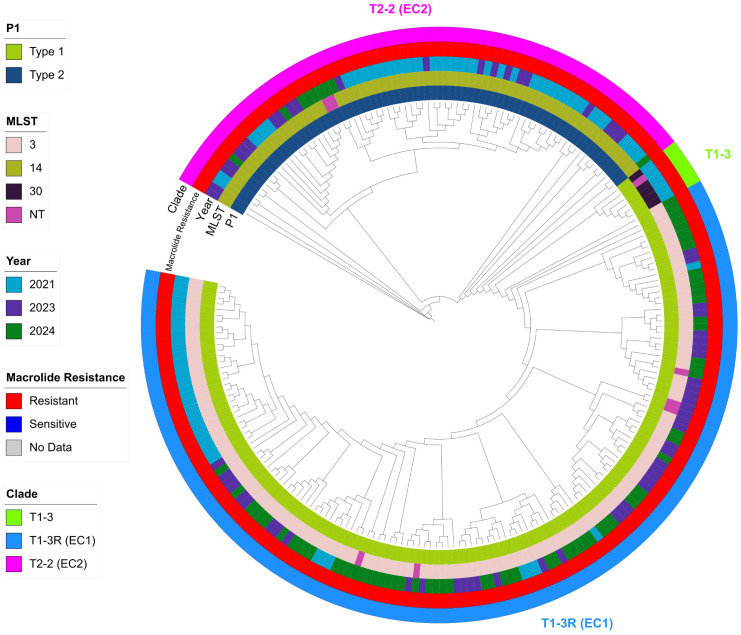 Figure 1
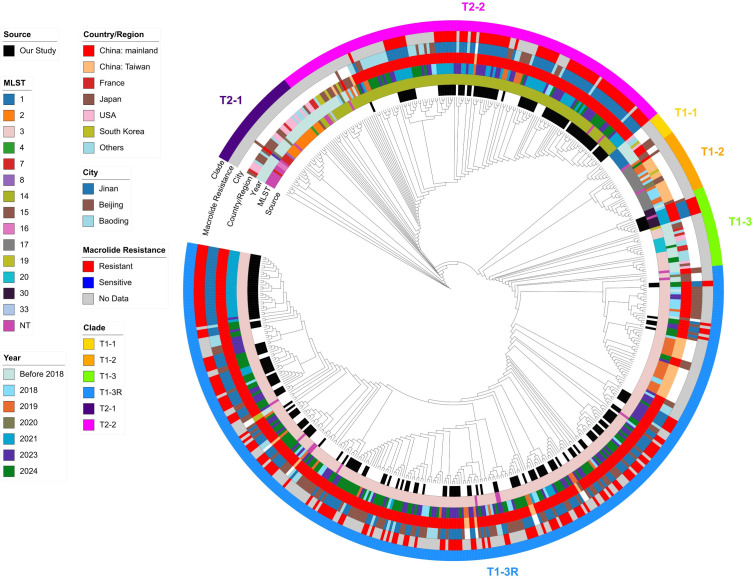 Figure 2
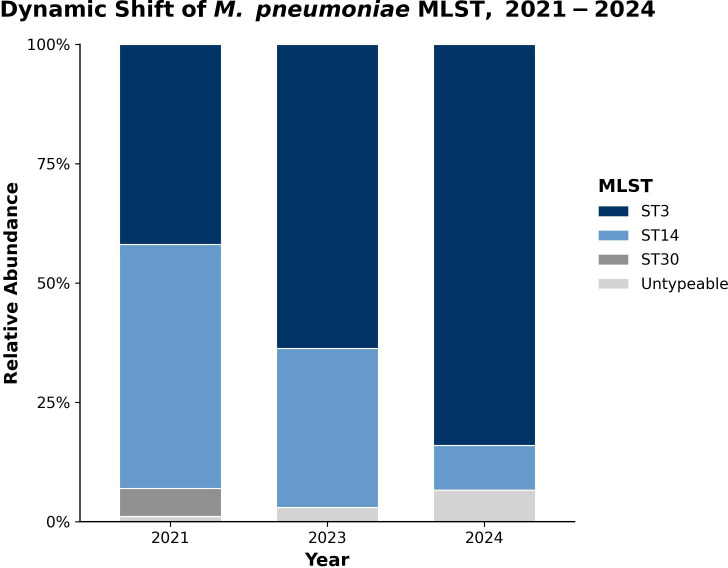 Figure 3
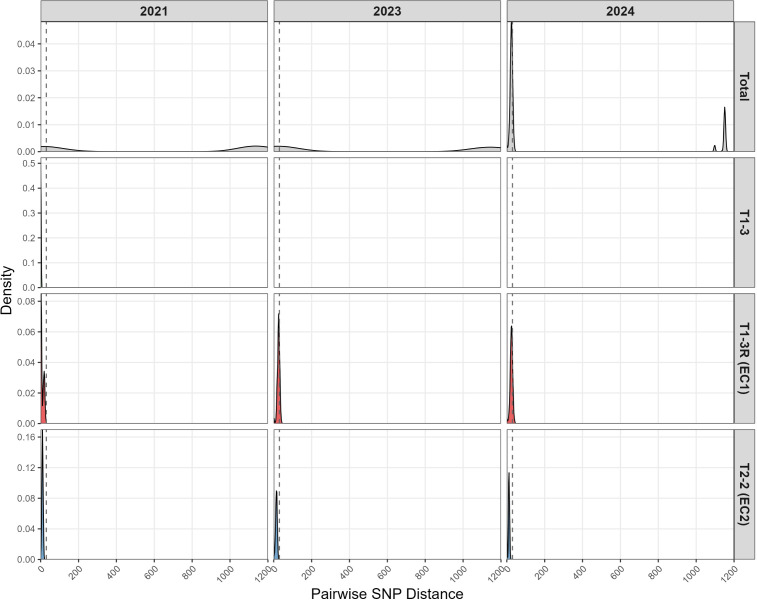 Figure 4
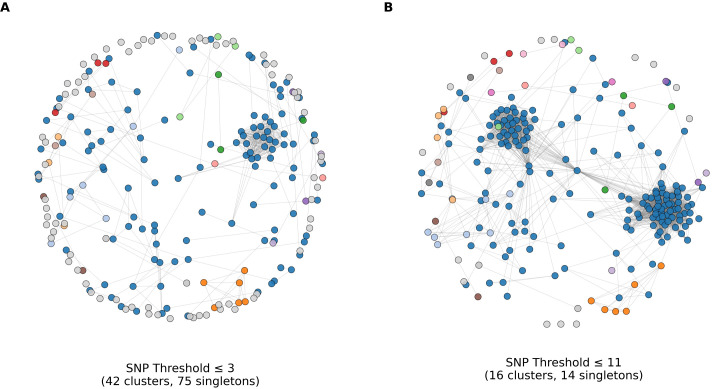 Figure 5
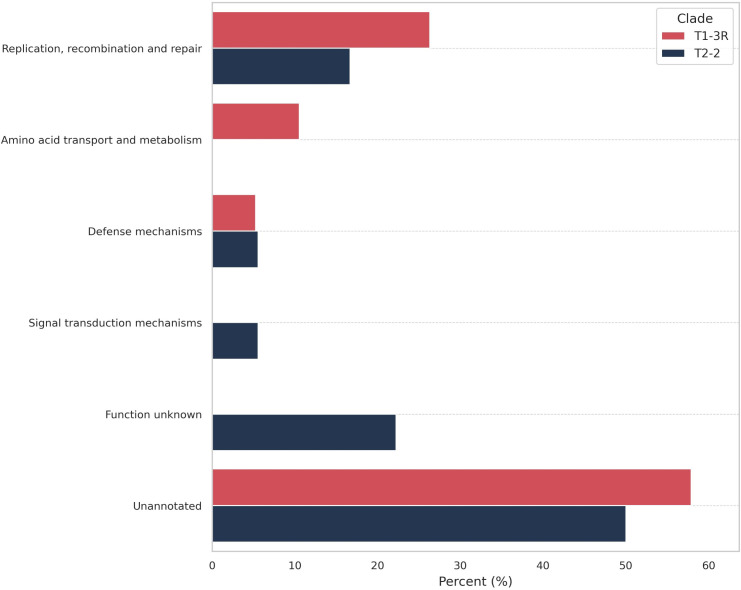 Figure 6
Peer Reviews
No public reviews on file for this paper yet. If you reviewed it on a platform where reviews are public (OpenReview, ICLR, NeurIPS, ICML), you can paste yours below so the community can read it here.
Videos
No videos yet. Explain this paper in a talk, walkthrough, or lecture? Add one.
Taxonomy
TopicsMicrobial infections and disease research · Pneumonia and Respiratory Infections · vaccines and immunoinformatics approaches