Combining shallow and deep neural networks on pseudo-color enhanced images for digital breast tomosynthesis lesion classification
Zhikai Yang, Yingqing Liu, Örjan Smedby, Rodrigo Moreno

TL;DR
This paper introduces a new CAD system for classifying breast lesions in tomosynthesis images using a dual neural network and pseudo-color enhancement.
Contribution
The novel DBT Dual-Net architecture combines shallow and deep neural networks with pseudo-color enhancement and inter-slice majority voting for improved lesion classification.
Findings
The proposed DBT Dual-Net outperforms existing classification approaches on a public dataset.
Pseudo-color enhancement improves lesion visibility in DBT images.
Inter-slice majority voting enhances classification accuracy by leveraging 3D spatial context.
Abstract
The classification of lesion types in Digital Breast Tomosynthesis (DBT) images is crucial for the early diagnosis of breast cancer. However, the task remains challenging due to the complexity of breast tissue and the subtle nature of lesions. To alleviate radiologists’ workload, computer-aided diagnosis (CAD) systems have been developed. The breast lesion regions vary in size and complexity, which leads to performance degradation. To tackle this problem, we propose a novel DBT Dual-Net architecture comprising two complementary neural network branches that extract both low-level and high-level features. By fusing different-level feature representations, the model can better capture subtle structure. Furthermore, we introduced a pseudo-color enhancement procedure to improve the visibility of lesions on DBT. Moreover, most existing DBT classification studies rely on two-dimensional (2D)…
Genes, proteins, chemicals, diseases, species, mutations and cell lines named across the full text — each resolved to its canonical identifier and authoritative record.
Click any figure to enlarge with its caption.
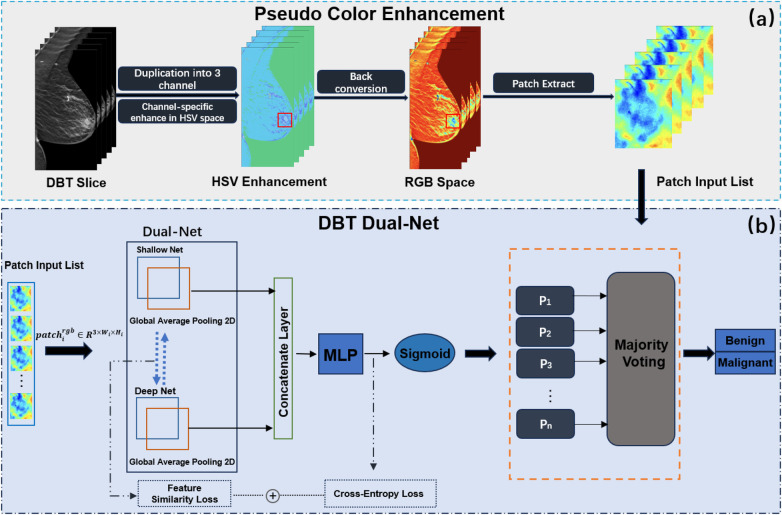 Figure 1
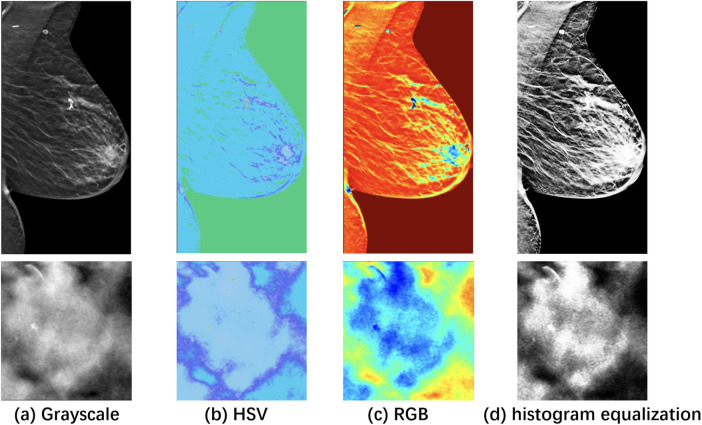 Figure 2
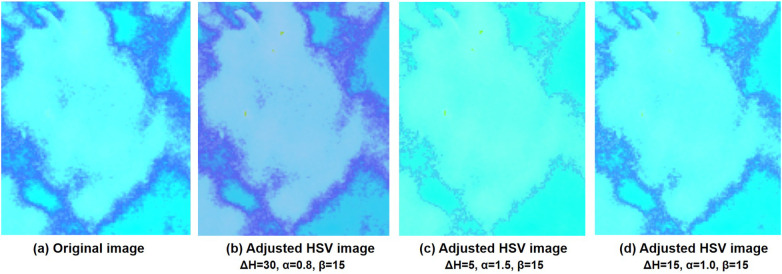 Figure 3
 Figure 4
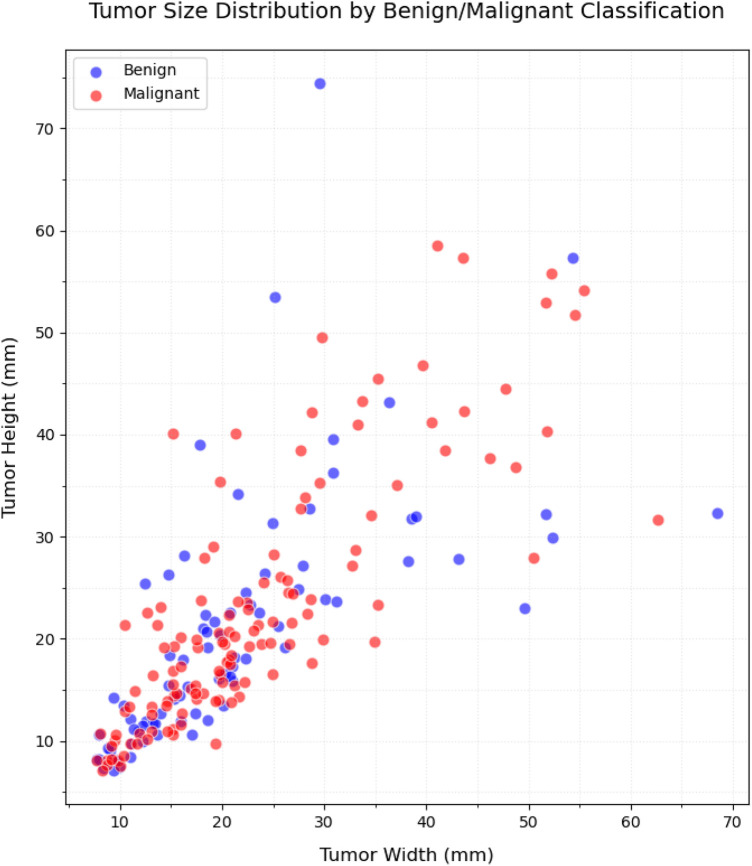 Figure 5
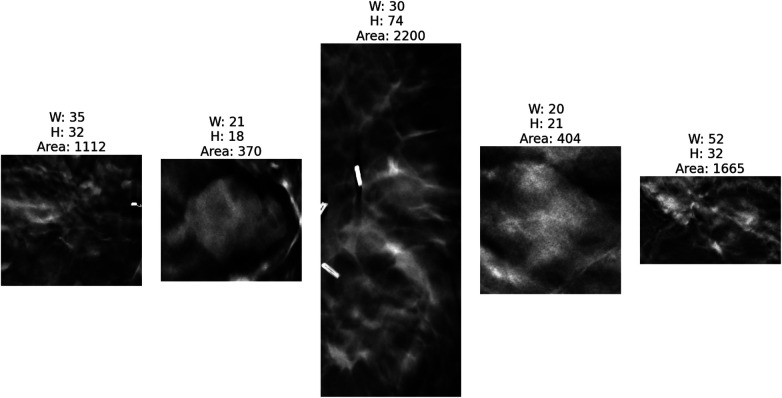 Figure 6
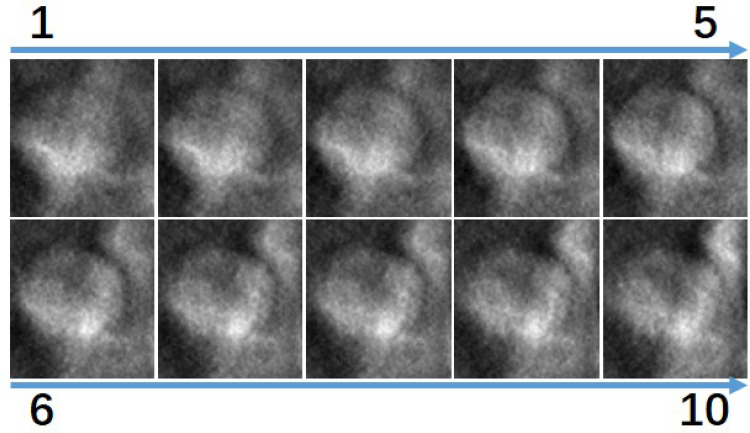 Figure 7
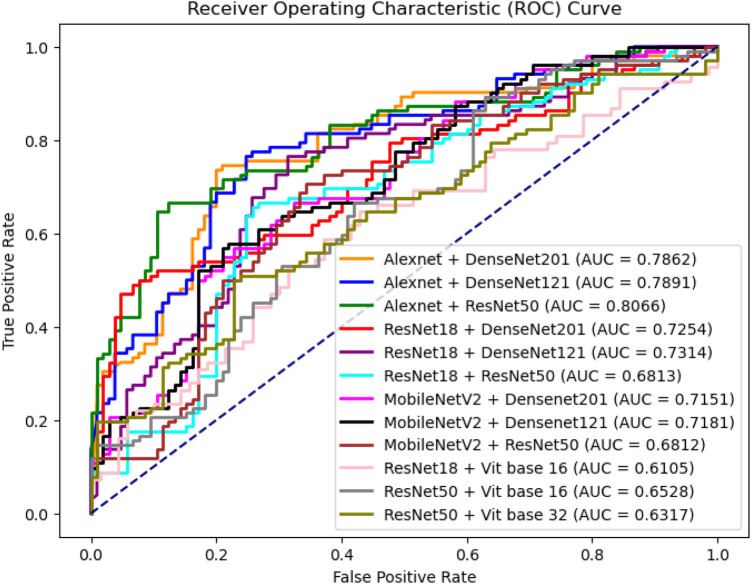 Figure 8
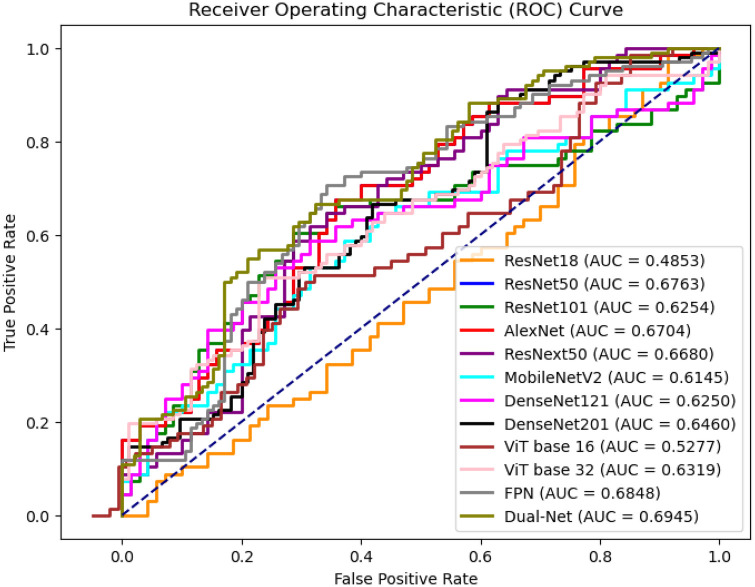 Figure 9
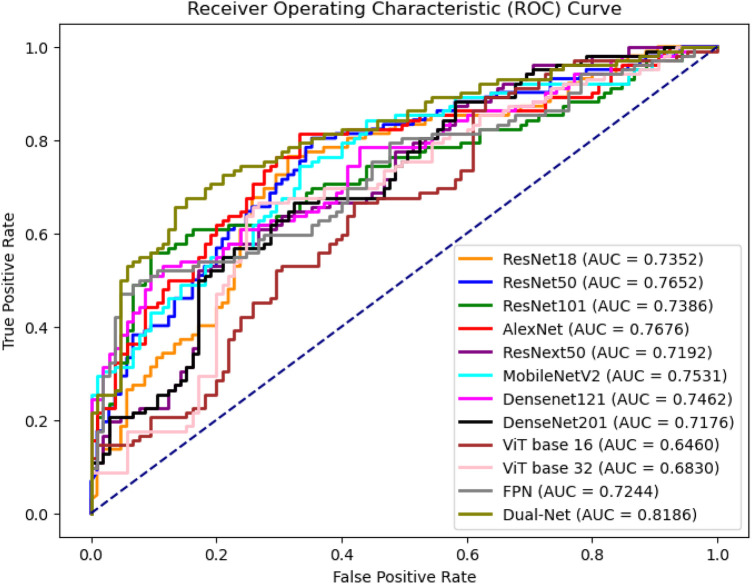 Figure 10
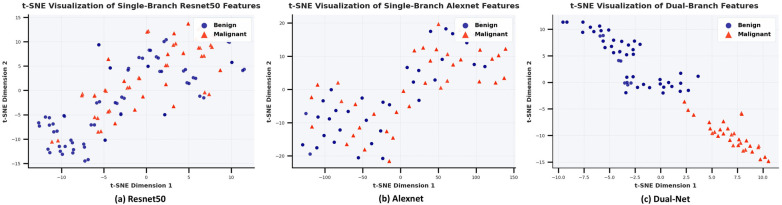 Figure 11
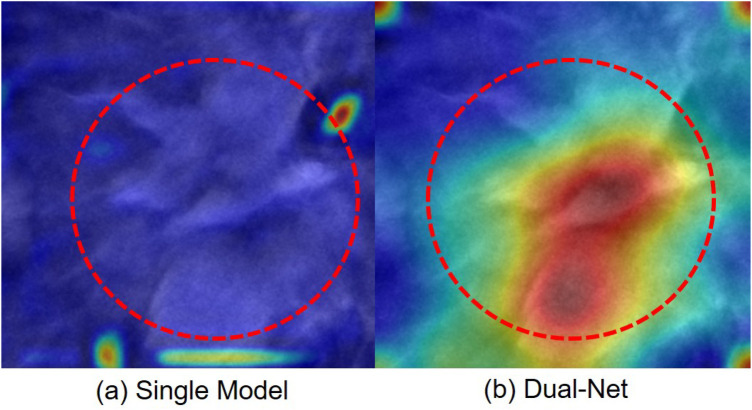 Figure 12
Peer Reviews
No public reviews on file for this paper yet. If you reviewed it on a platform where reviews are public (OpenReview, ICLR, NeurIPS, ICML), you can paste yours below so the community can read it here.
Videos
No videos yet. Explain this paper in a talk, walkthrough, or lecture? Add one.
Taxonomy
TopicsAI in cancer detection · Digital Radiography and Breast Imaging · Brain Tumor Detection and Classification