Detecting freebooted content in social media ads: multimodal provenance and e-commerce implications
Petr Weinlich, Tereza Semeradova

TL;DR
This paper explores how fake social media ads use stolen content to sell counterfeit products, using a new method to detect and track these ads.
Contribution
The paper introduces a multimodal provenance pipeline that outperforms single-modality methods in detecting content freebooting.
Findings
Multimodal late-fusion detection outperforms single-modality approaches in identifying content reuse.
Freebooted content from fashion creators appears across multiple domains, indicating systematic theft.
Freebooted ads are linked to deceptive advertising and unreliable product fulfillment.
Abstract
This study examines the phenomenon of content freebooting on social media and its exploitation for marketing counterfeit and “dupe” products. Using a four-week dataset of TikTok ads linked to 32 distinct e-commerce domains, we develop and evaluate a multimodal provenance pipeline—combining perceptual hashing, audio fingerprinting, vision embeddings, and natural-language clustering—applied to 54 ads, 180 landing pages, and over 3,000 extracted video frames. The primary contribution is methodological: multimodal late-fusion substantially outperforms single-modality detectors in identifying copyright-infringing reuse of creator content under adversarial transformations. Empirically, we document systematic asset theft from legitimate fashion creators, with several videos and review images reappearing across more than 10 separate domains. Purchases from three advertised shops, alongside…
Click any figure to enlarge with its caption.
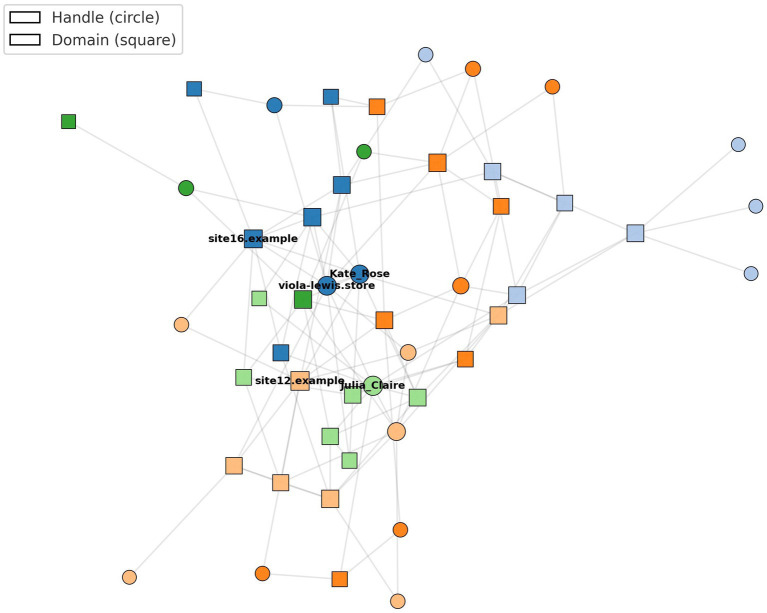 Figure 1
 Figure 2
Peer Reviews
No public reviews on file for this paper yet. If you reviewed it on a platform where reviews are public (OpenReview, ICLR, NeurIPS, ICML), you can paste yours below so the community can read it here.
Videos
No videos yet. Explain this paper in a talk, walkthrough, or lecture? Add one.
Taxonomy
TopicsConsumer Behavior in Brand Consumption and Identification · Copyright and Intellectual Property · Digital Marketing and Social Media