Understanding the walking football population: sociodemographic, health, lifestyle, and participation insights from a national tournament cohort
Alfie G. Price, Bradley Sprouse, Philip J. Hennis, John Hough, Ali Ahmed, Thaila Hibberd, Ian Varley

TL;DR
This study explores who plays walking football and how it benefits their health and well-being, showing it can support healthy aging.
Contribution
The paper provides new insights into the sociodemographic and health characteristics of walking football participants and their perceived benefits.
Findings
Participants in walking football are predominantly middle-aged and older adults with diverse socioeconomic backgrounds.
Walking football participants report higher mental well-being and lower stress and loneliness compared to national averages.
Most participants perceive improvements in physical fitness, social connections, and mental well-being from playing walking football.
Abstract
This study aimed to build a comprehensive understanding of who plays walking football and how participation relates to physical activity, well-being, and perceived health benefits, to assess its potential as a sustainable physical activity option for middle-aged and older adults. A cross-sectional, survey-based design examined the sociodemographic characteristics, health status, lifestyle behaviours, and participation experiences of 352 walking football players during The FA Walking Football Cup 2024 in England. Data were collected from six regional final events involving 84 teams. Participants (mean age: 56 years; 55.3% men, 43.6% women) reported a broad age range (33–81 years) and diverse socioeconomic backgrounds (16.6% from the most deprived 30% of areas), but ethnic diversity was limited (95.3% White vs. 81.7% nationally). Compared to national averages, more participants had a…
Genes, proteins, chemicals, diseases, species, mutations and cell lines named across the full text — each resolved to its canonical identifier and authoritative record.
Click any figure to enlarge with its caption.
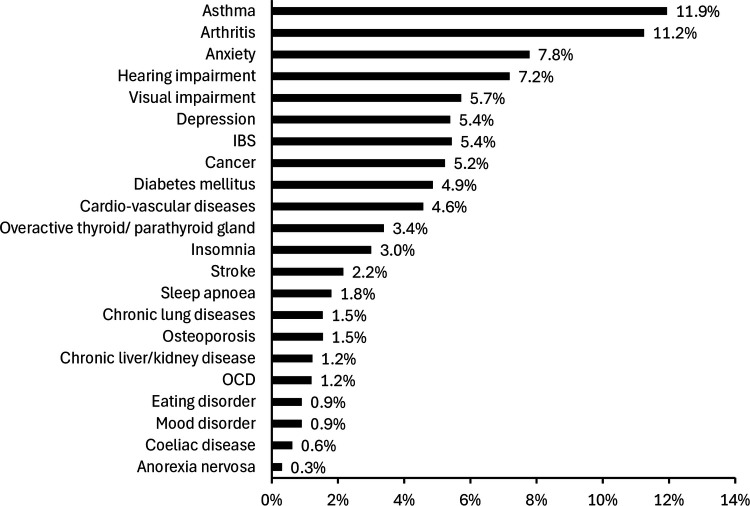 Figure 1
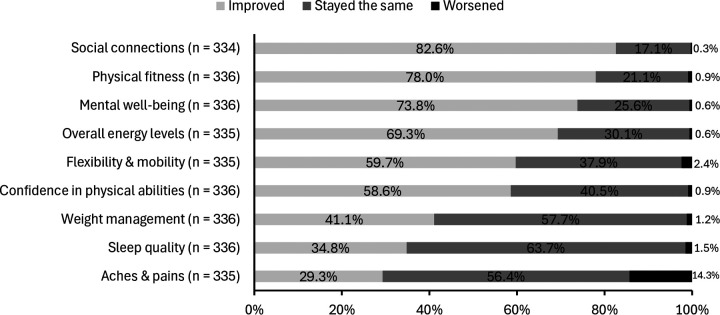 Figure 2
Peer Reviews
No public reviews on file for this paper yet. If you reviewed it on a platform where reviews are public (OpenReview, ICLR, NeurIPS, ICML), you can paste yours below so the community can read it here.
Videos
No videos yet. Explain this paper in a talk, walkthrough, or lecture? Add one.
Taxonomy
TopicsPhysical Activity and Health · Sports injuries and prevention · Cardiovascular Effects of Exercise