Biomechanics of medial meniscus tears in the context of pain: a finite element analysis
Karol Daszkiewicz, Piotr Łuczkiewicz

TL;DR
This study uses computer modeling to explore how different types of medial meniscus tears affect stress in the knee, potentially causing pain.
Contribution
The study introduces a finite element analysis to evaluate how specific meniscal tear types influence stress distribution and potential pain mechanisms.
Findings
Radial tears in the posterior horn of the medial meniscus caused the highest Tresca equivalent stresses.
Oblique tears led to an 187% increase in mean shear stress on the outer meniscal surface.
Longitudinal tears caused instability and increased shear stress in the central and end regions of the tear.
Abstract
Meniscal tears represent the most common knee pathology and may be associated with pain. Meniscal pain is caused by direct mechanical stimulation of nociceptors located in the outer, vascular part of the meniscus. Due to difficulties in selecting the optimal surgical treatment, the aim of the study was to analyze the influence of meniscal tears on the stress state in the context of meniscal pain. Radial, oblique, longitudinal and horizontal tears involving up to 90% of the width of the medial meniscus were modelled using the finite element method. Two types of knee joint loading were simulated: the stance phase of the gait cycle and external tibial rotation combined with compression. The highest Tresca equivalent stresses were obtained for the radial tear of the posterior horn. The largest increase in mean shear stress (187%) on the outer surface of the meniscus, relative to the…
Genes, proteins, chemicals, diseases, species, mutations and cell lines named across the full text — each resolved to its canonical identifier and authoritative record.
Click any figure to enlarge with its caption.
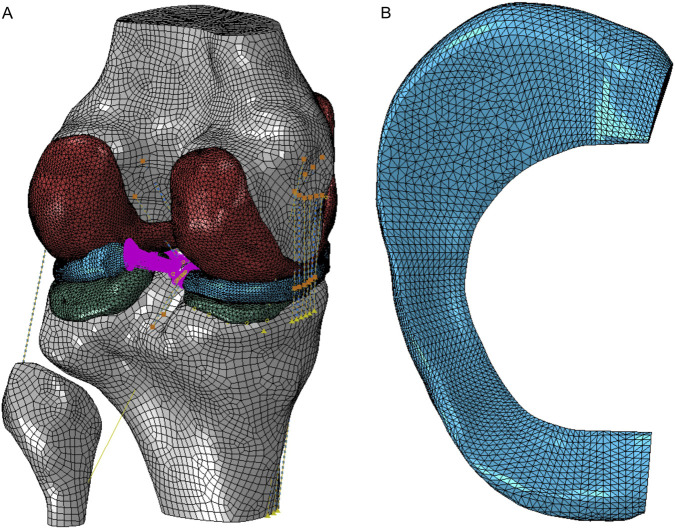 Figure 1
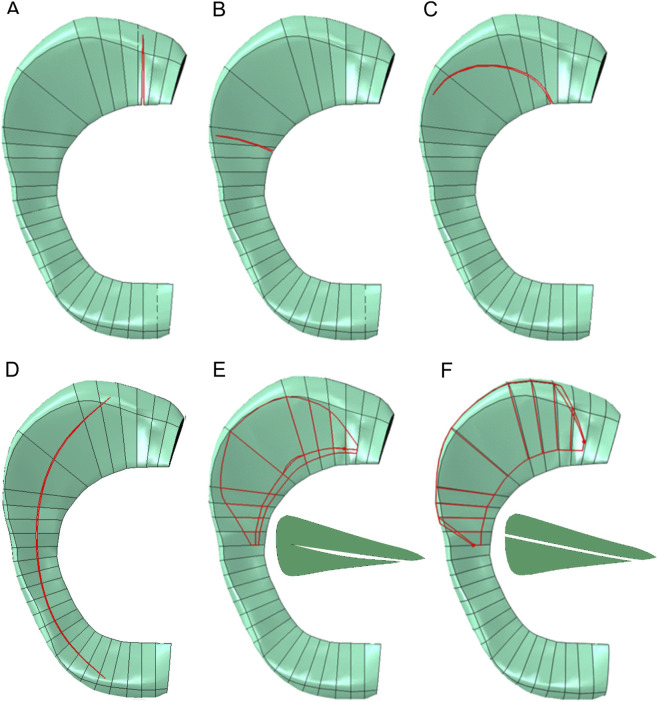 Figure 2
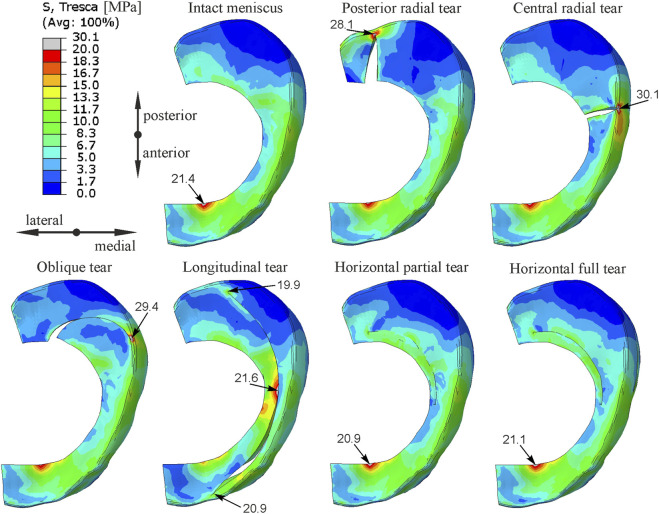 Figure 3
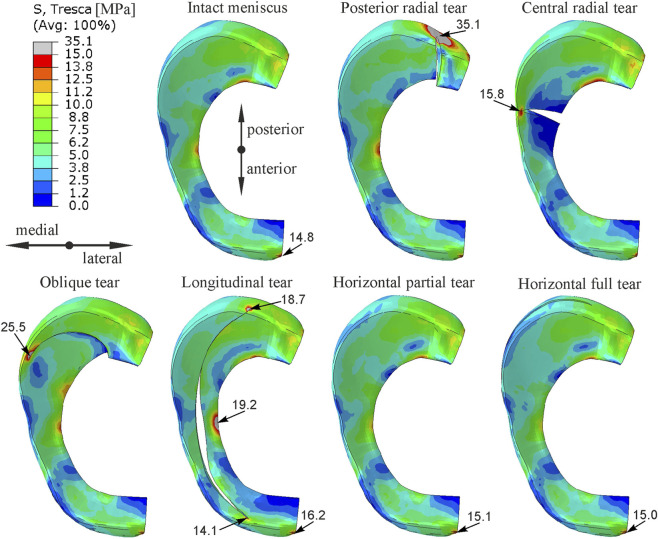 Figure 4
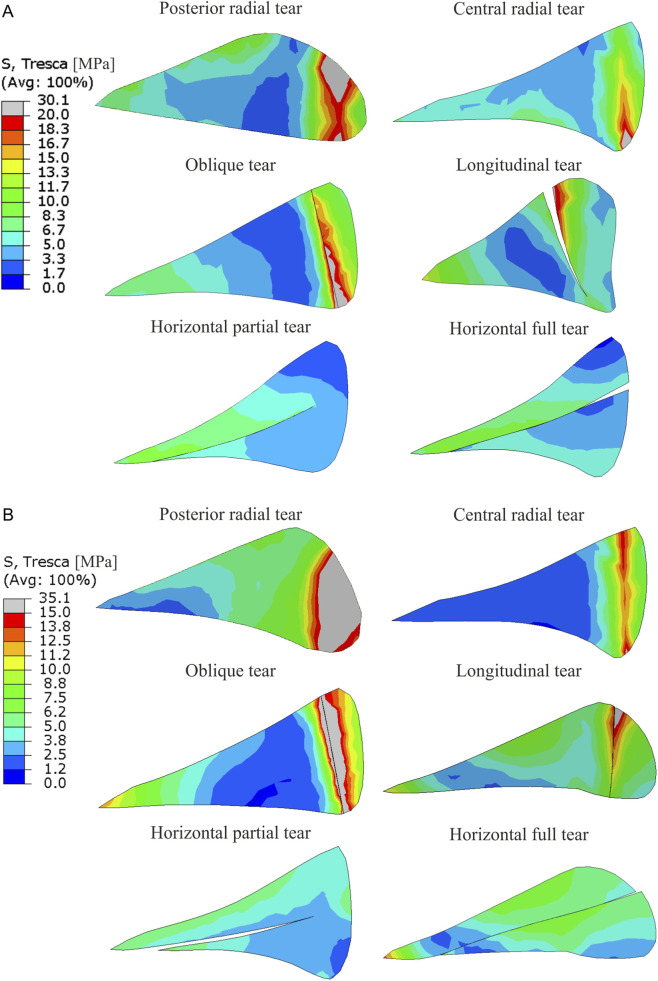 Figure 5
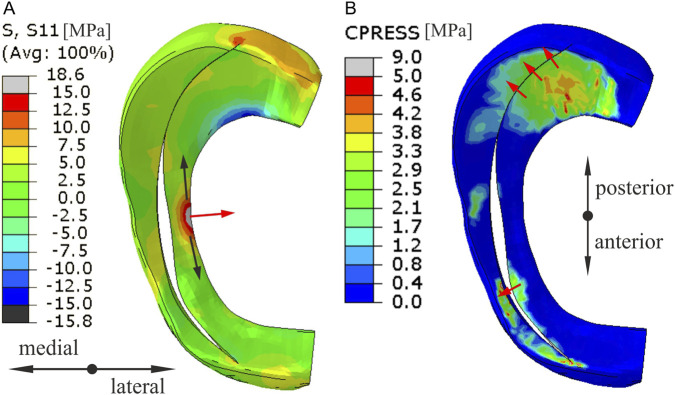 Figure 6
Peer Reviews
No public reviews on file for this paper yet. If you reviewed it on a platform where reviews are public (OpenReview, ICLR, NeurIPS, ICML), you can paste yours below so the community can read it here.
Videos
No videos yet. Explain this paper in a talk, walkthrough, or lecture? Add one.
Taxonomy
TopicsKnee injuries and reconstruction techniques · Total Knee Arthroplasty Outcomes · Osteoarthritis Treatment and Mechanisms