C-X-C motif chemokine ligand 13 suppresses osteoclast differentiation via interference with RANKL–RANK interaction
Trung-Loc Ho, Kun-Tsan Lee, Yu-Hao He, Le Huynh Hoai Thuong, David Achudhan, Wei-Chien Huang, Chih-Yuan Ko, Chun-Lin Liu, Jeng-Hung Guo, Chih-Hsin Tang

TL;DR
CXCL13 suppresses osteoclast formation by blocking RANKL-RANK signaling, offering a new target for treating bone loss disorders.
Contribution
CXCL13 is newly identified as a suppressor of osteoclast differentiation via interference with RANKL-RANK interaction.
Findings
CXCL13 inhibits RANKL-induced osteoclast formation and disrupts F-actin ring assembly.
CXCL13 promotes apoptosis in mature osteoclasts and suppresses MAPK and NF-κB signaling.
CXCL13 competitively interferes with RANKL-RANK binding and downstream TRAF6 signaling.
Abstract
Osteoclastogenesis, the differentiation of osteoclasts from monocyte/macrophage precursors, is essential for physiological bone remodeling but contributes to pathological bone loss in arthritis, osteoporosis, and bone metastasis when dysregulated. CXCL13 is a CXC chemokine well recognized for its role in immune regulation; however, its function in osteoclast biology remains undefined. This study aimed to investigate the effects of CXCL13 on RANKL-induced osteoclastogenesis. RAW264.7 cells were stimulated with RANKL to induce osteoclastogenesis. Osteoclast formation was evaluated by TRAP and F-actin ring staining, and quantitative real-time PCR (qPCR). GEO bioinformatic analysis revealed gene expression changes during RANKL-induced osteoclastogenesis. Mature osteoclast apoptosis was analyzed by cleaved caspase-3 immunofluorescence staining. MAPK and NF-κB signaling activation was…
Genes, proteins, chemicals, diseases, species, mutations and cell lines named across the full text — each resolved to its canonical identifier and authoritative record.
Click any figure to enlarge with its caption.
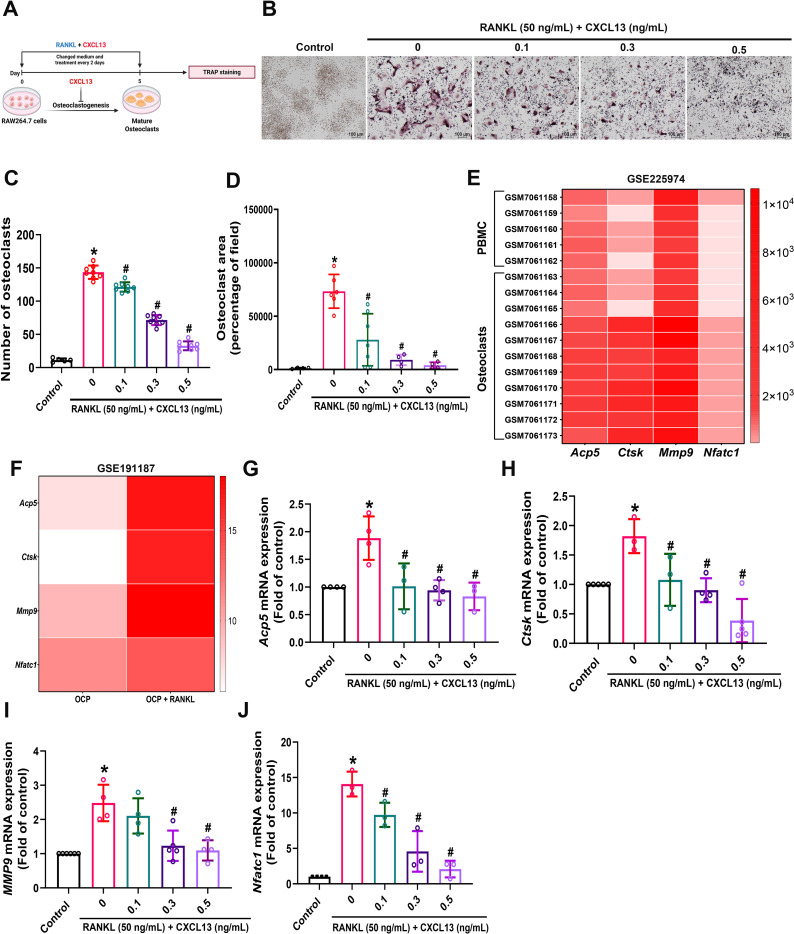 Figure 1
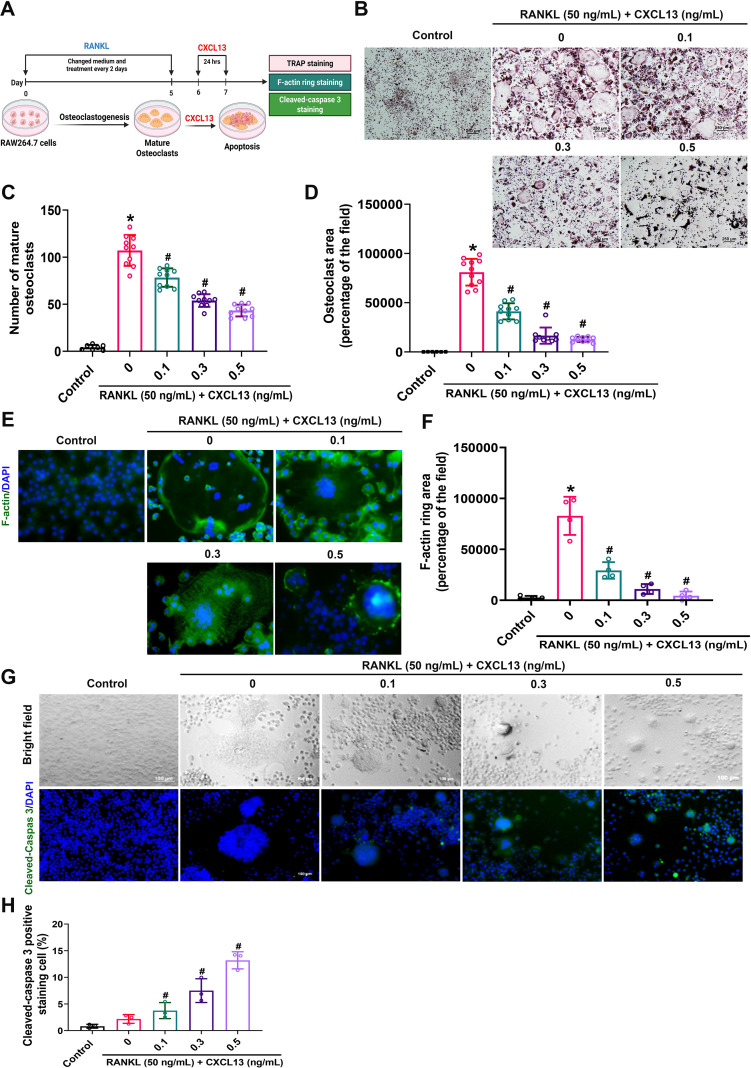 Figure 2
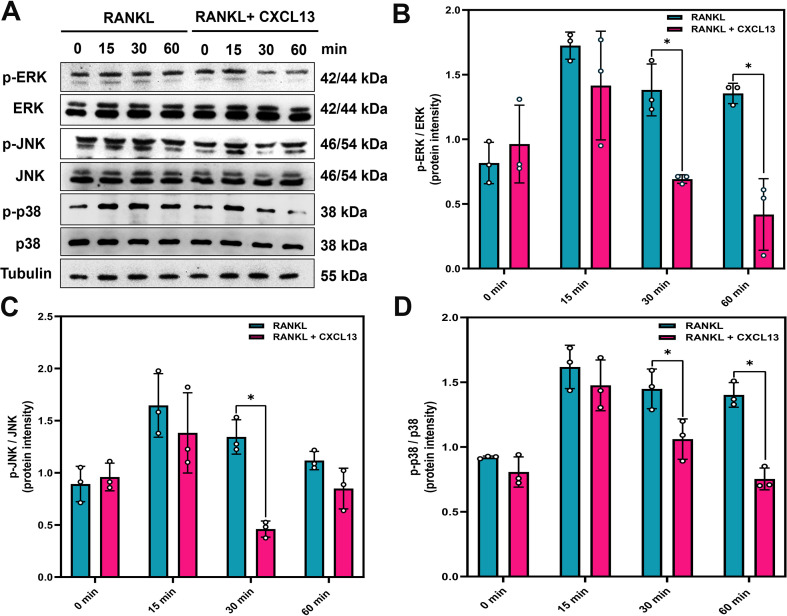 Figure 3
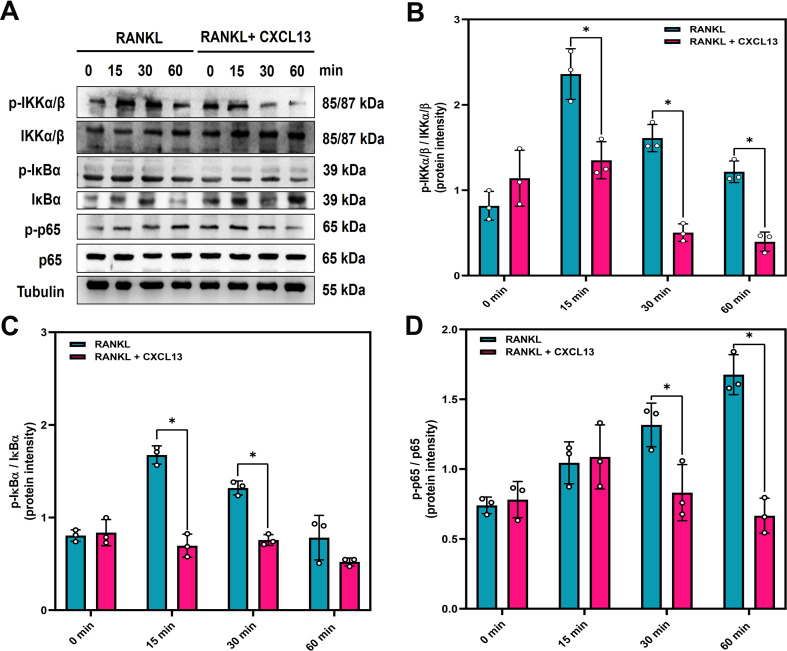 Figure 4
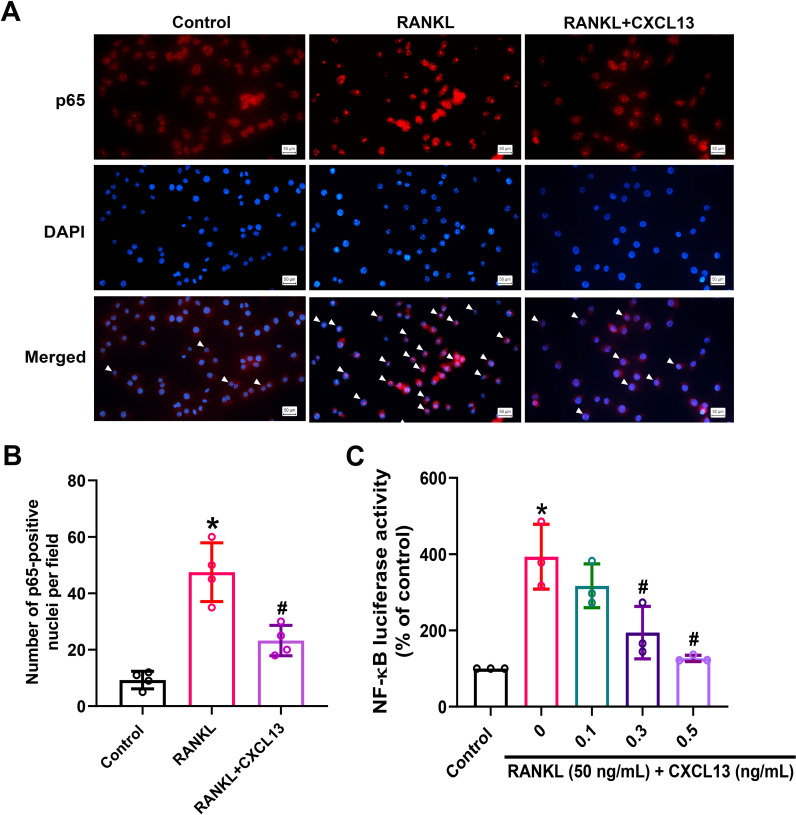 Figure 5
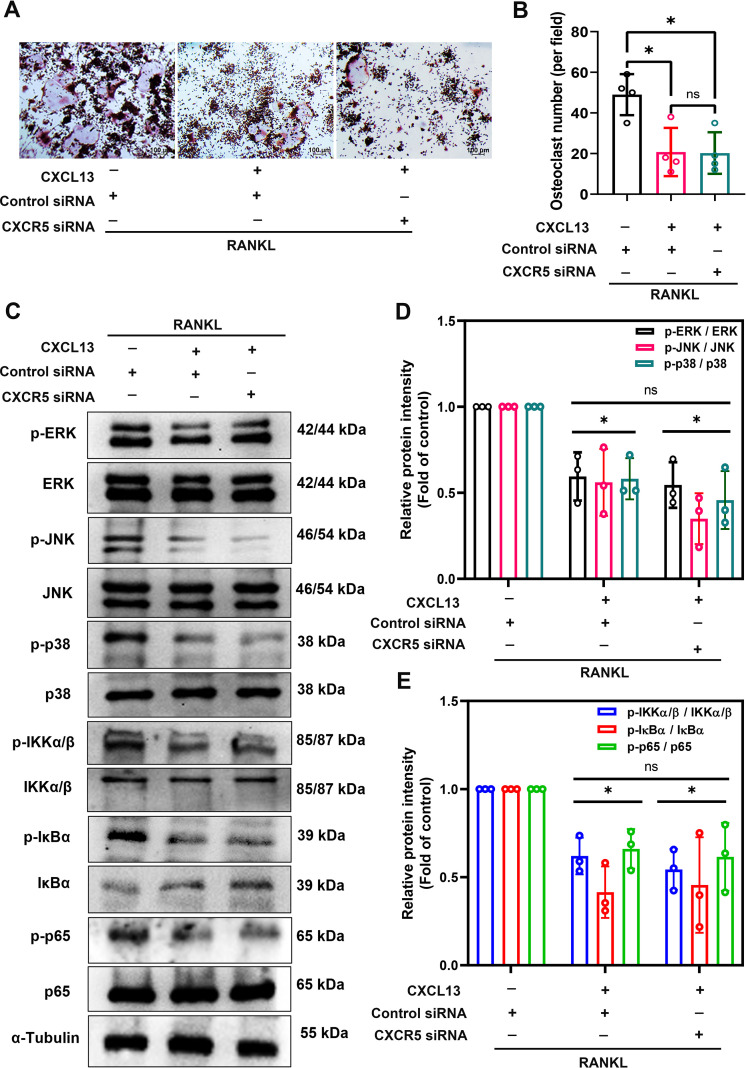 Figure 6
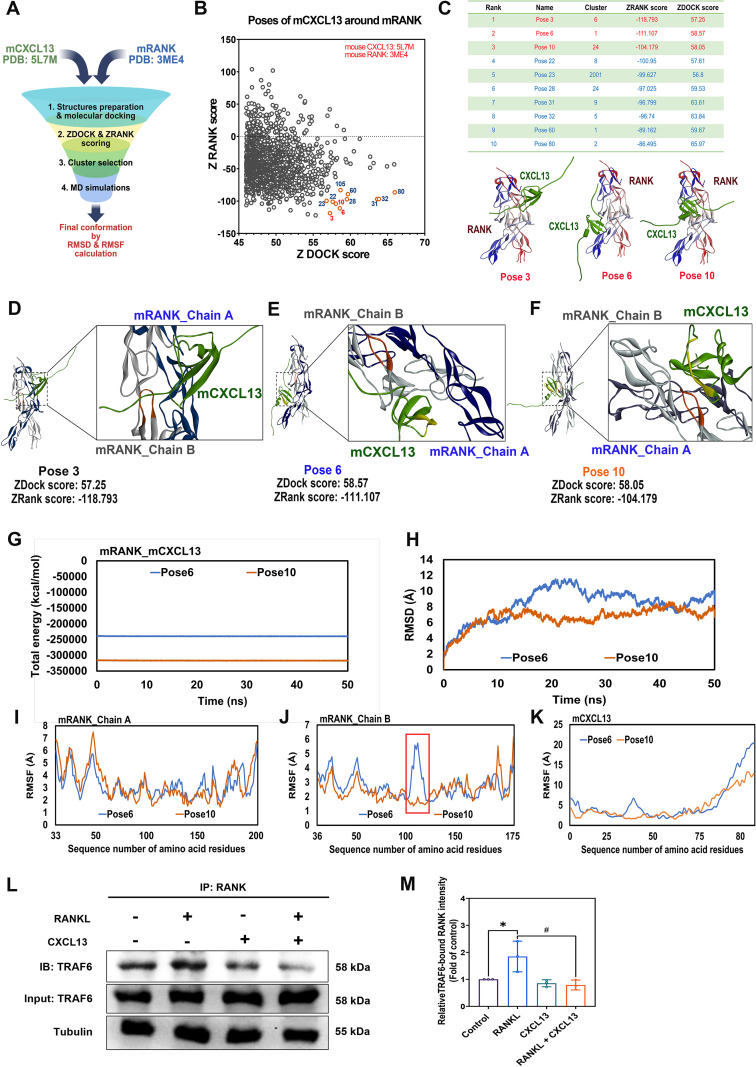 Figure 7
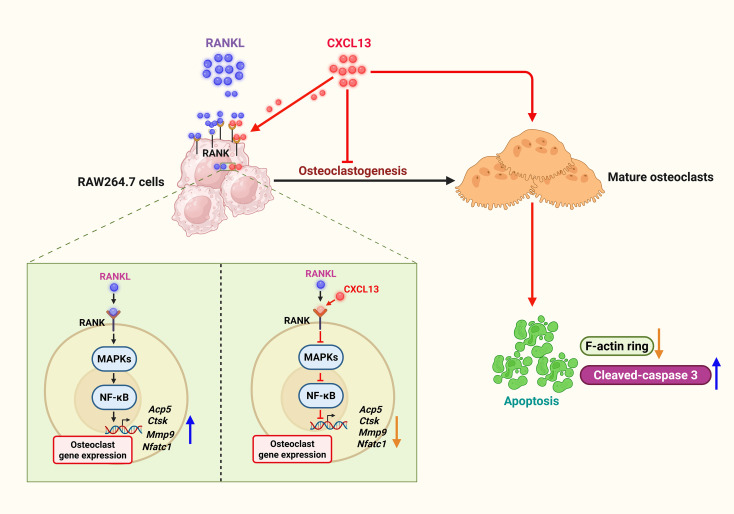 Figure 8
Peer Reviews
No public reviews on file for this paper yet. If you reviewed it on a platform where reviews are public (OpenReview, ICLR, NeurIPS, ICML), you can paste yours below so the community can read it here.
Videos
No videos yet. Explain this paper in a talk, walkthrough, or lecture? Add one.
Taxonomy
TopicsBone Metabolism and Diseases · Chemokine receptors and signaling · Osteomyelitis and Bone Disorders Research