Unveiling abietic Acid’s therapeutic potential: a narrative review on structure-activity relationship, pharmacological properties, pharmacokinetics, and toxicological considerations
Wanqing Ren, Tongzheng Liu, Jianlin Wu

TL;DR
Abietic acid, a natural compound from coniferous resins, shows potential for treating cancer, inflammation, and infections, but requires better delivery methods to reach clinical use.
Contribution
This review consolidates scattered preclinical data on abietic acid, a lesser-known natural compound, to highlight its therapeutic potential and guide future research.
Findings
Abietic acid exhibits anti-tumor effects via ferroptosis and cell cycle arrest in preclinical models.
It shows anti-inflammatory activity through COX-2 inhibition and PPARα/γ activation.
Clinical translation is hindered by poor solubility and bioavailability, but nanoparticle formulations may help.
Abstract
Abietic acid (AA) is a carboxylic acid and a tricyclic diterpenoid that is found in a variety of coniferous resins. Its promising natural properties have renewed interest in this substance that has been used medicinally for centuries for a range of indications including wounds, inflammation and infections. Extensive preclinical evidence over the past decade also supports its therapeutic properties. This review discusses the structure-activity relationship, pharmacological actions, pharmacokinetics and toxicology of AA. The unique molecular structure of AA, which supports a phenanthrene-like structure, a conjugated diene and carboxylic acid pharmacophore, rationalizes aspects of its wide biological effects. Preclinical research supports potentially significant anti-tumor effects in model systems through ferroptosis and cell cycle arrest, prominent anti-inflammatory activity via COX-2…
Genes, proteins, chemicals, diseases, species, mutations and cell lines named across the full text — each resolved to its canonical identifier and authoritative record.
Click any figure to enlarge with its caption.
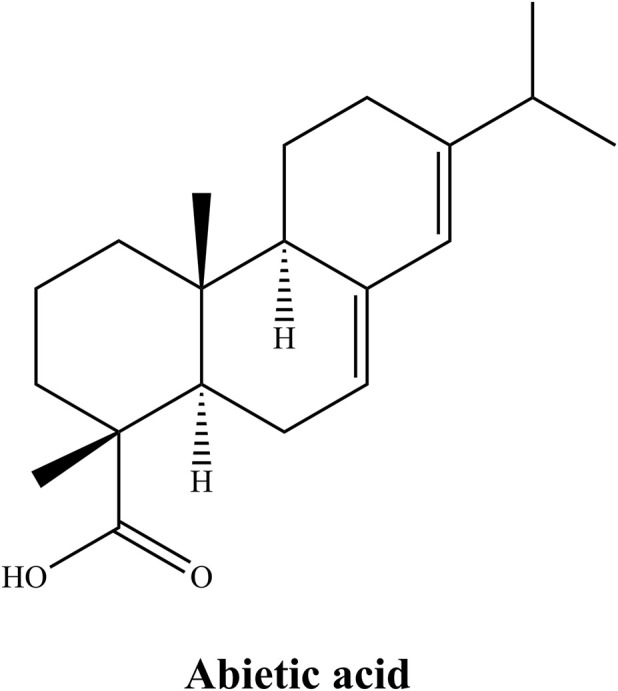 Figure 1
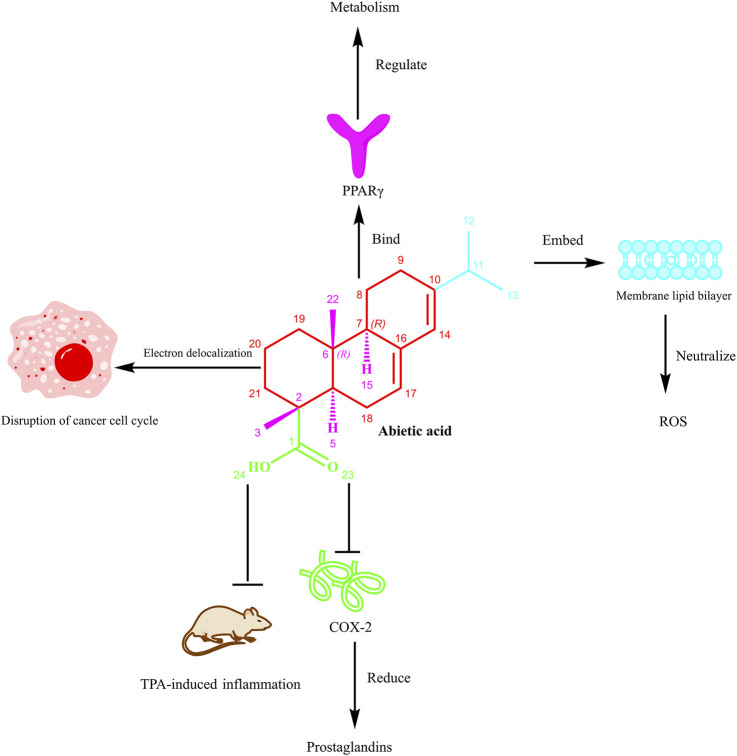 Figure 2
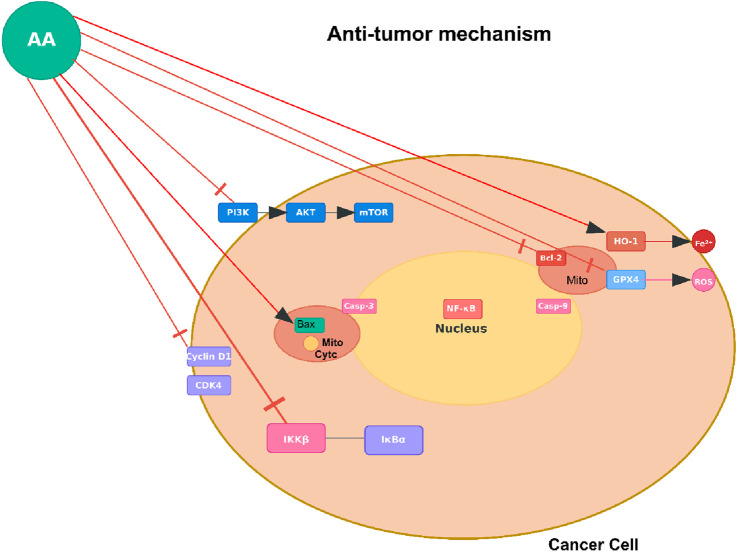 Figure 3
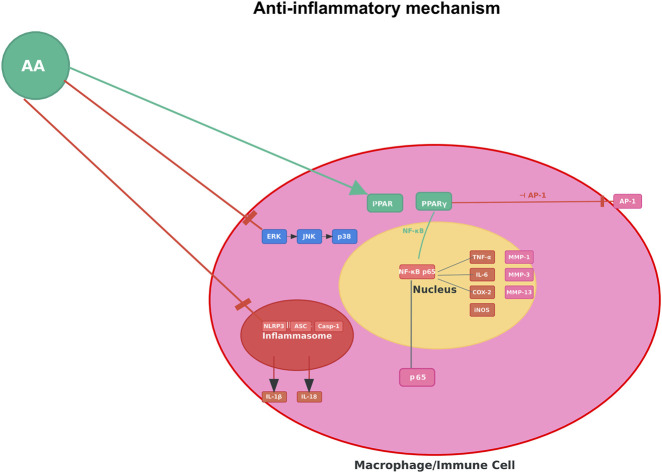 Figure 4
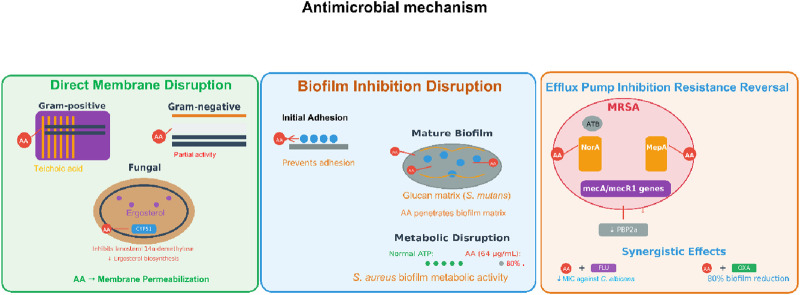 Figure 5
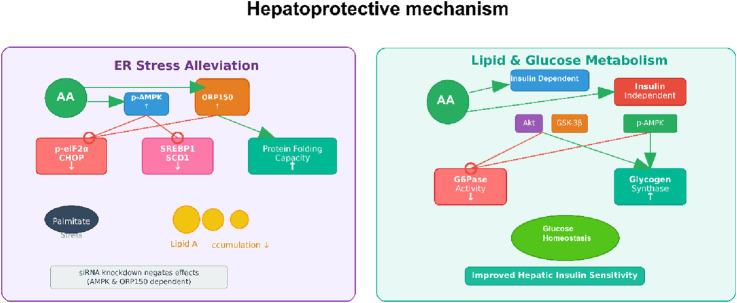 Figure 6
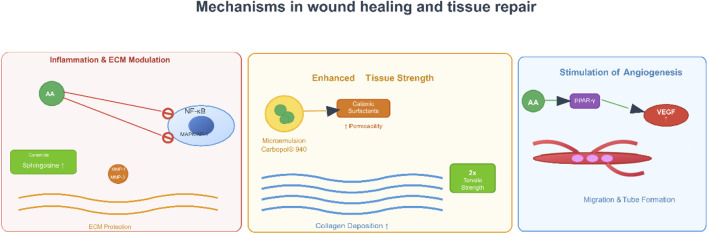 Figure 7
Peer Reviews
No public reviews on file for this paper yet. If you reviewed it on a platform where reviews are public (OpenReview, ICLR, NeurIPS, ICML), you can paste yours below so the community can read it here.
Videos
No videos yet. Explain this paper in a talk, walkthrough, or lecture? Add one.
Taxonomy
TopicsBiological Activity of Diterpenoids and Biflavonoids · Phytochemistry and biological activities of Ficus species · Retinoids in leukemia and cellular processes