Molecular evolution of the Wood-Ljungdahl pathway and the reductive glycine pathway in Desulfobacterota
Tomoyuki Wakashima, Keitaro Kume, Yoko Chiba

TL;DR
This study explores how ancient carbon fixation pathways evolved in a group of bacteria called Desulfobacterota.
Contribution
The study reveals the evolutionary history of the Wood-Ljungdahl and reductive glycine pathways in Desulfobacterota through gene gain, loss, and horizontal transfer.
Findings
The common ancestor of Desulfobacterota likely had genes for both the Wood-Ljungdahl and reductive glycine pathways.
Multiple lineages in Desulfobacterota independently lost these carbon fixation pathway genes over time.
Horizontal gene transfer contributed to gene replacements in the glycine cleavage system.
Abstract
Carbon fixation is a fundamental metabolic process that sustains ecosystems, yet its origins and evolutionary history remain largely unresolved. In this study, we focused on the Wood-Ljungdahl (WL) pathway, which is considered one of the most ancient carbon fixation pathways, and the reductive glycine (rGly) pathway, which shares several reactions with the WL pathway. The evolutionary scenario of the two carbon fixation pathways was inferred in the phylum Desulfobacterota, which includes microorganisms that operate either the WL pathway or the rGly pathway for autotrophic growth. The timing of gene gain and loss events was inferred by gene presence/absence analyses for both pathways, together with phylogenetic analyses of their key enzymes. Our results suggested that the common ancestor of Desulfobacterota possessed all genes encoding key enzymes of both pathways; formate dehydrogenase,…
Genes, proteins, chemicals, diseases, species, mutations and cell lines named across the full text — each resolved to its canonical identifier and authoritative record.
Click any figure to enlarge with its caption.
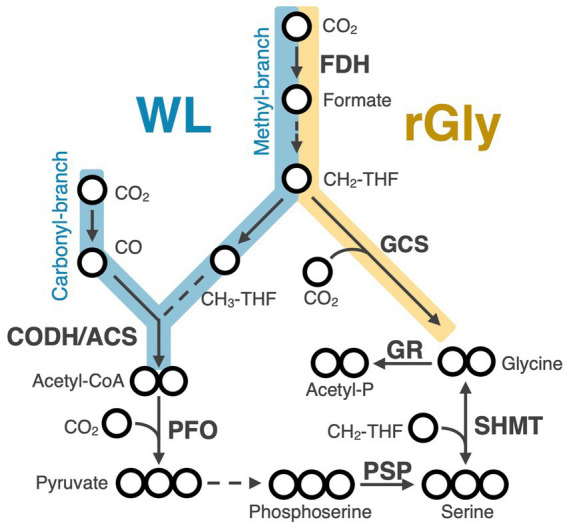 Figure 1
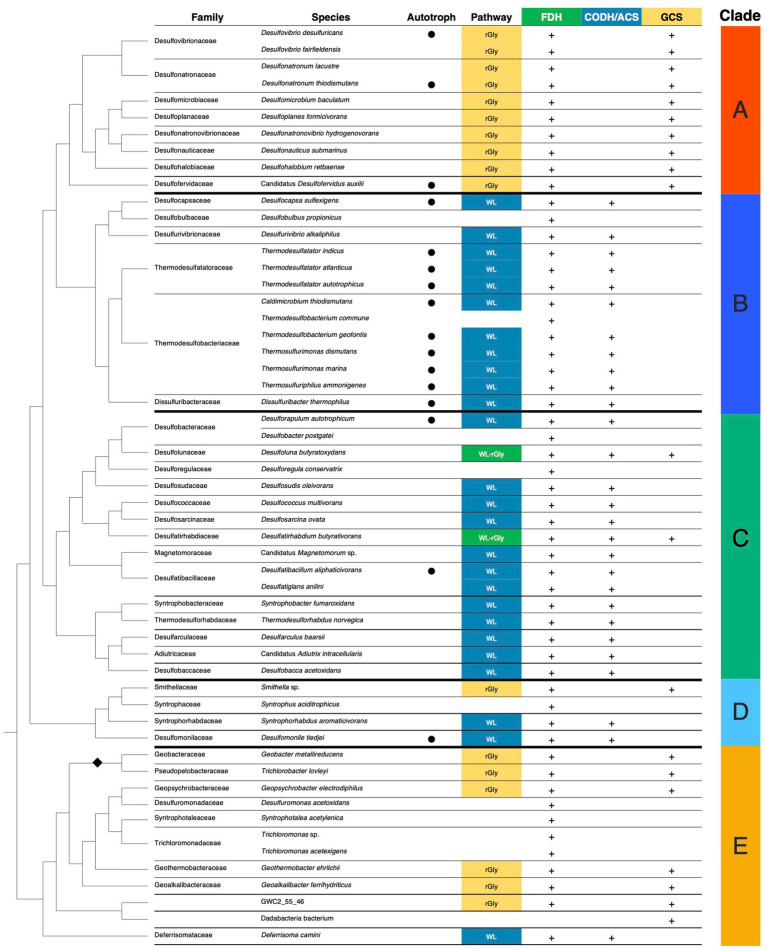 Figure 2
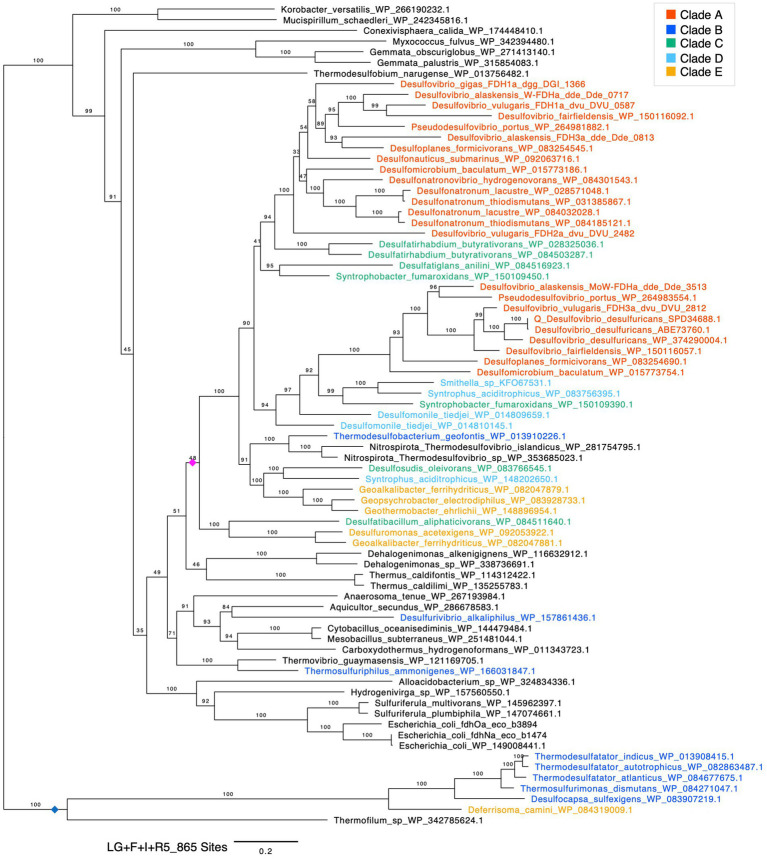 Figure 3
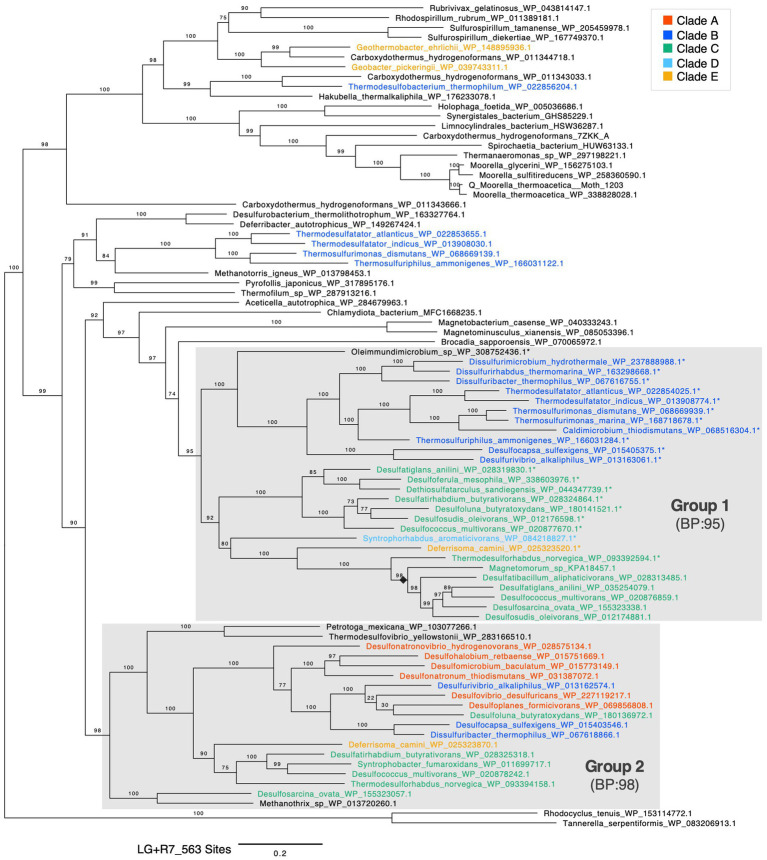 Figure 4
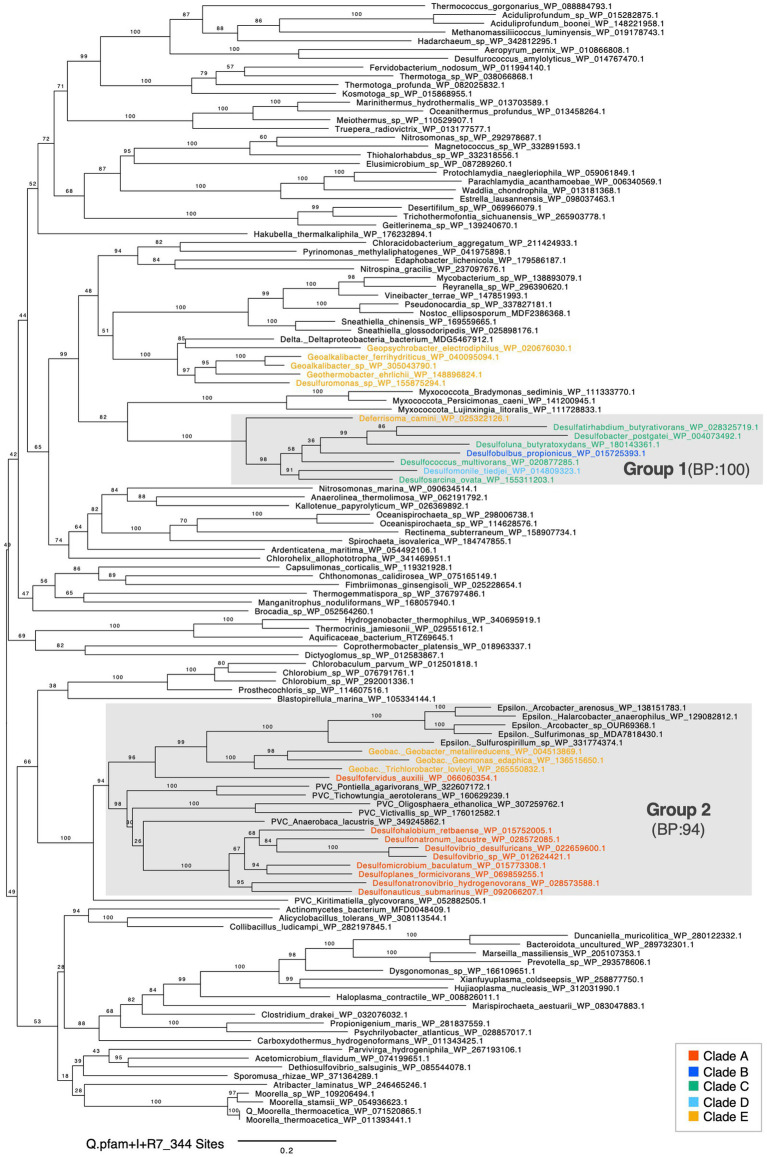 Figure 5
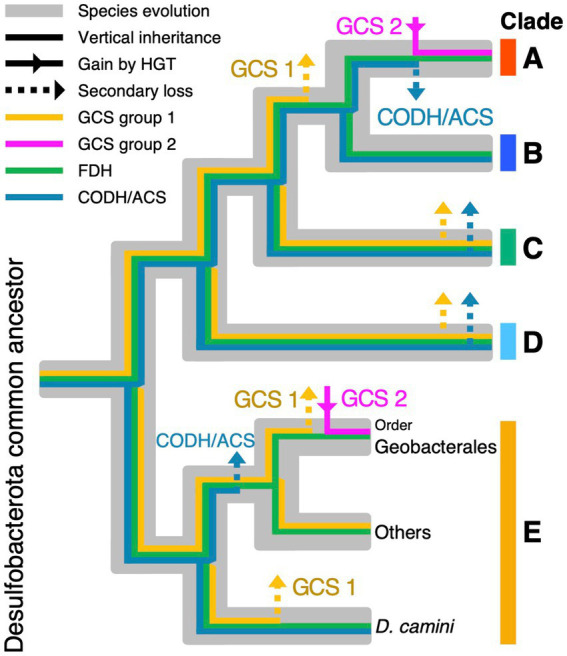 Figure 6
Peer Reviews
No public reviews on file for this paper yet. If you reviewed it on a platform where reviews are public (OpenReview, ICLR, NeurIPS, ICML), you can paste yours below so the community can read it here.
Videos
No videos yet. Explain this paper in a talk, walkthrough, or lecture? Add one.
Taxonomy
TopicsMicrobial Community Ecology and Physiology · Metalloenzymes and iron-sulfur proteins · Microbial metabolism and enzyme function