PCR-based detection of Enterocytozoon bieneusi in diarrheic patients from Guangdong, Shandong, Shanghai, and Zhejiang Provinces, China: a study on prevalence and genotypic characteristics
Jiangqiong Ke, Lijie Sun, Qi Yu, Xiaorong Yu, Zhongkai Zhang, Aiying Jiang, Xin Peng, Jiabin Zhang, Fuhao Jiang, Yanyan Jiang, Huanhuan Zhou, Wei Zhao

TL;DR
This study found that Enterocytozoon bieneusi, a microsporidian causing diarrhea, is prevalent in China, with varying rates across regions and age groups, and identified both known and new genotypes.
Contribution
The study reports five novel genotypes of Enterocytozoon bieneusi and highlights regional and demographic differences in infection rates.
Findings
4.9% of diarrheic patients tested positive for Enterocytozoon bieneusi.
Shanghai had the highest prevalence (14.3%) compared to other regions.
Five novel genotypes and seven known genotypes were identified in infected patients.
Abstract
Enterocytozoon bieneusi is the most prevalent microsporidian species infecting humans and causing diarrhea. Epidemiological investigations seldom focus on this pathogen, and its disease burden has been underestimated. This research investigated the prevalence and genotypic characteristics of E. bieneusi in patients with diarrhea from Guangdong (Zhuhai), Shandong (Qingdao), Shanghai and Zhejiang (Wenzhou) Provinces, China. A total of 691 fecal specimens from patients exhibiting diarrhea were collected and subjected to polymerase chain reaction (PCR) detection, targeting the internal transcribed spacer (ITS) region of the E. bieneusi genome. Genotypes were identified by sequencing PCR products, and zoonotic risk was evaluated through homology and phylogenetic analysis. 4.9% (34/691) of patients were positive for E. bieneusi. The patients from Shanghai had the highest incidence at 14.3%…
Genes, proteins, chemicals, diseases, species, mutations and cell lines named across the full text — each resolved to its canonical identifier and authoritative record.
Click any figure to enlarge with its caption.
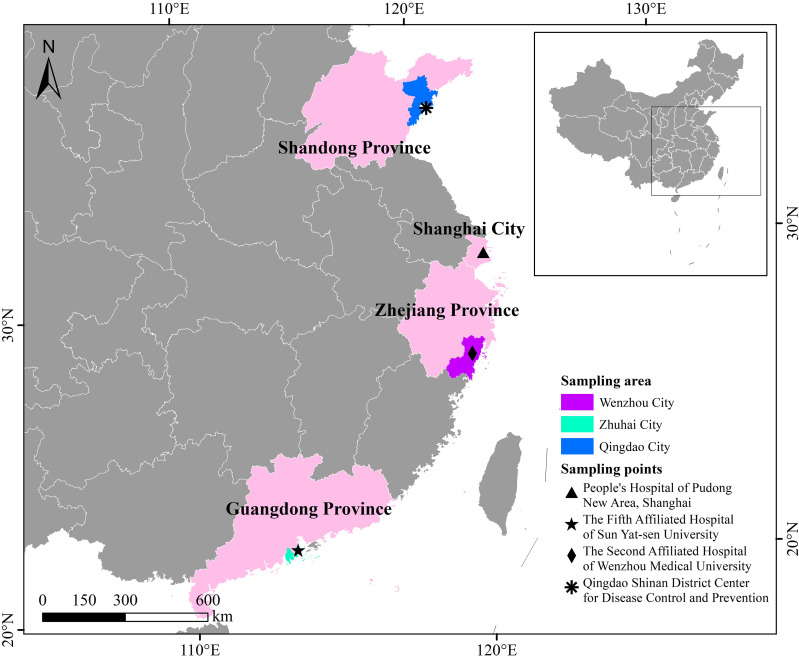 Figure 1
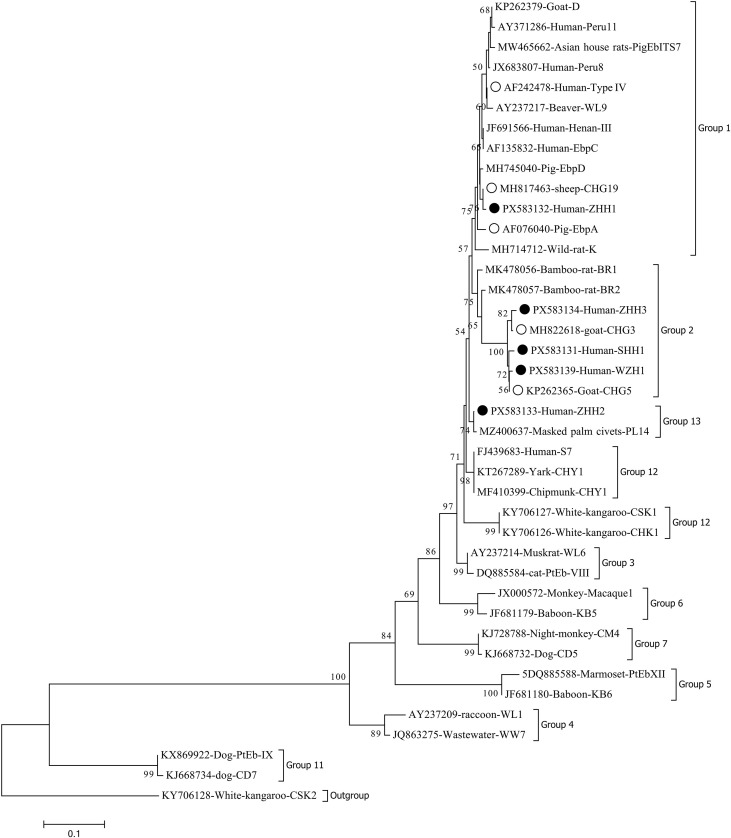 Figure 2
Peer Reviews
No public reviews on file for this paper yet. If you reviewed it on a platform where reviews are public (OpenReview, ICLR, NeurIPS, ICML), you can paste yours below so the community can read it here.
Videos
No videos yet. Explain this paper in a talk, walkthrough, or lecture? Add one.
Taxonomy
TopicsParasitic Infections and Diagnostics · Amoebic Infections and Treatments · Veterinary medicine and infectious diseases