Metabolomic analysis identifies alterations of amino acids in the tears and plasma of patients with dry eye disease with ocular pain
Lan Ke, Wanju Yang, Kuiliang Yang, Jiewen Mao, Yujin Wang, Dongping Li, Yiqiao Xing, Qingyan Zeng, Yanning Yang

TL;DR
This study found that specific amino acids in tears and blood may serve as potential biomarkers for dry eye disease with ocular pain.
Contribution
The study identifies novel amino acid biomarkers (methionine and 1-methyl-L-histidine) for dry eye disease with ocular pain.
Findings
Methionine levels in tears were significantly higher in patients with DED and ocular pain.
1-Methyl-L-histidine levels in plasma were significantly elevated in patients with DED and ocular pain.
These amino acids showed potential as biomarkers with AUCs of 0.686 and 0.869, respectively.
Abstract
Identifying the amino acid in tears and plasma and investigating the correlation between amino acid concentrations and the presence of dry eye disease (DED) with ocular pain. 15 participants in the DED with ocular pain group, 19 in the DED group, and 16 in the control group were enrolled and underwent DED examinations. Evaluation parameters included the Ocular Surface Disease Index score, Numeric Rating Scale score, clinical ocular parameters, as well as measurements from in vivo laser confocal microscopy. Amino acid concentrations were analyzed using the Waters ACQUITY UPLC I-Class/Xevo TQ-S micro system. A total of 29 and 36 distinct amino acids were identified in tear fluid and plasma, respectively. The results showed significantly higher levels of methionine (MET) in tear fluid and 1-methyl-L-histidine (1-MEHIS) in plasma in people who developed DED with ocular pain compared to…
Genes, proteins, chemicals, diseases, species, mutations and cell lines named across the full text — each resolved to its canonical identifier and authoritative record.
Click any figure to enlarge with its caption.
 Figure 1
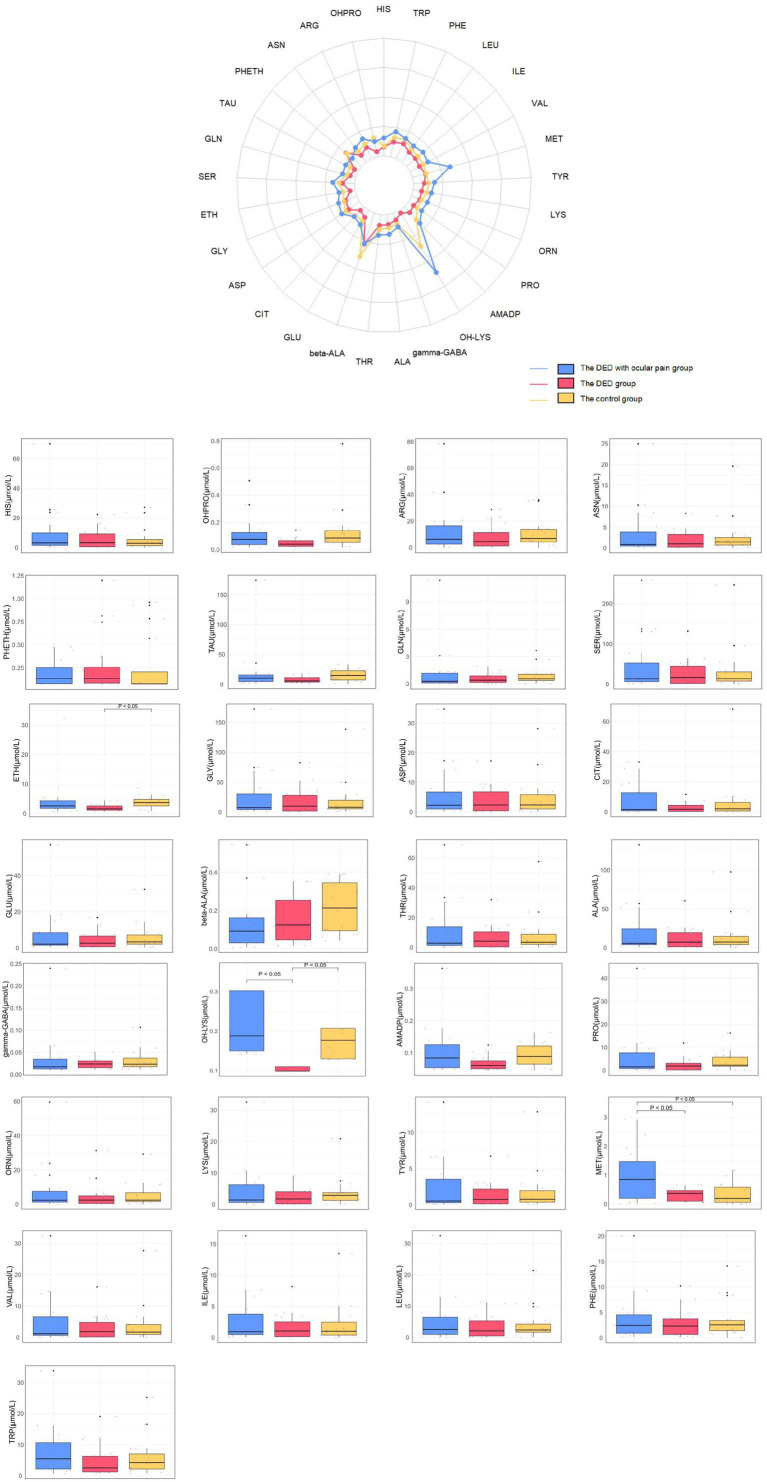 Figure 2
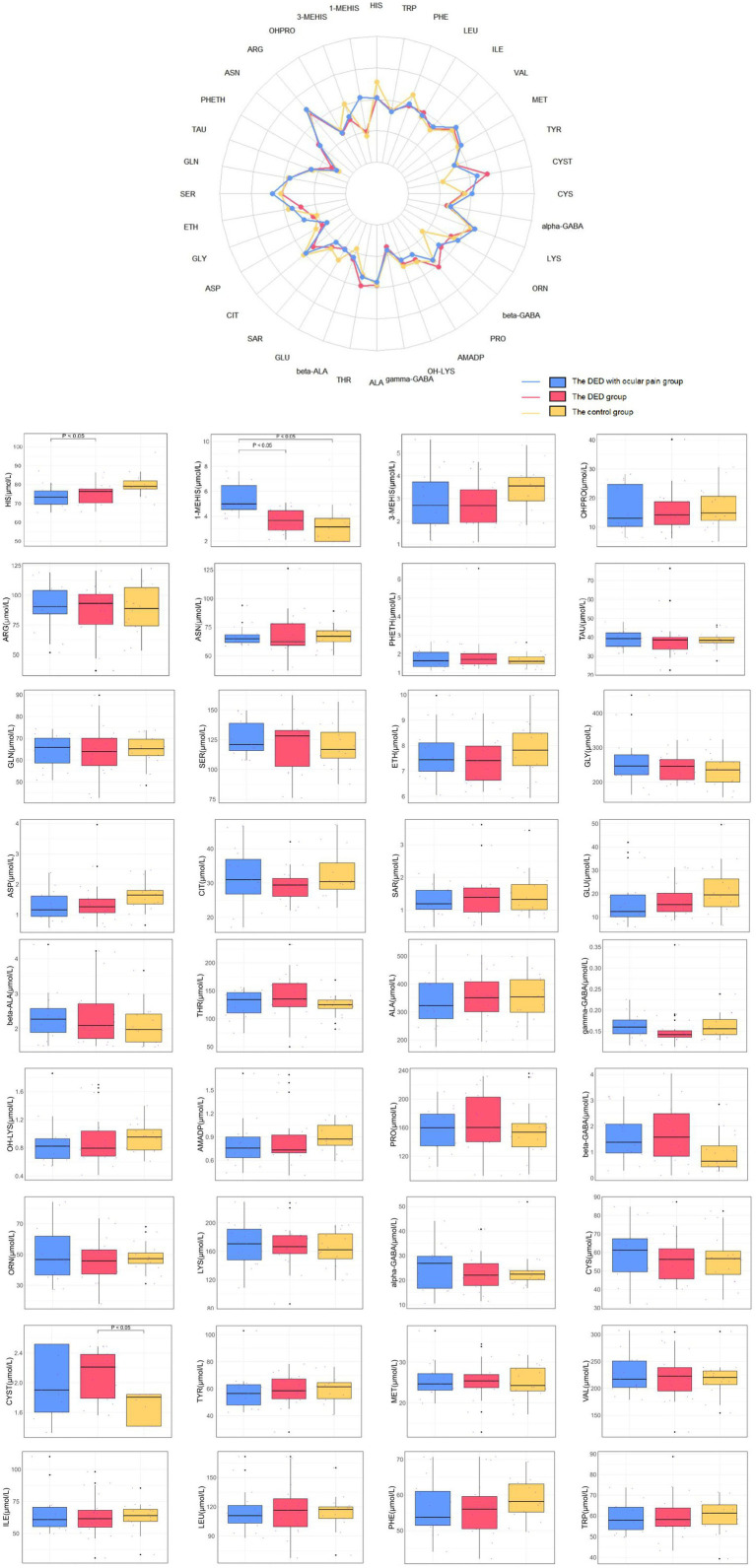 Figure 3
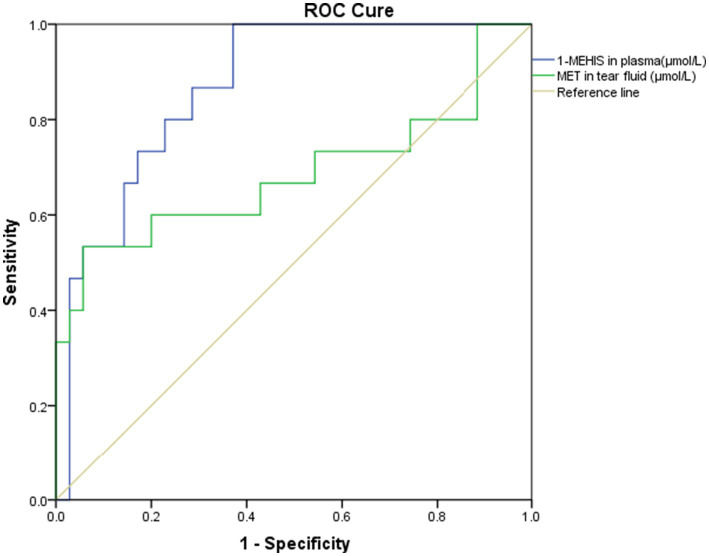 Figure 4
Peer Reviews
No public reviews on file for this paper yet. If you reviewed it on a platform where reviews are public (OpenReview, ICLR, NeurIPS, ICML), you can paste yours below so the community can read it here.
Videos
No videos yet. Explain this paper in a talk, walkthrough, or lecture? Add one.
Taxonomy
TopicsOcular Surface and Contact Lens · Sulfur Compounds in Biology · Corneal Surgery and Treatments